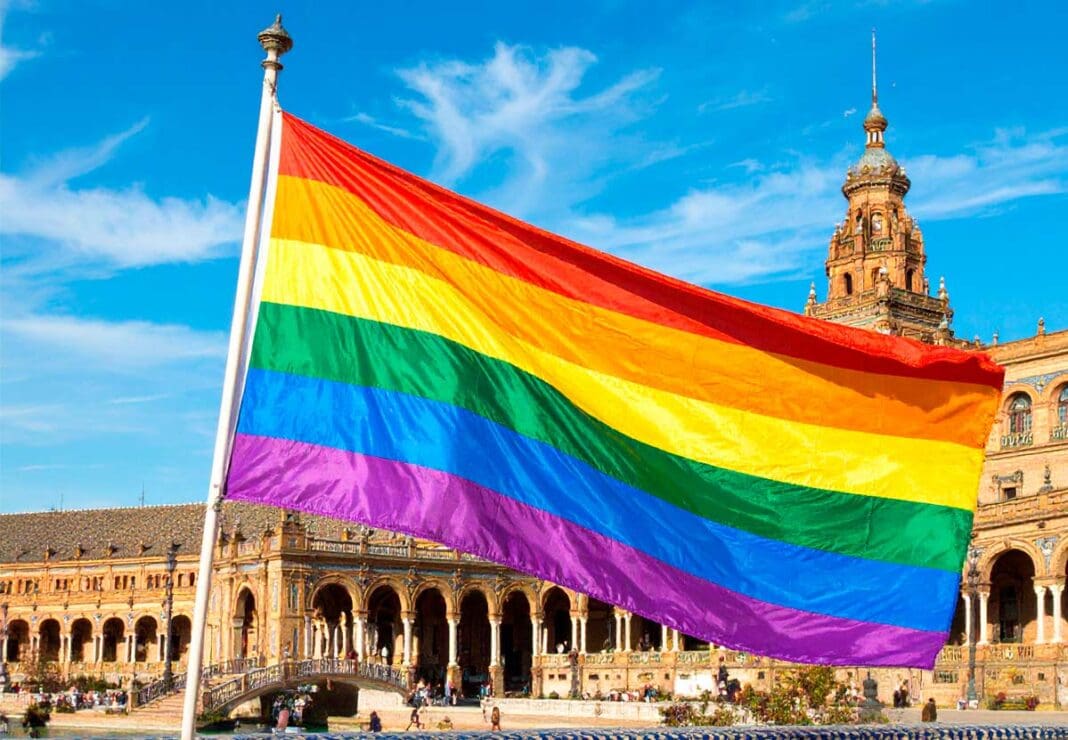


From August 21 to 25, Madrid will be the scene of a meeting that promises to mark a before and after in the relationship between spirituality and sexual diversity. The fifth assembly of the Global Network of Rainbow Catholics (GNRC) will bring together more people from different countries with the same objective: to reflect on the future of a more open and inclusive Church for LGTBIQ+ people.
Walking together after the Synod
The motto chosen for this edition, “Walking together: rainbow challenges after the Synod”, well summarizes the spirit of the meeting. For four days there will be conferences, debates, prayer spaces and workshops that seek to generate dialogue within an institution that, historically, has maintained restrictive positions regarding sexual diversity.
However, times seem to be changing, although not without contradictions. While the Vatican seems to have taken steps towards greater acceptance, more conservative voices in the ecclesial hierarchy insist on maintaining exclusive positions. Can the Church really be transformed from within?
A diverse and global agenda
The programming begins on Thursday, August 21 with the meeting of the GNRC Board of Directors and a welcome prayer. On Friday, attendees will be divided into groups —men, women, non-binary people and young people—, guided by theology and pastoral leaders such as Maritza Fuenzalida, Inés Pujol or Luisma González, among others.
On Saturday there will be one of the most intense moments: a conference on the future after the Synod and a testimony from Africa, a continent where the LGTBIQ+ community continues to face laws that punish dissident identities with prison, and even death. The day will end with a picnic and outdoor prayer in Madrid Río and the Virgen del Puerto gardens.
Sunday, August 24, will be the day of internal elections, book presentations with authors such as James Alison and Renato Lings, and a final Eucharist whose place is kept reserved for security reasons. The assembly will officially close on Monday the 25th with a farewell ceremony.
Madrid, host city
The Spanish capital was not chosen at random. In recent years, Madrid has become an international reference for religious and cultural diversity, a space where the spiritual and the inclusive can meet. For many participants, this event will also be an opportunity to build networks, heal wounds and claim that faith and diversity are not incompatible.
The main accommodation will be at the Miguel Antonio Caro High School, in Ciudad Universitaria, with a cost of 350 euros per person. The option of participating only in the activities and maintenance is also offered for 140 euros.
More than an event, an open question
With this assembly, the GNRC proposes something more than a conference program: it invites us to question to what extent it is possible to open real spaces of inclusion in an institution with centuries of tradition. Will the welcome message be able to overcome internal resistance? The answer is not written. But what is clear is that the voice of the Catholic LGTBIQ+ community wants and deserves to be heard.