


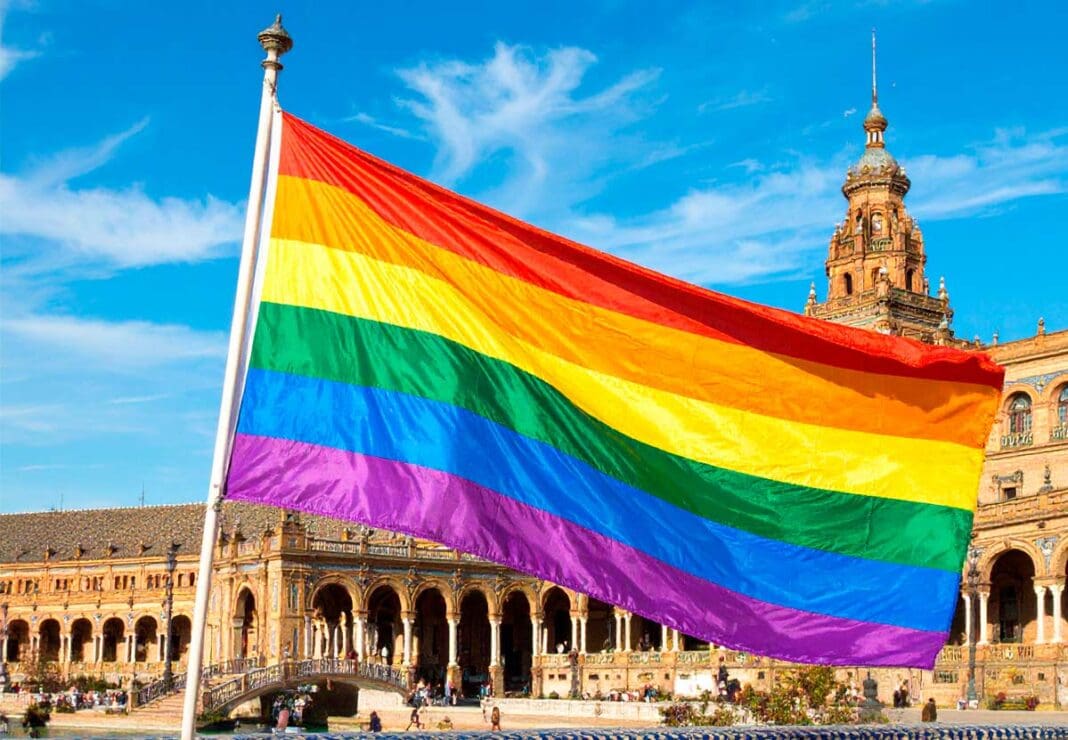
More than 250 professionals from Andalusian social services have recently participated in training sessions organized by the Ministry of Social Inclusion, Youth, Families and Equality. The objective: to bring the prevention and intervention protocol against LGBTIphobic behaviors closer and to guarantee that community centers are safe and respectful spaces.
A step towards inclusion
The training, officially recognized by the Andalusian Institute of Public Administration, has not been limited to transmitting information. It is about offering social service workers a practical tool that helps them identify and stop any form of rejection, prejudice or discrimination towards LGTBIQ+ people or their family members.
The idea is simple but powerful: if frontline staff have clear resources, the detection of exclusion situations is more agile and the response is more effective. Now, is it enough to educate those who are already within the system, or should we also rethink how we educate society as a whole?
Clear objectives, open challenges
The workshops focused on three axes:
- Raise awareness about the reality of sexual and gender diversity.
- Explain how to apply the protocol against LGTBIphobia in specific cases.
- Detect possible deficiencies in the prevention and attention of these situations.
The content was divided into two modules. The first, awareness-raising, was given in all provinces by the territorial coordinator of the Engloba association, Santiago Ruiz. The second, more technical and focused on the protocol itself, was in the hands of professionals with direct experience in community services, such as Rocío Oria (Lepe), José Ramón Alcalá Zamora (Cádiz, Huelva and Córdoba) and Nazareth Pastor (Alcalá la Real).
The importance of the front line
Francisco Obes, Diversity Coordinator of the Board, highlighted a key aspect: social services are, on many occasions, the first door that citizens turn to when faced with situations of discrimination. Hence its role is “fundamental” to detect and accompany.
The protocol, according to Obes, not only unifies the institutional response, it also marks a change in focus: moving from isolated reaction to organized prevention. A commitment to coherence in the fight against LGTBIphobia.
Looking further
These types of initiatives show a clear intention: for the public administration to be the guarantor of the rights of LGTBIQ+ people. But a question remains in the air: how to ensure that these tools transcend offices and translate into real changes on the street, in schools or in families?