
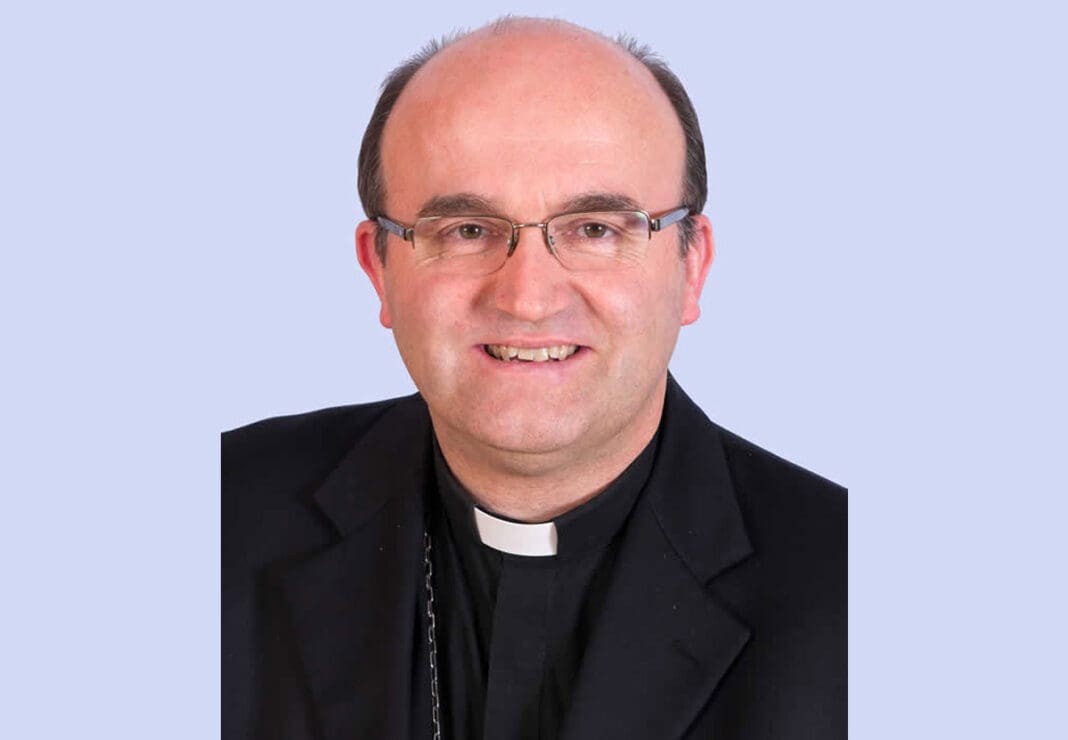
Today we focus on an issue of great relevance for the LGTBIQ+ community and the Spanish legal framework. The Provincial Prosecutor’s Office of Madrid has initiated a pre-trial investigation against the Bishop of Orihuela-Alicante, José Ignacio Munilla, for the possible commission of hate and discrimination crimes. The origin of these proceedings is a complaint filed by a citizen platform following public demonstrations by the religious in defense, allegedly, of conversion therapies for homosexual people.
We understand that, in such a sensitive topic, it is essential to offer a story that addresses the different aspects of the controversy.
The Origin of the Citizen Complaint
The legal action is part of the citizen platform “Your people and mine”, which presented the case to the Public Ministry. The complaint focuses on statements made by Bishop Munilla on May 3, 2024, during a program on the Radio María station.
According to the platform, the bishop suggested that there is a threat towards psychology professionals who accompany people with “homosexual inclinations” with the intention of “redirecting” their attractions. He himself defined the concept that he considers criminalized: “Conversion therapy is called any accompaniment to a person to try to heal their inner wounds so that they can live the virtue of chastity like every Christian.”
For the complaining entity, these statements represent hate speech and a direct injury to the dignity of LGTBIQ+ people, by equating non-heterosexual sexual orientation with an “inner wound” that must be “redirected” through chastity.
The Prelate’s Response: Bullying or Legitimate Criticism?
Bishop José Ignacio Munilla, using his profile on the social network X (formerly Twitter), has expressed his position and defense regarding the investigation. In his opinion, the judicial process lacks “any route” and has a clear intention: “It only seeks to intimidate the Church so that it does not dare to preach the Good News of Christian love, in order to try to impose on society as a whole a ‘State anthropology’ based on the ‘gender-LGTBI theory’.”
The religious has denied having directed criticism at LGTBIQ+ groups, stating that his censorship is directed exclusively at the Spanish law that prohibits and penalizes so-called “conversion therapies.” Munilla has raised a debate on freedom of expression, questioning whether criticizing the Government and its laws constitutes a crime, and has even asked if, if so, the parliamentarians who voted against said norm should not also be reported.
Furthermore, the bishop has insisted on the work of the Church, ensuring that they will continue to “accompany” people with “homosexual inclinations” who, in his words, “freely ask us for spiritual help to live in chastity.”
The Central Debate: Healing versus Freedom and Dignity
The key to this debate lies in the tension between legislation that seeks to protect the LGTBIQ+ community from harmful practices, such as conversion therapies —whose pseudoscientific and harmful nature has been widely documented—, and the defense of religious freedom and pastoral work.
The Madrid Prosecutor’s Office now assumes territorial jurisdiction, as the capital is the headquarters of the station from where the bishop’s words were broadcast. The open proceedings are an initial phase to determine whether the statements have the necessary legal-criminal significance to constitute a crime of hate or discrimination.
Reader, at this point, reflection is inevitable: How should the State, through its judicial institutions, balance the protection of the dignity of vulnerable groups with the right to freedom of expression and worship? Is there a clear line between criticizing a law and promoting speech that violates fundamental rights? It is a debate that transcends the legal to delve into the values that underpin our society.