
A pro-trans letter triggers a reaction from the author of Harry Potter
At the center of a new media storm, J.K. Rowling is once again the protagonist for her statements on gender identity. This time, the controversy arises after the publication of an open letter signed by more than 400 film and television professionals, who asked the main institutions in the sector for explicit support for the trans community. In response, the author shared an extensive essay on her X account (formerly Twitter), reaffirming her critical positions towards what she calls “gender ideology.”
In light of recent open letters from academia and the arts criticizing the UK’s Supreme Court ruling on sex-based rights, it’s possibly worth remembering that nobody sane believes, or has ever believed, that humans can change sex, or that binary sex isn’t a material fact. These…
— J.K. Rowling (@jk_rowling) May 3, 2025
It is not the first time that Rowling has expressed herself firmly on these issues. In fact, her opinions have already caused a notable rift between her and several figures from the Harry Potter franchise. But this new episode shows that the debate is far from closed.
The voices that raised the pen: an industry that takes a stand
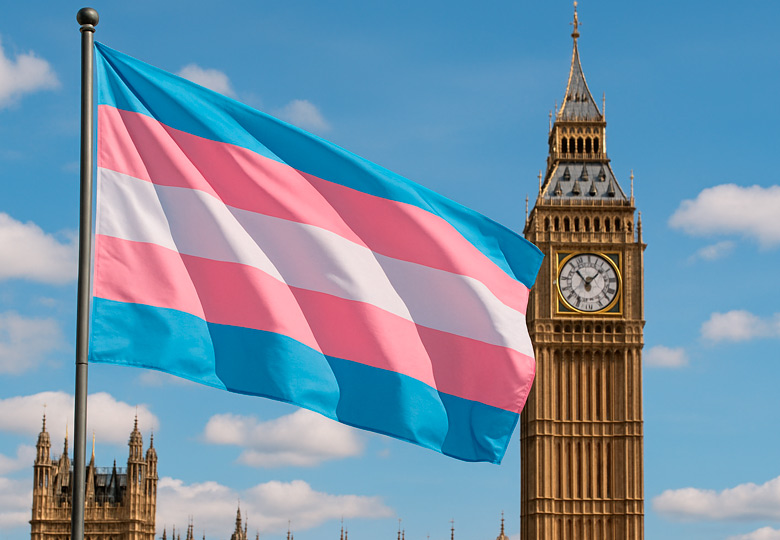
The pro-trans letter was supported by performers and creatives from different generations, including names directly linked to the magical universe created by Rowling. Among them are Katie Leung (Cho Chang), Sean Biggerstaff (Oliver Wood), Paapa Essiedu (future Severus Snape in the new adaptation), Charlotte Ritchie and Bessie Carter. His message was clear: it is urgent to make trans people visible and protect them from the growing hate speech.
Emma Watson, who played Hermione Granger, also indirectly expressed her support. Citing a phrase by the writer Matt Haig, he hinted at his rejection of attitudes that he considers close to fascism, although without directly naming the author. His gesture was interpreted as a clear position, marking a dividing line between the saga and its creator.
Rowling’s essay: criticism, skepticism and provocation
Far from softening the tone, J.K. Rowling responded with a long text in which she accused the signatories of acting out of fear and seeking social approval. According to her, these public actions are a symptom of “elitist virtue,” a way of accumulating symbolic capital in environments where dissent can be costly.
In her essay, Rowling denies the validity of transgender identities as a social or political category, and considers that the trans movement puts the rights of cisgender women and girls at risk. Furthermore, he expressed his discomfort with the idea that the recognition of trans people is a “new religion” based on dogmas that, in his view, contradict biological reality.
He also stated that the trans movement is losing support, both in the courts and in public opinion, and compared its evolution with other belief systems that, at the time, seemed invulnerable and ended up falling.
Legitimate debate or harmful speech?
Beyond Rowling’s popularity or literary talent, the impact of her words is real and profound. For many, his statements represent a validation of transphobic narratives that already find echo in conservative sectors. For others, they simply represent the exercise of an uncomfortable freedom of expression, but necessary for democratic debate.
Where do we draw the line between dissent and discrimination? What responsibility do creators have when their voice becomes a global speaker?
A crack in the heart of pop culture
It is nevertheless paradoxical that the world of Harry Potter, so appreciated for its message of inclusion, magic and resistance against hate, is overshadowed by conflicts over who deserves recognition and respect. The separation between work and author becomes increasingly difficult when those who grew up with those books feel that the universe they loved no longer embraces them.
An open debate, but not innocent
It is important to recognize that the debate on gender identity is not a theoretical discussion without consequences. The statements of public figures influence policies, social attitudes and, above all, the daily lives of trans people who already face discrimination, violence and exclusion. Even if a legitimate interest in protecting the rights of cis women is claimed, the tone and content of the speech can reinforce prejudices and marginalization that should have no place in a democratic society.
Are we listening to all voices?
While it is true that freedom of expression must be protected even when it is uncomfortable, it is also worth asking: from whom is this freedom protected and at whose expense? Are a billionaire author with millions of followers and a trans person who struggles for her daily existence really on equal footing?
Shouldn’t the debate on trans rights focus more on those who live that reality than on those who comment on it from a distance?