
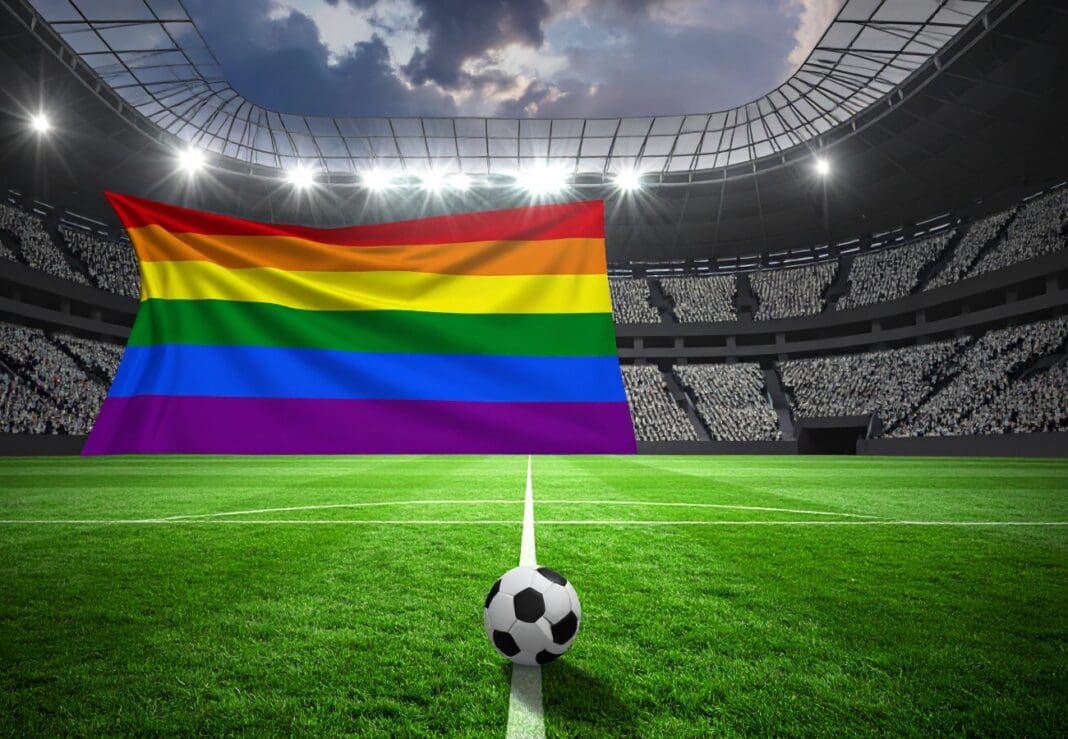
Football, often a mirror of global social and political dynamics, is once again the scene of a tense debate within the framework of the next World Cup in the United States, Mexico and Canada. Is it possible to celebrate diversity in a tournament that, due to its global nature, includes nations with legislation that is openly hostile towards certain communities? This is the question that readers are asking after the designation of a group stage match as the ‘LGBTQ+ Pride Party’ by the local organizing committee in Seattle.
The host city intentionally chose the meeting to be held on June 26, a date that coincides with Pride weekend in Seattle and also commemorates the legalization of equal marriage by the United States Supreme Court. A clear and powerful message of demand. However, the chance of the draw meant that the leading teams that day were Egypt and Iran, two countries where relationships between people of the same sex are not only not recognized, but carry severe legal penalties, including prison or even possible execution in the Iranian case.
The Clash of Positions: Official Protest and Local Firmness
The reaction of the Egyptian and Iranian football federations has been immediate and forceful. Mahdi Taj, president of the Iranian Football Federation, expressed his rejection on national television, calling the decision “unreasonable” and that it “appears to support a particular group.” Both countries have formalized their protest, requesting mediation from FIFA to avoid demonstrations that they consider “culturally and religiously incompatible” with their values. Egypt has come to ask that everything be limited to the strictly sporting field, without extra-sporting elements.
For its part, the Seattle Pride Advisory Committee (PMAC), the promoter of the initiative and outside the FIFA structure, has reaffirmed its intention to move forward. Its purpose is to take advantage of the immense loudspeaker of the World Cup to make visible and celebrate the LGTBIQ+ communities in Washington, seeking to generate a positive and lasting impact.
La Apertura del Mundial 2026: ¿Un Arma de Doble Filo?
Since its presentation, FIFA has sold the 2026 World Cup as the most open and diverse in history. With a record number of teams and the inclusion of countries never before seen in the World Cup, the geographical and cultural diversity is undoubtedly extraordinary. However, this same openness is generating friction in the social and political arena.
This is not the first time that the demand for LGTBIQ+ rights has generated controversy in the World Cup context. In Qatar 2022, the ban on the use of rainbow armbands by FIFA has already sparked great controversy, showing the difficulty of reconciling the values of inclusion of global sport with the legal and cultural realities of the host or participating countries.
Le reader, what do you think FIFA’s limit should be regarding these types of claims? Should sport be a political platform without conditions, or is it necessary to mediate the cultural sensitivities of the participating countries? It is a complex conversation that, far from closing, seems to intensify with each new major event.