


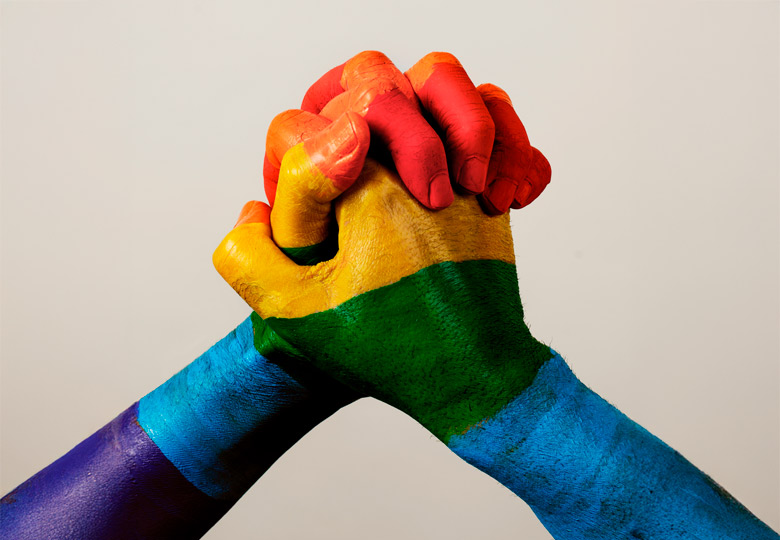
Ana Redondo accuses Ayuso of legislating against equality and defends institutional firmness in protecting the group.
The Minister of Equality, Ana Redondo, has confirmed that the central Executive does not plan to look the other way in the face of the decisions of some autonomous communities that, in her words, “are legislating against the LGTBI+ collective, equality, democracy and rights.” Among them, he has directly pointed out the Community of Madrid.
During a visit to the emblematic Pasaje Begoña in Torremolinos, a space with a strong symbolic load for the memory and vindication of the LGTBIQ+ movement, the minister referred with concern to the current social climate. “Words generate violence. We are witnessing a degradation of public discourse that leads to real attacks, confrontations, fear,” he stressed. It is not a free alert: just a few weeks ago, two young people suffered a brutal homophobic attack in this same town.
🗣 “The law of equal marriage has allowed us to be free, true freedom in capital letters.”
📷 The Minister of Equality, @_anaredondo_, has participated in the round table presentation of the magazine ‘SIX 2025’. pic.twitter.com/Lk8bQpHRDC
— Ministry of Equality (@IgualdadGob) May 29, 2025
Tension between administrations
Redondo has been clear in stating that the central government “is not going to consent” to limits already recognized rights from Madrid. He has denounced what he considers a strategy on the part of Isabel Díaz Ayuso to “violate and restrict the guarantees of the group.” In that same speech, she also criticized the Valencian president, Carlos Mazón, for approving regulations that, according to the minister, curtail fundamental freedoms and divert attention from other pending crises, such as those derived from DANA.

This positioning of the Ministry of Equality is supported by a recent ruling by the Constitutional Court. The ruling partially annulled a Madrid law that reduced the scope of the LGTBI+ regulations approved in 2016. Among the most controversial points, the exclusion of the group’s entities as an active party in judicial or administrative processes related to the defense of their rights stood out. Justice made it clear that these restrictions have no place in the current legal framework.
A political conflict or a defense of rights?
However, not all voices agree on this reading. Is this a sincere defense of LGTBIQ+ rights or are we facing a political instrumentalization of the territorial conflict? Some experts warn of the risk of polarization when sensitive issues are used as a weapon between governments. Furthermore, it is worth wondering if the Executive is willing to sustain this fight until the end or if it will remain in forceful but symbolic statements. Is there a clear roadmap? And what role does citizens play in this dispute?
What is at stake
Beyond the disputes between administrations, what is at stake are the living conditions of thousands of people. The setback in laws that protect the LGTBIQ+ community is not only a legal issue, but a direct threat to the well-being, security and dignity of many historically violated identities. Equality, as a constitutional value, should not be subject to ideological swings or partisan interests.
The institutional response, social pressure and citizen surveillance will be key to preventing the rights already won from being diluted in decisions that, although protected by autonomous majorities, can break basic consensuses on diversity and inclusion.