

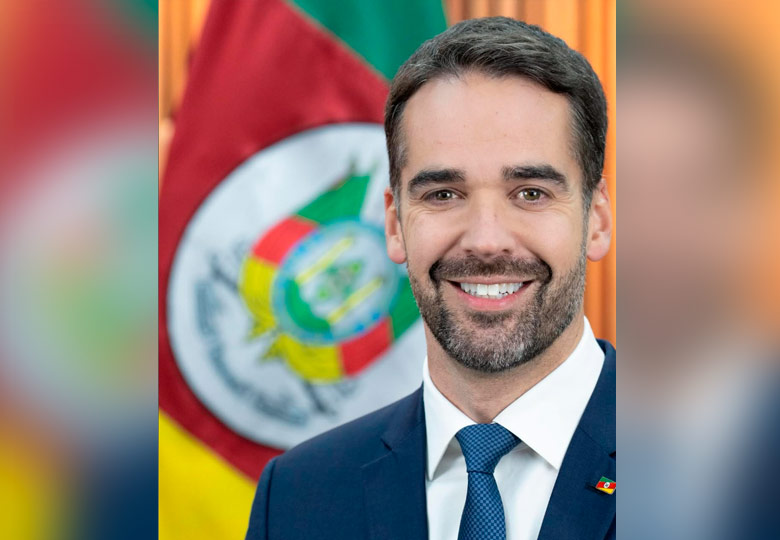
Eduardo Leite, current governor of the state of Rio Grande do Sul, has registered his candidacy for the 2026 presidential elections. If elected, he would become the first openly gay president in the history of Brazil, marking a milestone in the country’s politics and in the visibility of the LGTBIQ+ collective.
The announcement took place last Tuesday, May 20, after his recent incorporation into the Social Democratic Party (PSD), after leaving the PSDB, a party in which he had been active for more than two decades. “Yes, I am a pre-candidate for the Presidency of the Republic. It is a legitimate aspiration of someone who has been mayor, governor and wants to contribute to the progress of Brazil,” Leite declared before the media.
His candidacy seeks to position himself as an alternative to the current political polarization, marked by the blocs associated with Jair Bolsonaro and Lula da Silva. According to Leite, both projects are based on a logic of confrontation rather than a constructive proposal for the future.
Unprecedented visibility
The possibility of an openly gay person becoming president of Brazil represents a symbolic advance of great relevance. Although there are more and more LGTBIQ+ leaders in institutions, access to the highest positions of power continues to be exceptional.
Leite made his sexual orientation publicly known in 2021, during a prime-time interview on the TV Globo network. That gesture was valued by many sectors as an act of personal courage in a political environment that is still not very inclusive. Since then, his figure has gained notoriety both in Brazil and abroad.
Sufficient representation?
However, part of the Brazilian LGTBIQ+ group has shown caution regarding this candidacy. Although Leite has made his sexual orientation visible, his career has not been characterized by active support for the rights of the group. At the time, the phrase “I am a gay governor, not a gay governor” was interpreted by various sectors as a way to distance themselves from LGTBIQ+ activism.
Likewise, his support for Jair Bolsonaro in the 2018 elections continues to generate unrest. The former president has been widely criticized for his openly homophobic speech and his statements against the rights of LGTBIQ+ people. Jean Wyllys, former federal representative and activist, has pointed out that Leite “had many opportunities to defend the community and he did not do so.”
Between gesture and commitment
Leite’s candidacy raises a key question: is visibility enough to represent the LGTBIQ+ group in politics? Or is an explicit commitment to their demands essential? The fact that someone can become president without hiding their identity is undoubtedly important. But if that identity is not translated into concrete policies, what kind of representation does it offer?
Currently, figures such as Erika Hilton – congressman and trans activist – continue to lead legislative proposals focused on improving the lives of LGTBIQ+ people, as well as other historically marginalized sectors. Their work shows that it is not enough to be there; you have to act.