

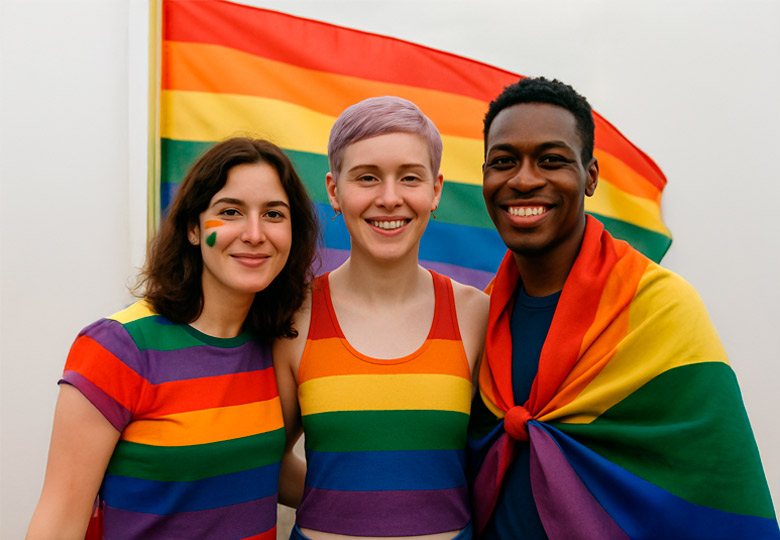
The situation of LGBTI rights in Latin America in 2025 is a reflection of significant advances and persistent challenges. As more inclusive laws have been promoted, social reality shows a considerable gap in the acceptance and protection of these communities. The fight for equality has been constant, marked by the history of discrimination and violence. In this context, it is essential to analyze the legislative achievements and the challenges that LGBTI people still face in the region.
Historical Context of LGBTI Rights in Latin America
The evolution of LGBTI rights in Latin America has been marked by a complex historical framework that ranges from pre-Columbian cultures to current sociopolitical dynamics. Over the years, the interaction between various cultural traditions and colonization has significantly influenced the perception and treatment of sexual diversity in this region.
Pre-Columbian Influence on Sexual Diversity
Pre-Columbian cultures in Latin America showed a notable openness towards sexual diversity, with practices and beliefs that recognized and accepted different gender identities. For example, indigenous peoples such as the Mexica and the Mayans had a rich and nuanced understanding of sexuality, which included figures such as the “muxes” in Oaxaca, Mexico, who are recognized as a third gender and play important roles in their communities.
The existence of these diversified identities reveals a past in which gender norms were more fluid and less rigid. Rituals were observed that honored diversity and respected the multiple ways in which sexuality could be expressed. This initial acceptance, however, would be severely affected with the arrival of European colonizers.
Impact of Colonization on Gender Identity
Colonization brought with it a belief system that imposed a binary and patriarchal vision of sexuality that marginalized and repressed the various existing gender identities. The arrival of European colonizers and the subsequent imposition of Christianity encouraged the criminalization of homoerotic practices and non-binary identities, which caused a profound transformation in the social perception of sexual diversity.
Policies of persecution, which were consolidated through civil and religious codes, led to the violent repression of LGBTI people. This context of oppression has left a lasting mark on Latin American society, manifesting itself in discriminatory attitudes and behaviors that persist to this day.
Evolution of Social Movements since the 60s
LGBTI social movements in Latin America began to take shape in the 1960s, in a global context marked by revolts and struggles for civil rights. The growing visibility and mobilization of the LGBTI community was a response to systematic oppression and violence. These new waves of activism were inspired by struggles for equality in other parts of the world, such as the civil rights movement in the United States and the sexual revolution of the 1960s.
The emergence of organizations and groups dedicated to the defense of LGBTI rights boosted the visibility of the problems faced by the community. Through marches and awareness campaigns, activists began to demand recognition of their rights and the abolition of discriminatory laws. The first pride march in Latin America took place in Mexico in 1979, setting a precedent for future events throughout the region.
Since then, the fight has evolved, and although there has been significant progress in terms of legal rights, such as equal marriage in several countries, activism faces broad struggles against violence, discrimination and lack of social acceptance, demonstrating that the historical legacy of colonization still influences the contemporary reality of LGBTI identities in Latin America.
Recent Legislative Advances
In recent years, the LGBTI community in Latin America has seen important advances in legislative terms. Below are some of the most significant milestones that have shaped the current legal landscape.
Equal Marriage in the Region
The legalization of equal marriage has been a crucial change in the fight for equal rights in Latin America. As several states have begun to adopt this right, the foundation has been laid for greater social inclusion and dignity for same-sex couples.
Pioneer Countries in Equal Marriage
Argentina – 2010
-
First country in Latin America to legalize equal marriage at the national level.
- Publicidad-
-
The law was approved on July 15, 2010.
-
It marked a milestone and served as an inspiration for other countries in the region.
Uruguay – 2013
-
Second Latin American country to approve equal marriage at the national level.
-
The law was enacted in April 2013 and came into force in August of the same year.
Brazil – 2013
-
Although it was not approved by Congress, the National Council of Justice forced civil registries to carry out equal marriages since May 2013.
-
This made equal marriage a de facto right throughout the country.
Mexico – gradual process (2009–2022)
-
Mexico City was a pioneer in approving equal marriage in 2009 (it came into effect in 2010).
-
At the federal level, the Supreme Court of Justice declared prohibiting it unconstitutional, but the implementation was gradual by states.
-
By 2022, all states had already legalized it.
Colombia – 2016
-
In April 2016, the Constitutional Court approved equal marriage throughout the country.
-
It was established as a legal right without the need for a specific law from Congress.
Other countries that followed later:
-
Ecuador – 2019
-
Chile – 2022
-
Costa Rica – 2020 (first in Central America)
Evolution in Chile and Other Countries
Chile has been in a process of legislative transformation, where a law on civil unions was approved in 2015, but in 2025 it is still evolving towards the full legalization of equal marriage. Society’s support has been increasing, and political dialogue on the issue continues to grow. Other countries are beginning to follow the path towards full equality, although the pace of progress varies significantly between regions.
Recognition of Civil and Social Rights
The recognition of complementary rights in addition to equal marriage has manifested itself in various forms. This advance is vital as it contributes to the inclusion of the LGBTI community in all areas of social life.
Civil Unions and their Impact
Over the years, civil unions have served as a bridge to the full recognition of marital rights. These agreements allow same-sex couples to access certain legal benefits, although without the full rights that come with marriage. In countries like Chile, this is an intermediate step that has allowed greater visibility and acceptance of sexual diversity in society.
Policies for Protection against Discrimination
The legal framework in Latin America has begun to include protection policies against discrimination. Countries such as Ecuador, Bolivia and Mexico have adopted clauses in their constitutions that prohibit discrimination based on sexual orientation and gender identity. This represents a significant shift towards a more inclusive environment, although there is still a long way to go.
Adaptation of Gender Identity Laws
The laws that regulate gender identity have been subject to changes in several countries, where the legal recognition of trans identities has gained weight in the last decade. This adaptation is essential to guarantee the respect and rights of trans people.
Name and Sex Change Procedures
In 2025, several countries have simplified procedures so that trans people can change their name and sex on official documents. Argentina, for example, has led the way by allowing this process to be carried out without the need for surgical interventions, offering a model that other countries have begun to imitate. However, in nations like El Salvador and Peru, significant barriers remain that limit trans people’s ability to access these rights.
Gender Violence and Trans People
Efforts at legal adaptation are even more urgent given that trans people face disproportionate violence. This situation raises the need to not only legislate, but also implement programs that promote education and awareness regarding gender diversity. The lack of effective policies has perpetuated a cycle of violence that is unacceptable in any society that aspires to be just.
Current and Persistent Challenges
The situation for the LGBTI community in Latin America presents a set of difficulties that need to be addressed urgently. Although legislative progress has been made, daily reality is marked by multiple forms of discrimination and violence. The current challenges require a comprehensive approach and determined commitment from all sectors of society.
Violence and Discrimination based on Sexual Orientation
Violence directed towards LGBTI people constitutes one of the greatest challenges in the region. This violence manifests itself in various ways, from physical attacks to hate crimes, which leave a deep mark on the affected communities.
Data on Hate Crimes in Latin America
Between 2014 and 2020, 1,292 murders related to sexual orientation or gender identity were reported, an alarming number that underlines the need for effective measures to combat this phenomenon. Countries such as Brazil and Mexico have recorded particularly high numbers, indicating that lack of protection and social stigma remain predominant factors. Gender-based violence, as well as racism and homophobia, are intertwined, creating a hostile environment that must be dismantled.
Cultural and Religious Impact in the Caribbean
In several Caribbean countries, homosexuality continues to be criminalized. The influence of retrograde cultural and religious norms perpetuates a climate of intolerance. Jamaica, Guyana and Trinidad and Tobago are examples of nations where LGBTI people face high levels of violence and discrimination. Religion plays a significant role in social perception, where many doctrines condemn sexual diversity, contributing to maintaining a stigma that translates into a deep rejection of the LGBTI community.
Gaps in Health and Wellbeing for the LGBTI Community
Access to health services for LGBTI people remains a critical area of concern. Although there is some improvement, discrimination in the healthcare field can result in serious consequences for the health of these communities.
Inequitable Access to Health Services
The structural barriers to access to health are visibly marked. For example, fear of discrimination causes many LGBTI people to avoid seeking medical care. Furthermore, healthcare personnel often lack adequate training to sensitively address the specific needs of these individuals. The lack of appropriate resources and the insufficiency of inclusive policies contribute to deepening these gaps, leading many people to not receive the necessary care.
State of ‘Conversion Therapies’
Despite efforts to prohibit ‘conversion therapies’, which are harmful and discredited practices, their existence persists in several countries in the region. Cultural resistance to accepting sexual diversity facilitates the continuity of these practices, which are contrary to human rights. In nations like Mexico, a total ban on these therapies is expected by 2025, but the fight against their harmful effects remains an urgent priority.
Legal Needs for Trans People
Trans people face unique challenges that need to be addressed from a legal and social approach. The lack of recognition and effective protection increases their vulnerability in various areas of daily life.
Name and Sex Change Procedures
The possibility of legally changing the name and sex in official documents represents a significant advance for many trans people. However, in several countries there are still obstacles that make this process difficult. In nations like El Salvador and Peru, the absence of effective procedures leaves many in a situation of legal precariousness, restricting their access to basic rights.
Gender Violence and Trans People
Gender violence disproportionately affects trans people. Statistics indicate that this group is more likely to suffer violent attacks, often fatal. The reasons lie in the intersection of discrimination based on sexual orientation and gender violence, which creates a hostile environment. This network of violence highlights the urgent need for awareness campaigns and the implementation of specific policies that generate real change in the provision of rights and protection of trans people throughout the region.
Institutional and Civil Society Responses
Institutional and civil society responses play a capital role in the protection and promotion of LGBTI rights in Latin America. As regulations advance, a firm commitment is required from both the State and non-governmental organizations to ensure the effective implementation of these laws.
Government Policies towards LGBTI Rights
Government policies have varied considerably in the region. Some countries have moved towards inclusion, promoting strategies that respect the rights of the LGBTI community.
- The adoption of inclusive policies has been most notable in nations such as Argentina and Uruguay, where awareness and training programs on sexual diversity have been implemented in the public sphere.
- However, other governments have opted for more conservative policies, showing resistance to change. In certain cases, there has been a setback in the rights already won, driven by administrations with anti-rights stances.
- There are international commitments that oblige States to adopt measures to protect sexual minorities, although their compliance is uneven.
Role of Civil Society Organizations
Civil society organizations are fundamental in the defense and promotion of the rights of the LGBTI community. Its work covers a wide range of activities, ranging from awareness raising to legal advice. Some of its key features include:
- Development of awareness campaigns about the discrimination and exclusion faced by the LGBTI community.
- Provision of legal services and support to victims of violence, facilitating access to justice for those who suffer discrimination due to their sexual orientation or gender identity.
- Creating safe spaces where LGBTI people can express themselves freely and find emotional support.
Organizations also play a crucial role in promoting inclusive public policies. Through the preparation of reports and studies, they contribute to making the community’s needs visible and demanding effective actions from the State.
Disinformation and Anti-Rights Narratives
Despite advances in rights, misinformation remains a considerable obstacle. Anti-rights narratives have gained ground in many aspects of public life, affecting the social perception of the LGBTI community.
- Systematic campaigns have been detected that spread misinformation about sexual diversity, fueling stigmas and prejudices that contribute to violence and discrimination.
- Conservative groups have used digital platforms to spread content that reinforces discrimination, which has led to an increase in the polarization of public opinion.
- Control of the narrative becomes an urgent task, where civil society organizations must work actively to counter these visions and offer a truthful and scientific perspective on sexual diversity.
To counteract misinformation, it is essential that public policies include educational programs that promote respect for diversity. This will allow us to move towards a more inclusive and respectful society with all identities and orientations.
Future of LGBTI Activism in Latin America
The panorama of LGBTI activism in Latin America is emerging as dynamic and multifaceted. As new generations approach and digital technologies are implemented, opportunities and challenges arise that will define the fight for equality and dignity in the near future.
Importance of the Pride Marches
Pride marches have evolved as central symbols of the visibility and resistance of the LGBTI community. These events not only celebrate diversity, but also serve as platforms for rights. Participation in these demonstrations has grown over the years, reflecting an increase in social acceptance and support for the LGBTI cause.
On the other hand, marches face challenges in different contexts. In several countries, the existence of anti-rights groups has generated an environment of confrontation and risk. Despite these threats, marches persist as an intergenerational bond and a safe space for individuals to express their identities. In this sense, they are considered vital tools to unite the community and foster solidarity.
Generation of New Activists and Digital Networks
In the digital age, LGBTI activism has found new forms of organization and mobilization. Online platforms and social networks have become crucial spaces for the dissemination of information and awareness about LGBTI rights. The younger generation, with their familiarity with technology, is using these tools to empower themselves and create connections regionally and internationally.
- Creation of viral campaigns that make injustices visible.
- Promotion of dialogues around issues of gender and sexual diversity.
- Building supportive communities that transcend national borders.
The ability to instantly connect with other activists and organizations results in faster and more effective collective action. However, it also presents challenges, since misinformation and polarization on social media can divert the focus from activism to internal conflicts.
Role of Intersectionality in Social Struggles
Intersectionality has emerged as an essential element in the fight for LGBTI rights. This approach recognizes that experiences of discrimination are not homogeneous and vary across other identities, such as race, class, and culture. Understanding how these interactions affect individuals within the LGBTI community allows for more inclusive and effective action.
Activists are beginning to focus their attention on the need for a broader approach that takes into account the diverse realities faced by marginalized people within the same community. The struggles of indigenous groups, people of African descent and trans women, among others, require specific strategies that address their particular situations.
- Promotion of discourses that integrate all identities.
- Development of initiatives that promote equality in broad contexts.
- Recognition that struggles for social justice are interconnected.
LGBTI activism in Latin America is at a crossroads where the future will depend on the ability to unite diverse voices, advocate for inclusive policies and promote a culture of respect that ensures the dignity of all, regardless of their gender identity or sexual orientation. The commitment of new generations in the fight for equality will be crucial to continue moving towards more just and equitable societies.