

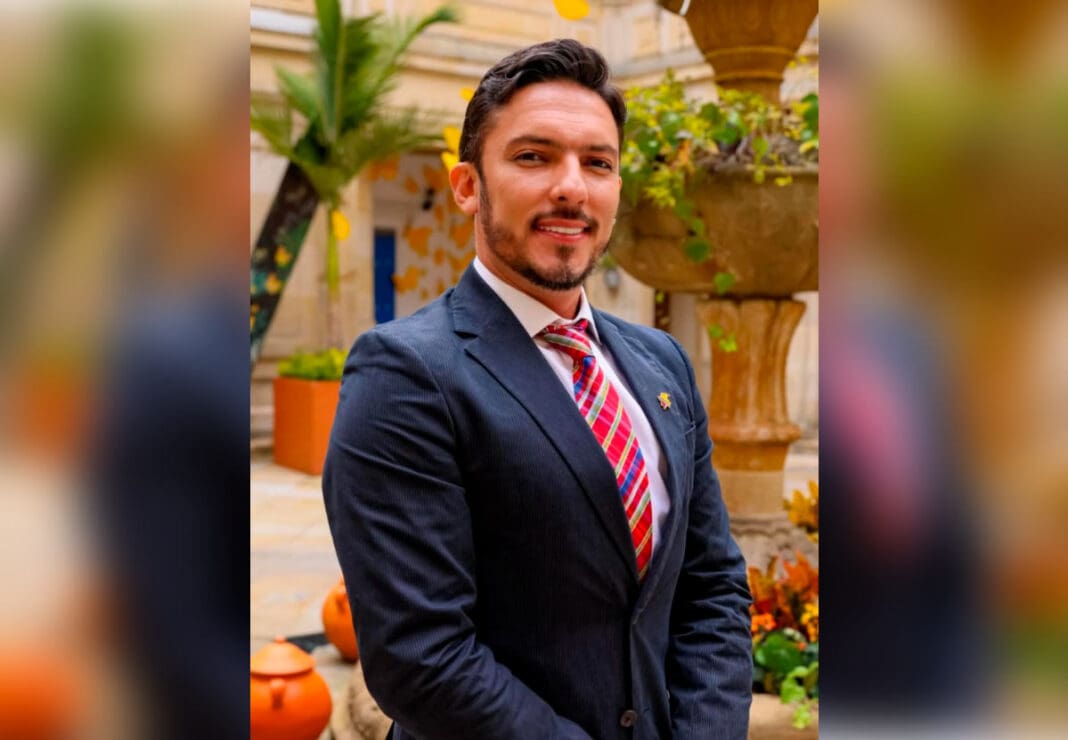
The new Minister of Equality in Colombia, Juan Carlos Florián, not only assumed a high-profile political position. It also opened, frankly and bluntly, a debate about identity, language and representation in the public sphere.
In an interview for the podcast A pelo, Florián explained why he wants to be mentioned in the feminine:
“I use the feminine name because I am a person and because I am a queer. I am not gay. I am a queer and that is why I speak in the feminine.”
During the conversation, she used expressions such as “we” or “lists” and defined herself as a “public servant.” A gesture that, for many, is not just a matter of grammar, but a political and personal statement.
HIV, visibility and the fight against stigma
Florián revealed that he has been living with HIV for two decades, and he did so without drama but firmly: “People who live with HIV are not less suitable or less capable of being able to assume a position.”
He also talked about other experiences with sexually transmitted infections, mentioning that he does it as part of a prevention strategy. The frankness of her words—even when recounting protected and unprotected sexual experiences—breaks taboos that still persist in public conversation.
Here an inevitable question arises: are we prepared as a society to listen to this type of testimonies without prejudice or morbidity?
A political path with Petro
His relationship with President Gustavo Petro is not recent. It dates back to their activism in the Alternative Democratic Pole 20 years ago, when they coincided in an LGTBIQ+ space within the party. In 2012, Petro—then mayor of Bogotá—appointed her as the first deputy director of the Directorate for LGBTI Affairs of the Secretariat of Social Integration.
Since then, the relationship has been consolidated in mutual trust. Florián describes Petro as “a standard bearer of human diversities in the world” and considers her appointment as minister (that’s what he wants to say) a historic achievement for the LGTBIQ+ community.
Responsibility and clear limits
Enthusiasm, however, is accompanied by realism: “It is enormous. It is a very big responsibility, it is aspirational. We have to see it as we can, it is a matter of political will.”
He also warned that he does not intend to turn the Ministry of Equality into an institution focused exclusively on LGTBIQ+ issues: “We are not going to ‘electebetize’ the ministry, either.”
More than a position, a symbol
The arrival of Florián to this ministry is not just a political movement. It is a reminder that representation matters, but also that politics is an area where dreams, challenges and enormous responsibilities coexist.
It remains to be seen if his direct style and his feminine way of naming himself will open a new chapter in the way Colombia speaks—and thinks—about identity and diversity.