

The abstention of the PP unblocks the parliamentary processing of a norm long awaited by the group, with special attention to rural areas
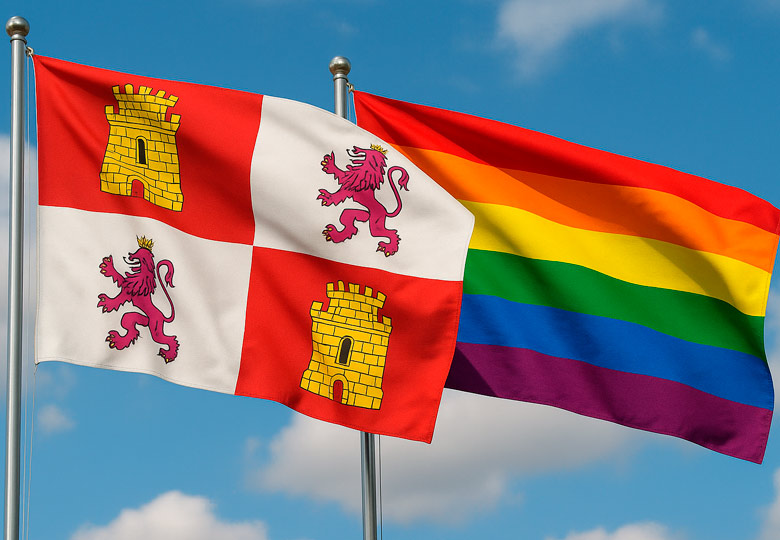
The Cortes of Castilla y León have taken this Wednesday a first step towards providing themselves with an autonomous LGTBIQ+ law. They have done so after years of postponements, with the Bill presented by the Socialist Group, and thanks to a key abstention from the Popular Party. Although Vox and two former attorneys expelled from the same party voted against, the text passed the consideration process.
The content of the proposal is not minor: 76 articles that seek to adapt state legislation to the autonomous reality, with a clear focus on rural areas, where LGTBIQ+ people often face double discrimination. One of the key concepts introduced in the text is that of “sexile”, the forced exile of people from the collective who are forced to leave their homeland due to fear, rejection or lack of opportunities.
What does the future LGTBIQ+ law of Castilla y León propose?
- Comprehensive health care, especially on issues of intersexuality and gender transition, with specific protocols and training for health personnel.
- Educational programs that include emotional-sexual diversity, aimed at both students and their families.
- Job protection, ensuring that no one has to hide their identity or face discrimination in the workplace.
- Cultural and media measures that promote visibility and respect.
- Sanctions for those who violate the rights included, with a regime that takes into account the severity of the attack and the impact on the victim.
An autonomous community without law… until now
Castilla y León was, until this movement, the only autonomous community without its own legislation on LGTBIQ+ matters. Activist Marina Echevarría, present in the Cortes, celebrated the news with caution: “It is a necessary step, but we cannot allow it to remain stagnant.” He also warned about the risk that the process could be delayed by the political calendar or paralyzed by partisan interests.
The PP, neither yes nor no
The position of the Popular Party has been lukewarm. Although he did not block progress, his abstention was accompanied by criticism. According to its attorney Noemí Rojo, the law “does not expand rights” and could generate legal uncertainty. Even so, he assured that his group is not against the text and advocated for “rigorous legislation.”
Vox and the “indoctrination” narrative
As expected, Vox voted against. Attorney José Antonio Palomo described the initiative as an act of “institutional indoctrination” based on “gender ideology.” He assured that it is not about seeking equality, but about imposing privileges, and defended individual freedom “without labels.” This narrative, which attempts to separate the rights of the collective from the social realities that motivate them, ignores the structural discrimination that the law itself seeks to correct.
A democratic anomaly… in the process of being resolved?
From other groups such as Unidas Podemos, Por Ávila or Soria, the proposal has already been supported, pointing out the urgent need for this norm and denouncing that Castilla y León continues to lag behind in rights. Attorney Pablo Fernández spoke of a “democratic anomaly” and asked not to waste any more time.
But not all voices are satisfied. Yolanda Rodríguez, president of Fundación Triángulo in the community, recognizes that this advance “does not guarantee that the final text will be useful or that it will arrive with the necessary consensus.” He questions the lack of institutional leadership in its preparation and warns about the risk of approving a weak law, without teeth or budget.
A necessary law… or a symbolic gesture?
Although the standard promises significant progress, some critical voices wonder if it will really be effective. Is it a profound measure or just a political response to get by? The lack of full consensus, the legal doubts expressed by the PP and the outright refusal by Vox could leave it in limbo. Furthermore, can a law without adequate funding transform the reality of rural areas or classrooms? The answer is still up in the air, and it will be the practical development of this law that will determine its true impact.