
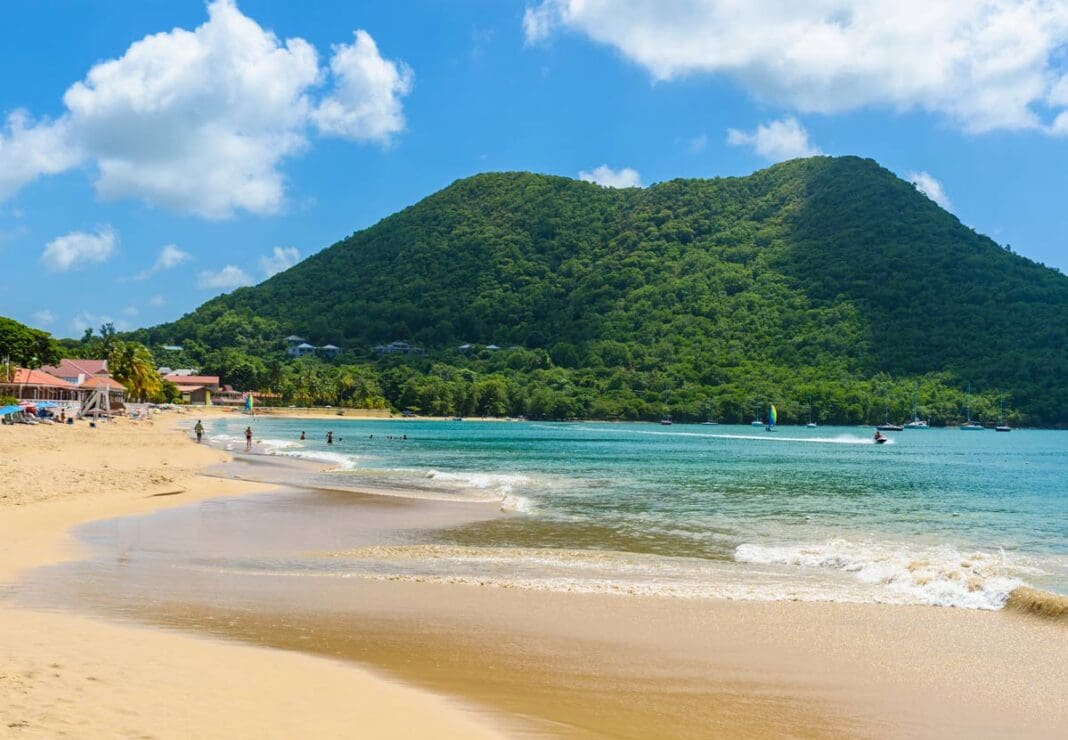
A ruling that many people have been waiting for for years has finally arrived: the Supreme Court of the Eastern Caribbean has declared unconstitutional the laws that criminalized consensual sexual relations between people of the same sex in Saint Lucia. This ruling represents a symbolic and legal victory for activists and organizations that have been fighting for some time against the colonial vestiges that still mark the legislation of several Caribbean countries today.
What exactly has been repealed?
The so-called “buggery” (sodomy) and “gross indecency” laws punished anal sex with up to 10 years in prison, although in practice they were rarely applied. However, its mere existence generated a climate of threat, discrimination and insecurity for the LGTBIQ+ community.
Now, the court has ruled that these regulations violate the constitutional principles of equality and human dignity. It is not just a legal issue: it is a symbolic recognition that no one should live under the weight of laws that criminalize their existence.
“We are not asking you to change your beliefs. We are only asking for justice,” the plaintiffs in the case jointly declared. “These laws were obsolete and violated basic human rights.”
A colonial heritage still in force
Those who oppose these changes often argue that these laws are part of Caribbean cultural identity. But, as lawyer Veronica Cenac, one of the key figures in the case, recalled, these norms did not emerge in the region, but were imposed by the British colonial powers.
“The irony is that those who oppose advances in LGTBIQ+ rights accuse them of being a ‘Western agenda’, when in reality the laws that criminalize diversity were imported from the West itself,” Cenac stated.
And now what?
Although the ruling marks a turning point, activists are clear: this does not end here. Kenita Placide, Executive Director of the Eastern Caribbean Alliance for Diversity and Equality (ECADE), summed it up this way:
“This is only half the battle. The other half is changing minds and hearts to be able to live together without fear.”
Placide warns that, despite legal progress, the reality on the streets remains tense. Social surveillance of men walking together, homophobic attacks and murders of LGTBIQ+ people do not disappear with a court ruling.
A movement that is gaining strength in the Caribbean
This achievement adds to the favorable rulings in Barbados, Antigua and Barbuda, Dominica and Saint Kitts and Nevis, where similar laws have also been repealed in recent years. Even so, five Caribbean countries continue to criminalize relationships between people of the same sex: Jamaica, Grenada, Guyana, Saint Vincent and the Grenadines and Trinidad and Tobago.
And although there is progress, not everything is optimism. This year in Trinidad and Tobago, the Supreme Court reversed an earlier ruling striking down its own sodomy law, which has sparked concern in the region. A legal clause known as the “savings clause”—created to protect colonial laws—could be the main obstacle to definitive change.
What does this mean for the future?
There is no single answer. On the one hand, the LGTBIQ+ movement in the Caribbean continues to gain visibility, strength and legitimacy. Participation in Pride events, such as the one held in July in Trinidad and Tobago, demonstrates a community that is unwilling to take a step back.

On the other hand, it remains to be seen whether the judicial systems of the remaining countries will dare to follow this path. Could a ruling in Saint Lucia have a domino effect on the rest of the Caribbean? Are governments ready to definitively abandon the shadows of legal colonialism?
⚠️ A legal victory… but enough?
Although the ruling represents a crucial advance, not everyone is convinced that it is the definitive solution. There is a risk that these sentences are celebrated as “happy endings”, when in reality they can leave intact many forms of social discrimination, daily violence and exclusion. Furthermore, the support of international organizations generates criticism in sectors that see it as an external imposition, which could weaken the local legitimacy of the movement. How to guarantee that these changes reach the streets and do not remain only in the courts?
The path to equality in the Caribbean is full of obstacles, but also hope. Laws can change in a day; mentalities, not so much. But each failure, each activist, each march, brings us a little closer to a future where being LGTBIQ+ does not pose a risk, but simply another valid way of living and loving.