
A group of minors reported an assault during the Benialí festivities, in Alicante, after receiving insults for their sexual orientation. Neighbors, the City Council, and LGTBI organizations condemned the events and demand that the response not be limited to the complaint: we must also educate against hate.
The festivities of a town should be a place to meet, celebrate, and feel part of a community. In Benialí, a small locality in La Vall de Gallinera, in Alicante, the celebration ended leaving a scene that raises a difficult question again: what is happening when homophobia appears among adolescents and turns into insults, threats, and violence.
A group of minors reported having suffered an assault during the festivities held this weekend. According to testimonies collected by various media, three boys, also minors, allegedly shouted insults related to their sexual orientation at them, including “lesbians” and “faggots”, as well as shouts of “Long live Franco” and “Long live Vox.” The Civil Guard has taken statements from the young women, a witness, and later from the alleged aggressors, whose versions of what happened differ. The investigation is still open.
The seriousness of the episode is not only in what happened that night. It is also in what it reveals: that certain hate speech can end up being incorporated into the everyday language of adolescents and transferred from insult to violence.
A town responds
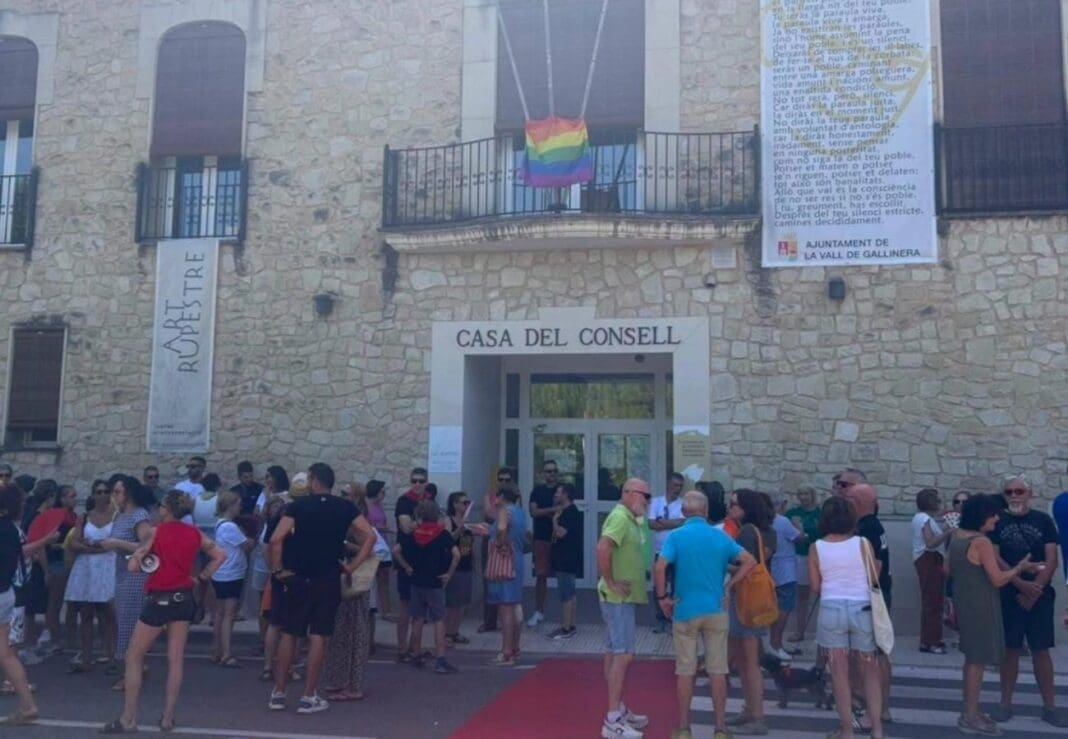
The reaction from part of the community was immediate. Neighbors from La Vall de Gallinera participated in a rally to reject the assault, while the City Council publicly expressed its “absolute rejection and condemnation” and conveyed its support and solidarity to those affected.
The council also reminded that festivities should be spaces for meeting and coexistence and reaffirmed its commitment to a Vall de Gallinera that is “diverse, inclusive, respectful, and free of LGTBIfobia.” The rally gathered about 200 people.
This is not a minor detail. In the face of an assault that particularly affects minors, the response of a community also matters. That neighbors take to the streets to say that homophobia does not represent the town is a way of setting a limit: here, not everything goes.
“It’s not a joke”
From Diversitat Alacant, the events were classified as LGTBIfobic violence. Its president, Juan David Santiago, warned about the emergence of new “hot spots” of homophobia and cautioned that we cannot allow hatred towards LGTBI people and certain fascist discourses to enter the everyday lives of adolescents as if they were something normal.
The organization went beyond asking for the events to be investigated and for responsibilities to be clarified. Santiago pointed out that behind behaviors like this there is also “a collective failure as a society” and called for work to prevent them from happening again.
The Minister of Equality, Ana Redondo, also expressed her solidarity with the young women and condemned the assault, linking it to the need to respond firmly to hate speech and defend human rights.
Educate before we have to regret
The response to LGTBIfobia cannot begin only when an assault occurs.
Education is one of the fundamental tools to dismantle prejudices before they turn into violence. It is not enough to teach that insulting is wrong. We must explain why it is wrong to discriminate against someone for being lesbian, gay, bisexual, or trans; why a couple of two girls is not a reason for mockery; why using a sexual orientation as an insult reproduces a form of violence; and why certain discourses that present LGTBI people as a threat end up generating fear and exclusion.
It also involves working with families, educational centers, institutions, and leisure spaces. Because education in diversity cannot be reduced to a date on the calendar nor depend exclusively on those who suffer discrimination.
What happened in Benialí is particularly striking because those identified as alleged aggressors are also minors. That does not mean minimizing the events. It means asking what tools we are giving to new generations to relate to those who are different from them.
Consciousness is also built in community
There is a second lesson in what happened: the importance of not normalizing.
A homophobic insult is not simply “a joke.” An assault motivated by sexual orientation is not just another fight. And looking the other way is not neutral either.
That a neighbor intervenes, that a community gathers, that a city council condemns the events, and that an LGTBI organization accompanies the victims are responses that help build another message: hate does not have to become the norm.
But for that response to be effective, it must be maintained beyond the headlines.
Awareness campaigns, affective-sexual education and diversity, training for professionals, prevention of LGTBIfobic violence, and the creation of safe spaces for adolescents are part of the same strategy: to ensure that the next generation does not have to learn to respect others after an assault.
Benialí thus leaves a contradictory image. On one hand, a night of partying marked by insults and a report of homophobic violence. On the other, a community that took to the streets to say that this does not represent it.
Social consciousness is also built this way: by pointing out hate, accompanying those who suffer it, and, above all, educating so that it does not happen again.