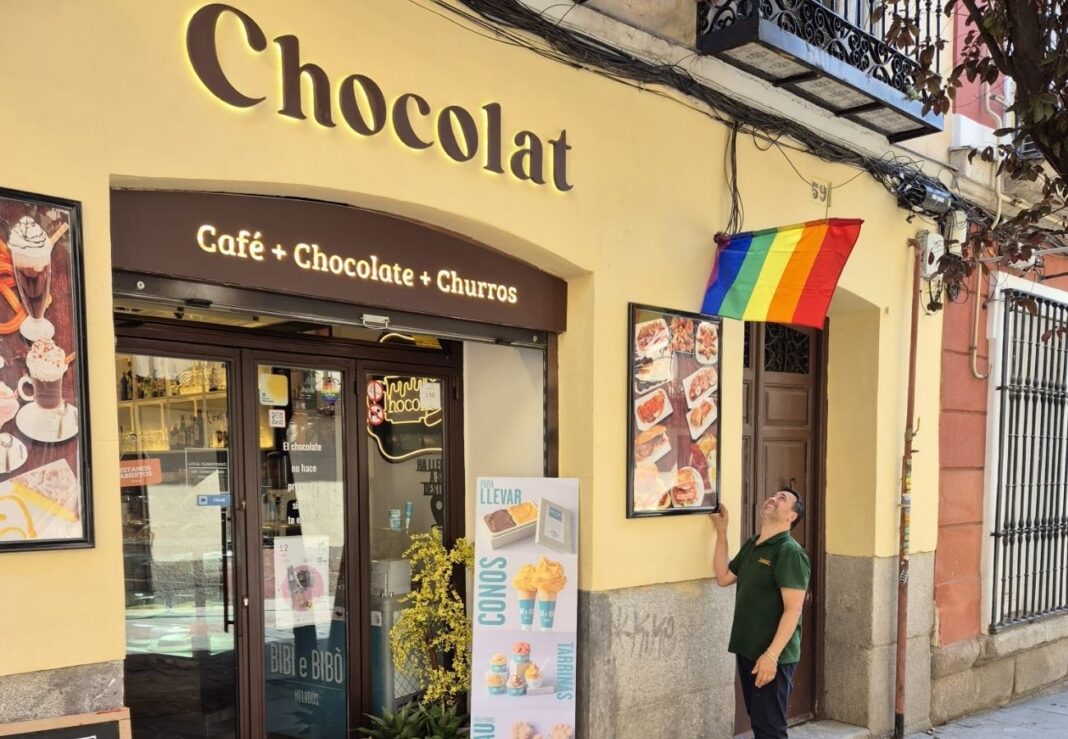


- According to the data from FELGTBI+ cited by Pablo Campos, more than half of LGTBI+ people have experienced some act of hate in the last year, and harassment on social media has almost doubled since 2024.
- The president of Rainbow eSafe warns that the digital and physical are no longer separate: many aggressions start with an insult on social media and end with someone who knows where the victim lives or works.
- Campos demands to take the digital evidence seriously, strengthen the training of prosecutors and police, and move towards a State Pact against hate speech.
LGTBI+ digital violence continues to grow, and the numbers confirm it: harassment on social media has almost doubled since 2024. We spoke with Pablo Campos, president of the Rainbow eSafe Association and computer expert, about how online hate has changed in recent years, why platforms and institutions continue to fail, and what someone suffering from digital harassment can do right now.
Campos founded Rainbow eSafe —which we have already discussed in Revista Rainbow when reviewing its inception and the launch of its Rainbow Digital Barometer— precisely because, as he explains, there was a need for a specialized space focused solely on the digital violence suffered by the community. This is the full conversation.
How do you see the landscape compared to when you started?
When I started, back in 2016, many people still thought that what happened on the internet “wasn’t real.” Being insulted on social media or having a photo spread was something you had to endure. Today that has changed in part: there is more awareness and more legal tools. But violence has also changed. It is faster, more organized, and reaches more people. Before we talked about a specific harasser. Now we also talk about campaigns, about groups that target a person and launch against them. That’s why we decided to create Rainbow eSafe: there was a need for a specialized space focused solely on the digital violence suffered by the community.
What part of the increase occurs in the digital environment?
The data from FELGTBI+ makes it quite clear: more than half of the community has experienced some act of hate in the last year, and four out of ten have suffered harassment on social media. Additionally, harassment has almost doubled since 2024. And be careful, because the digital and physical are no longer separate. Many times it starts with an insult on social media, continues with threats via messaging, and ends with someone who knows where you live or work. What we hear the most: ongoing harassment, threats, dissemination of intimate images without consent, outing (publicly revealing someone’s sexual orientation), and identity theft, especially on dating apps.
What weight do organized hate speeches have?
A lot, and that’s what worries me the most. Pointed harassment hurts, but organized hate creates a climate. When there are accounts with many followers that dehumanize the community, especially trans people, it gives permission to others to attack. There is something that repeats a lot: someone points to a person and, within hours, they receive hundreds of messages. That’s not a coincidence. Hate speech is the precursor to aggression, and we are seeing it in the data.
View this post on Instagram
Are the platforms doing enough? Where is the failure?
No, they are not. The main failure is that they react late and poorly. You report content and they respond that it “does not violate the rules,” or they remove it when the damage is already done. Automatic moderation does not understand the context or the language of hate disguised as “opinion.” Moreover, the platforms themselves benefit from the controversy: content that generates anger circulates more. In Europe, we already have the Digital Services Regulation, which requires large platforms to respond. Now we need to demand that it be truly enforced and not just remain on paper.
Is the institutional response up to par?
The Penal Code already includes harassment, the dissemination of intimate images without consent, hate speech, and aggravation for LGTBIfobic reasons. In other words, the law exists. The problem lies in applying it. Resources are lacking, specialized training is lacking, and the processes are slow. And when a victim goes to report and no one understands what is happening to them, or they are told “just close the account,” they do not return. That is why underreporting remains enormous. There are very committed professionals in the prosecutor’s office and police, but it cannot depend on luck with who assists you.
What do you do when someone comes asking for help?
The first thing is to listen and reassure. The person arrives scared and often feeling guilty, and the first thing they need to know is that they have done nothing wrong. Then, preserve the evidence: screenshots, links, dates, profiles. This is key, and many victims delete everything out of fear or shame. That’s where my experience as a computer expert comes in: we know how to collect that evidence so that it is useful in court. And from there, we accompany: how to protect their accounts, how to report on the platform, and if they want, how to take the step of formally reporting.
View this post on Instagram
What is really missing?
I’m going to say something that isn’t said much: we need to take digital evidence seriously. You can have the best law in the world, but if the evidence is not collected properly, the case falls apart. And most victims do not know how to do it, and many professionals do not either. Then, of course, resources are lacking and there is a lack of political will for a State Pact against hate speech. But there is also something more uncomfortable: society needs to stop seeing harassment on social media as something minor. It is not “just internet stuff.” It is violence, and it destroys lives.
What would you say to someone who is suffering harassment right now?
That they are not alone. That what is happening to them is violence and it has a name. That they should not delete anything: take screenshots, save links, and note dates. That they should not respond to the harasser. And that they should ask for help, from us at Rainbow eSafe, from a trusted LGTBIQ+ entity, or from someone close. And if they feel in danger, to call 112 without hesitation. Asking for help is not exaggerating.


What is the priority for the coming months?
To reach more people. We want every person in the community to know that there is a specialized place to turn to. For that, we are working on several lines: training for professionals, our digital self-defense manuals, the network of Safe Spaces in Barcelona, and the Rainbow Barometer. The latter is especially important because it measures two things at once: how much digital violence the community suffers and how much they know their rights and the tools to defend themselves. That second part is hardly being measured, and it is key to know where to act.
Anything you want to add?
Yes, one thing. When we talk about digital violence, we often think of social media, but we cannot forget who suffers it the most: trans people, young people, those living in small towns, and those with fewer resources. It is harder for all of them to ask for help. Our work needs to reach right there. And to anyone reading this, I would ask something simple: if you see someone being attacked on social media, don’t stay silent. A message of support can change that person’s day.
Pablo Campos closes the conversation with the same message with which he opened it: digital violence is not “just internet stuff,” it is violence in every sense, and the response —legal, institutional, and social— is still not up to par. While that changes, Rainbow eSafe insists on a very concrete idea: preserve the evidence, ask for help, and do not remain silent in the face of hate, neither as a victim nor as a witness. Those who want to take the first step can find the free digital self-defense courses offered by the association at SafeNet LGTBI+.