


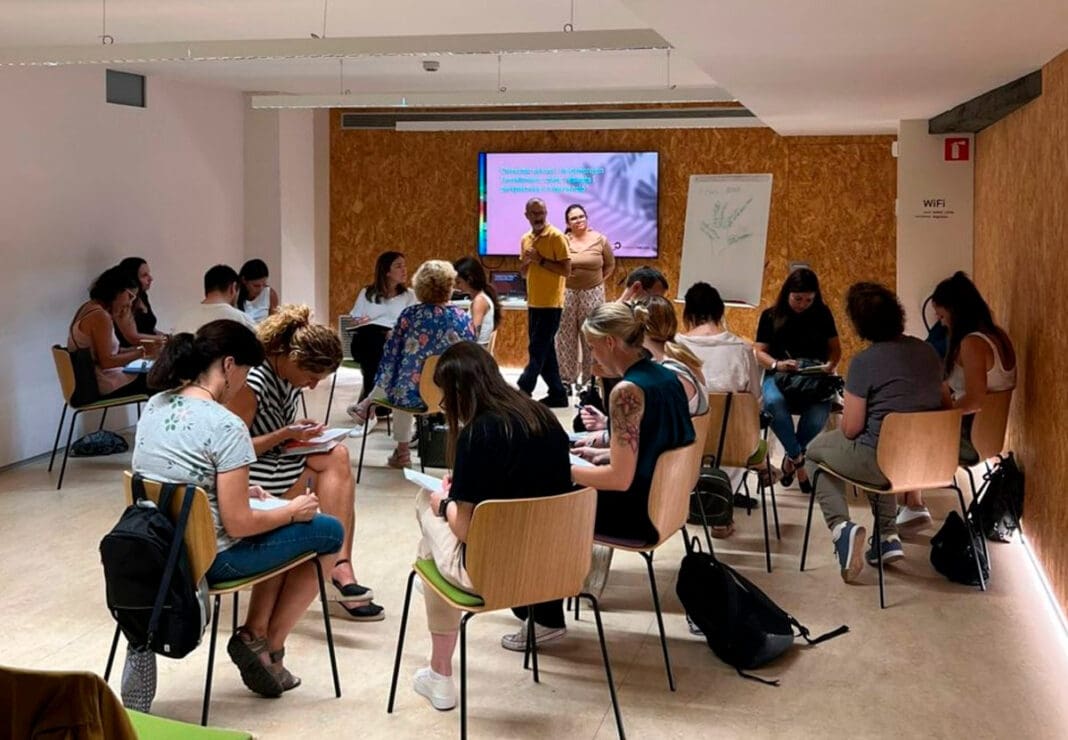
In a significant step towards a more inclusive society, the Enllaç Foundation, with the support of the Barcelona City Council, has launched a pioneering training cycle. This program is designed to train the staff of residences and municipal day centers in aging with an LGTBIQ+ perspective, guaranteeing dignified and respectful care for all seniors.
The initiative, which will take place between September 18 and November 13, seeks to transform these spaces into safe environments free of discrimination. It is a reminder that diversity has no expiration date and that each person deserves to be recognized and valued at all stages of their life.
Why is this Training from an LGTBIQ+ perspective Crucial?
“We work to bring the LGTBIQ+ perspective to any space and service intended for older people,” says Josep Maria Mesquida, president of the Enllaç Foundation. His words resonate with the prevailing need to address a reality that is often invisible: that of LGTBIQ+ seniors who, after years of fighting for their rights, deserve full aging without fear.

This training is not only a matter of empathy, but of social justice. It seeks to eradicate LGTBI-phobia in care services, creating environments where LGTBIQ+ seniors can feel truly at home, without the need to hide their identity or their history.
The “Link 2025 Notebook”: A Tool for Change
One of the pillars of this training cycle is the “Link Notebook 2025”. This teaching guide is much more than a manual; It is a compendium of good practices and deep reflections to integrate emotional-sexual, gender and family diversity in the aging process.
The notebook addresses crucial topics such as intersectionality, rights, participation and accompaniment, offering practical tools and real examples. It is an invitation to reflect, to question prejudices and to build a future where age and LGTBIQ+ identity are not barriers, but part of a rich human tapestry.
Looking to the Future: A Comprehensive Plan
The advances in recent years are undeniable, from the development of materials to greater visibility of the needs of LGTBIQ+ seniors. However, the definitive boost, as Mesquida points out, could come from the Plan for LGTBIQ+ Seniors announced by the Government. This plan must define clear public policies that recognize and protect this group.
Are we really prepared as a society to guarantee that all LGTBIQ+ seniors live their final years with the dignity and respect they deserve? The answer lies in continued commitment to education, awareness and the implementation of policies that reflect true inclusion.