

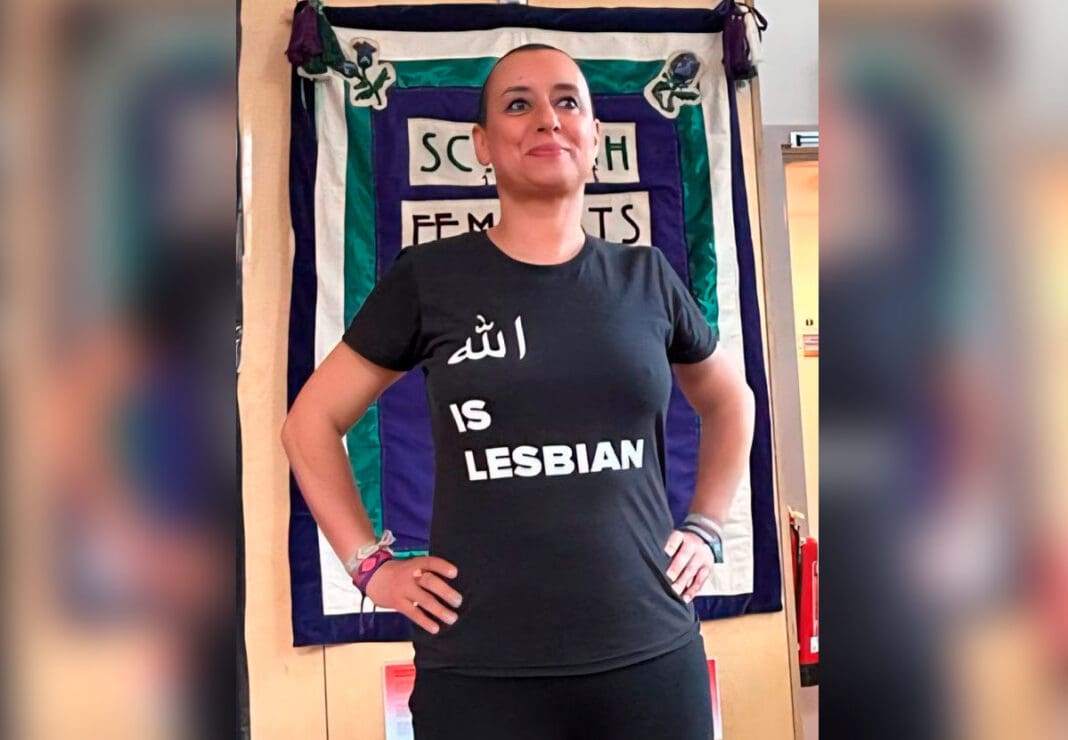
In Morocco, freedom of expression remains a minefield for those who challenge religious and social norms. Activist Ibtissam Lachgar knows this well. A few days ago, she was arrested in Rabat after sharing on her social networks a photograph in which she appeared wearing a t-shirt that said: “Allah is lesbian”.
The judicial authorities did not take long to act. They alleged “urgency” to order his arrest and open an investigation for alleged religious offense. A step that revives the debate about the limits of freedom of expression in a country where criticism of religion, the monarchy or territorial integrity can cost you jail time.
A country with strict laws against religious criticism
In Morocco, the 2002 press law prohibits expressions critical of Islam, the monarchy or territorial integrity, with penalties that include prison. The Penal Code also provides between three and six months in prison and fines for those who “insult” the Muslim faith.
Is this value protection or disguised censorship? The answer is not simple. It depends on who you ask… and what side of history you stand on.
Wave of reactions and threats on networks
Lachgar’s post lit up the networks. Conservative sectors were furious: “Her freedom is an insult to all Moroccans… this woman’s place is behind bars,” wrote one user. Others, however, defended their right to express themselves, denouncing the use of repressive laws to silence dissident voices.
This is not the first time Lachgar has received threats. He has denounced messages with explicit violence: proposals for rape, lynching, stoning and even attempted lawsuits for “outraging the sacred.”
A trajectory marked by resistance
Far from giving up, Ibtissam Lachgar has been defending individual and collective rights for more than a decade. She co-founded the Alternative Movement for Individual Liberties (MALI), organized a kiss-in in front of the Rabat Parliament in 2013 to protest the repression of public affection, and in 2012 she supported the arrival of the Women on Waves boat, which advocated for the right to abortion.
In such a hostile environment, his determination generates both admiration and rejection. How far can a person go to defend their ideals in a country that punishes dissent?
The truth is that, as the case progresses, the image of Lachgar with that shirt is already a symbol for some and a provocation for others. What no one can deny is that it has once again put an uncomfortable question on the table: who decides what can be said… and what cannot?