
- The twentieth edition of Fierté Montréal culminated on August 9 with its grand parade through downtown.
- The slogan “Let’s shine together” united celebration, memory, and advocacy for 2SLGBTQIA+ rights.
- A minute of silence remembered the victims of transphobia, lesbophobia, homophobia, biphobia, and AIDS.
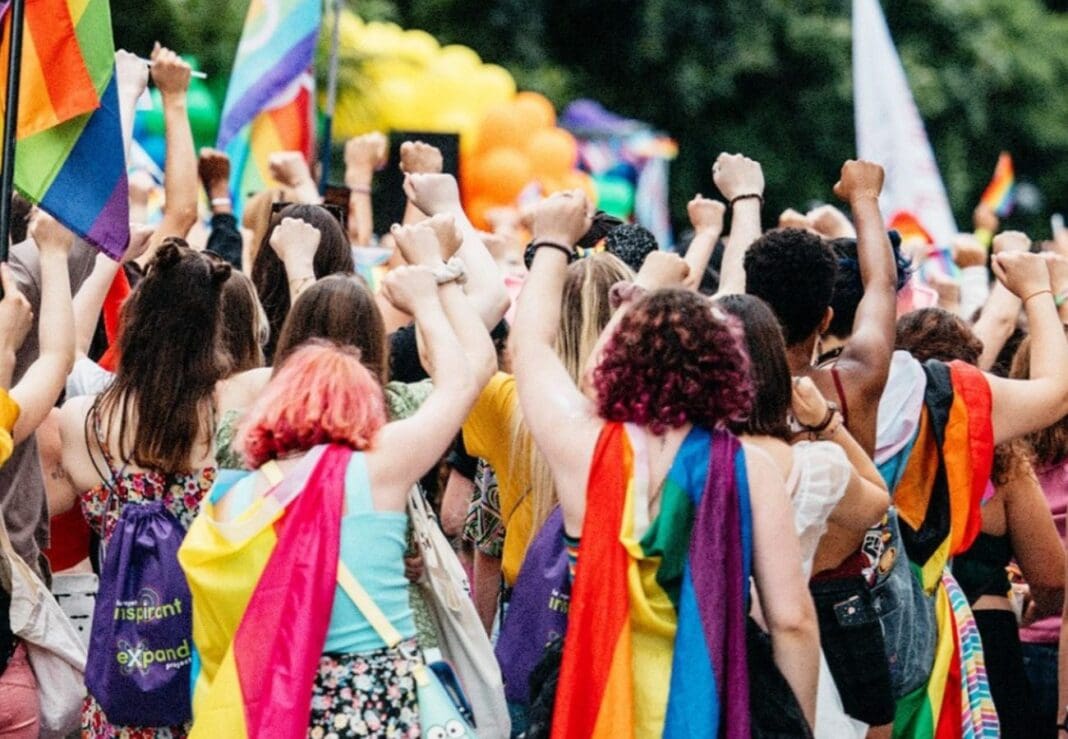
The Montreal Pride closed its twentieth edition on Sunday, August 9, with a free parade along René-Lévesque Boulevard. Thousands of participants marched through the center of the Canadian city under the slogan “Let’s shine together,” on a day that combined visibility, community celebration, remembrance of victims, and advocacy for 2SLGBTQIA+ rights.
A parade that connects the city’s memory
The march began at 1:00 PM and proceeded along René-Lévesque to Atateken Street, in the heart of the Village. The route symbolically linked the old queer district in the west with the neighborhood that today concentrates much of Montreal’s LGTBIQ+ life. The organization announced an approximate duration of three hours and free access.
The theme for 2026, “Let’s shine together”, was presented as an affirmation of collective strength. Fierté Montréal directly linked it to a context in which some voices continue to be silenced: showing oneself unapologetically, occupying public space, and defending one’s identity thus become acts of resistance.
The march brought together community organizations, associations, unions, sports and sociocultural collectives, businesses, and political formations. The open participation reinforced the idea of a mobilization that does not belong solely to the registered entities but to the entire communities and those who support their rights.
The twentieth edition of the festival took place from July 31 to August 9. The programming extended activities throughout the Village and the esplanade of the Olympic Park, with shows, community meetings, and artistic proposals. The organization placed special emphasis on local talent and the plurality of 2SLGBTQIA+ communities.
View this post on Instagram
Celebrate without erasing absences
The most solemn moment arrived at 2:00 PM. For one minute, the music and noise stopped to remember those who died prematurely due to transphobia, lesbophobia, homophobia, biphobia, and AIDS. The call also included Indigenous 2SLGBTQIA+ people who are missing or murdered.
That silence introduced into the center of the celebration a memory that prevents presenting Pride as merely a playful event. The parade celebrated progress and diversity, but also made visible the losses and pending demands. The official call itself invited people to walk both to recognize progress and to highlight current claims.
After the march, the celebration continued in the Village with the Zénith day and at the esplanade of the Olympic Park with the Mega T-Dance. The closing maintained the cultural character of a festival that presented drag, queer pop, opera, comedy, cabaret, reinterpreted folklore, burlesque, and Latin music over ten days.
Fierté Montréal defines its mission beyond producing a major annual event. The entity states that it seeks to amplify the voices of 2SLGBTQIA+ communities, improve their representation, and ensure that their rights are recognized in society. This orientation explains the coexistence of large shows with community spaces, commemorative acts, and political messages.
Twenty editions with the Village at the center
The return of much of the programming to the Village was one of the keys to the anniversary. Higino Monteiro, interim executive director of the festival, explained in the presentation that the edition was guided by listening, transparency, and humility, with the communities placed at the center of each initiative.
The celebration of twenty years also allowed for measuring the dimension acquired by the event. Tourisme Montréal presents it as the largest LGTBIQ+ gathering in the Francophone world and attributes to the festival a global attendance that can exceed 750,000 people during its days. For the parade, the tourism entity cites more than 15,000 participants and an audience exceeding 300,000 people in regular editions.
These figures describe the urban and tourist impact, but do not replace the political meaning of the event. The route, the minute of silence, and the slogan for 2026 constructed a clear narrative: collective visibility remains necessary even in a city known internationally for its openness.
The festival also sought to ensure that diversity was present on the stages. The anniversary programming included local artists, major drag nights, queer cabaret, proposals from racialized communities, and a Latin celebration after the parade. Plurality did not appear as an appendix, but as the main content of the gathering.
What Montreal Pride 2026 leaves behind
The closing confirmed that a large-format Pride can simultaneously sustain celebration, cultural industry, memory, and advocacy. The image of thousands of people marching along René-Lévesque was accompanied by an explicit reminder of those who are no longer here and of the voices that still face obstacles to being heard.
The twentieth edition also leaves a useful reference for other large events: the scale does not have to dilute community roots. By returning activity to the Village, programming local talent, and framing the parade as a political expression, Fierté Montréal linked its growth with the neighborhood and the organizations that shaped the celebration.
The slogan “Let’s shine together” summarizes that proposal. It does not propose isolated individual visibility, but a shared light that gains strength when it incorporates differences, memory, and solidarity. In 2026, Montreal Pride celebrated two decades looking back without getting stuck in commemoration.