
- The National Museum of Colombia removes at least 30 pieces about LGTBI diversity, feminism, the Patriotic Union, and the Peace Agreement, including a Pride flag.
- President Abelardo de la Espriella speaks of an “open, determined, and patriotic struggle against wokism”.
- The protests on October 17 and 18 in front of the museum ended with pressurized water, stun grenades, and tear gas.
The National Museum of Colombia, in Bogotá, removed on October 15, 2026 at least 30 posters, photographs, and objects from three of its rooms, many of them about LGTBI history and feminist movements. The measure, amid the “cultural battle” of the Government of Abelardo de la Espriella, has sparked two days of protests.
What works have been removed from the National Museum?
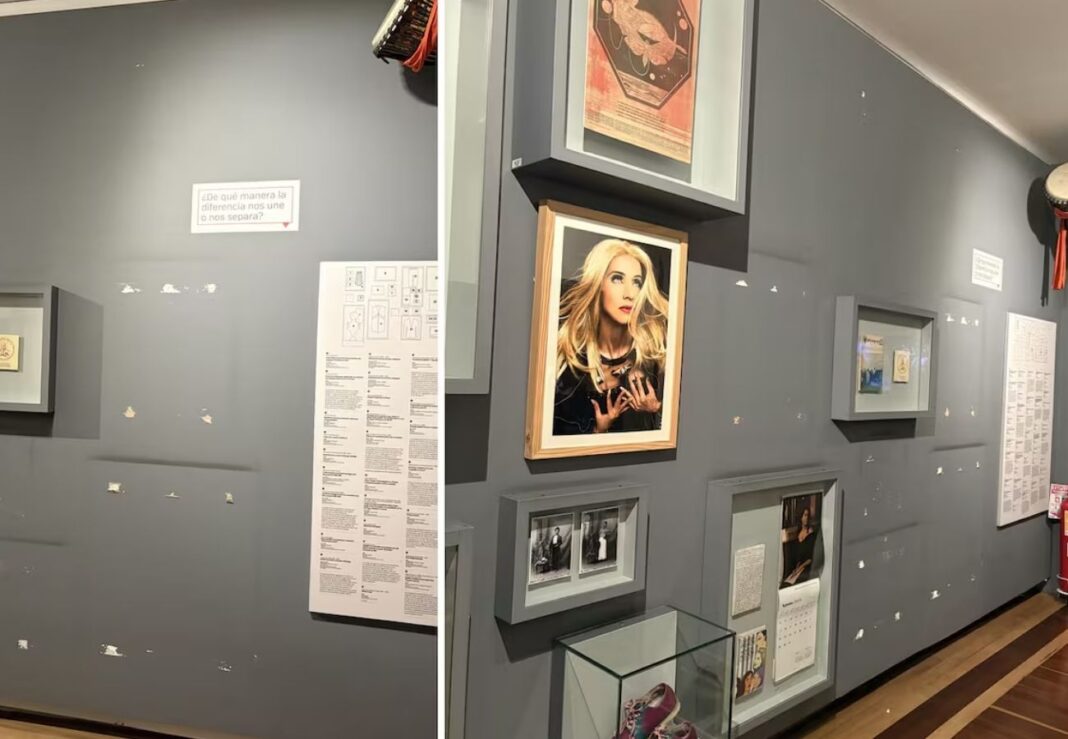
Among the removed pieces are a Pride flag, a lesbian poster from the LGBT march of 2006, and the historical magazine The Gay Window. According to El Tiempo, the most affected room is “Making Society”, from which at least ten objects about LGTBI and feminist history were removed.
The list includes the Pride flag that belonged to Elizabeth Castillo, a photograph of Humberto Rincón Perfetti about the march “For an Inclusive Colombia”, and issue number 2 of The Gay Window, by Manuel Antonio Velandia and León Zuleta.
The wall “From the 1991 Constitution to the 2016 Peace Process” has also been dismantled, almost all the photographs from the diversity wall in the room “Memory and Nation”, posters of Bernardo Jaramillo Ossa (UP) and Carlos Pizarro (M-19), and the pen made from a bullet with which the Peace Agreement was signed.
What does the Government of De la Espriella say?
The Government defends the change as part of its offensive against “wokism” which, it claims, was promoted by the administration of Gustavo Petro. On October 15, De la Espriella described the Ministry of Culture as the epicenter of a “cultural counter-revolution” and announced it will be renamed Ministry of Culture and Heritage.
According to EFE, the president instructed Minister Paola Holguín to eliminate representations that he considers “apology for terrorism”. Holguín states that the museum “does not serve as an instrument of political indoctrination” and that its museology “is being evaluated and redesigned”.
How have the protests been?
The protests in front of the museum ended in two consecutive days with police intervention. On Saturday the 17th, nearly a hundred people gathered and a group of young people pasted reproductions of the removed pieces on the exterior work LATEREM.
On Sunday the 18th, the National Anti-Riot Unit (Unadi) dispersed another gathering with a water cannon, and later with water jets, stun grenades, and tear gas. The Ombudsman, Iris Marín, described the operation on Saturday as “disproportionate”.
The LGTBI collective responds
Organizations such as Colombia Diversa and Caribe Afirmativo, along with former Culture ministers and former senator María José Pizarro, have rejected the measure. For activists, removing these pieces is erasing LGTBI memory from the official narrative of the country.
Frequently asked questions
How many works have been removed from the National Museum of Colombia?
At least 30 pieces, including posters, photographs, and objects, from three museum rooms.
Who is behind the decision?
EFE attributes the order to President Abelardo de la Espriella, who asked Minister Paola Holguín to eliminate what he considers “apology for terrorism”.
What LGTBI pieces have been removed?
Among others, a Pride flag, a lesbian poster from the LGBT march of 2006, and a copy of the magazine The Gay Window.

Who has criticized the measure?
Colombia Diversa, Caribe Afirmativo, former Culture ministers, former senator María José Pizarro, and the Ombudsman’s Office, which criticized the police operation.