


We know what can happen. We have known for years, with data, with campaigns, with testimonies. And yet, chemsex continues to grow. Only in Madrid, between 2017 and 2022, the number of people treated for problems associated with this practice multiplied by ten. That is not an isolated fact: it is proof that “informing about the risk” is not working as a strategy, at least not on its own. And I believe that as a community we need to ask ourselves why, instead of repeating the same warning once again.
What we already know about the risks
There is no need to insist much on the figures: in Madrid and Barcelona, between 9% and 11% of men who have sex with men practice chemsex, according to the Homosalud study by Stop Sida. A 2024 study published in Frontiers in Public Health found that nearly 18% of respondents in Spain had been diagnosed with a sexually transmitted infection in the previous six months. This is compounded by the risks of overdose, dependence, and, in the most severe cases, psychosis or suicidal ideation associated with the intensive use of substances like GHB or methamphetamine.
No one who regularly practices chemsex is unaware of these risks. They are talked about, published, and appear in public health campaigns for over a decade. So the question that really matters is not “Are the dangers known?” —the answer is yes— but “Why do we still continue anyway?”
Why it persists, even though the dangers are known
Here is where I believe the conversation often falls short. Reducing chemsex to a matter of lack of information is convenient, but it explains nothing. What research and those of us who work with this community have been observing points to something else: chemsex persists not because of ignorance, but because it serves a function.
For many gay and bisexual men, decades of stigma about their own sexuality leave a real mark on self-esteem. A context where desire is satisfied alongside substance use can function, without anyone verbalizing it that way, as a way to deactivate that internalized rejection. This is compounded by isolation: not everyone has a close environment to share their sexuality without fear, and the sessions —what is popularly known in Spain as “chills”— offer a way, albeit fragile, to feel part of something. The National AIDS Plan itself includes this jargon: chill, session, high, party, vice, are the words that the community itself uses to name it. And there is the simplest function of all: evasion. For those who carry stress, anxiety, or a history of rejection, chemsex can operate as an emergency exit from the real world, even at a very high cost.
No campaign that simply repeats “this is dangerous” will compete with that. If we really want to reduce harm, prevention must stop only talking to the head —”this can kill you”— and start talking to the reason why someone keeps coming back, chill after chill, despite knowing it.
The piece I often see and that almost no one mentions: the digital
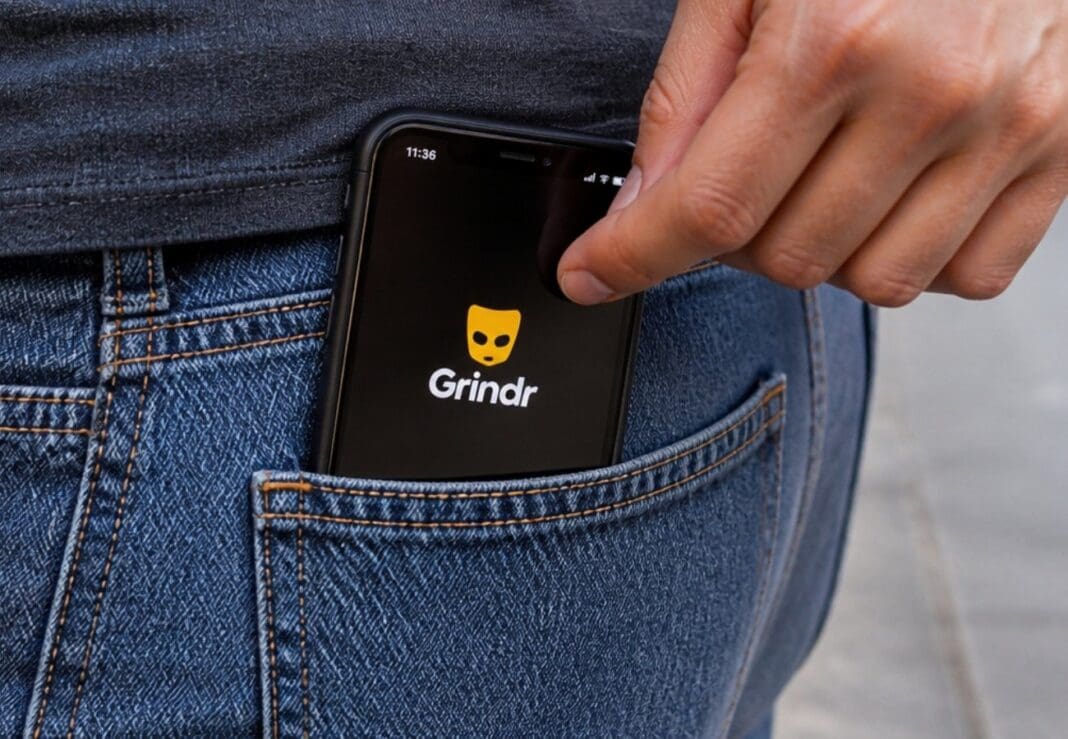
From my work in digital violence, there is a factor that I see repeating and that rarely enters this conversation: dating and geolocation apps not only facilitate access to chemsex, but have become part of its infrastructure. It’s not just that they make it easier to find a sexual partner to have a chill with that same night —that has already radically changed the way access to the practice is obtained—; it’s that in those same apps, the sale of substances has frequently been documented, with profiles using coded language (plant emojis, batteries, snowflakes) to announce what they have available without saying it openly. Geolocation, which originally serves to find a partner near you, works just as well to find who sells near you, or who has a chill open right now fifteen minutes away.
That same ease of access —sex, substances, and strangers, all just a couple of taps away— is also what multiplies digital vulnerability: contact with people you don’t know at all, substances that affect judgment, recordings that circulate naturally among those who barely know each other. When someone loses control of what was recorded or with whom, they are exposed to blackmail or sextortion —behaviors that the Penal Code punishes as extortion or non-consensual dissemination of intimate images, even though the law still does not use that word—. I bring this up not to divert the focus from the underlying debate, but because it is the part that is least mentioned, and that often hits just when the person is most unprotected: in the middle of a chill, or the next day, without fully remembering what happened.
The counterargument that must be acknowledged
I know there are those who argue that we are already doing enough: there are harm reduction campaigns, care services in Madrid and Barcelona, accessible information on specialized websites. And it is true, those resources exist and save situations. But a resource that only informs about danger, without addressing why the person keeps returning to that practice —nor the digital infrastructure that supports it— arrives too late. Harm reduction works when it understands the function that consumption serves, not just when it lists its consequences.
What is really needed
We need prevention that does not treat those who practice chemsex as someone who “hasn’t realized”, but as someone who probably has realized, and who continues there for reasons that deserve to be heard before being judged. This means training health and community professionals to ask “What is this giving you?” before asking “Do you know how dangerous it is?”. And it also means finally incorporating the digital part into that conversation —apps, chills, undercover substance sales, risk of blackmail— so that no one discovers too late that the risk did not end with the substance.