

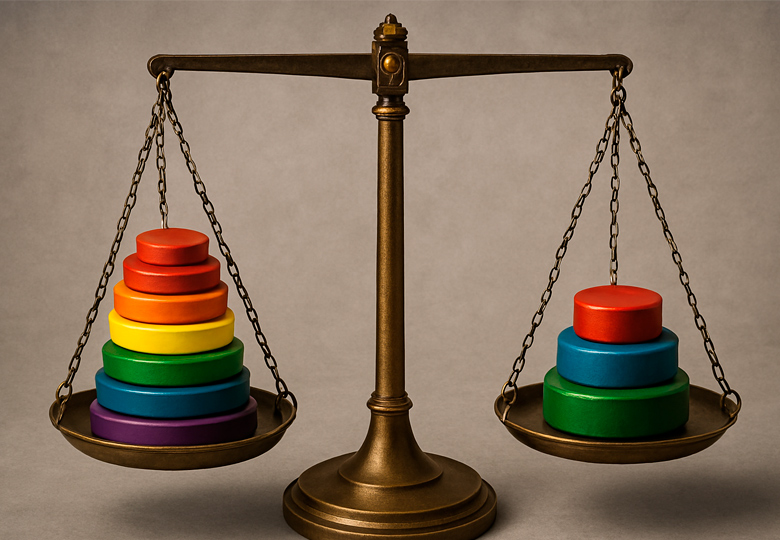

The panorama of LGTBIQ+ rights in the world is, to say the least, fascinating, but also disturbing. In recent years we have witnessed significant progress in many countries, while in other places the rights of LGTBIQ+ people are under threat. Throughout this article, we will explore how the situation currently stands, what factors play a role in this dynamism and why, even in moments of progress, everything is not always said.
Advances: Achievements to Celebrate
Legal Recognition and Equal Marriage
One of the most celebrated advances in recent times is the legal recognition of the rights of LGTBIQ+ people in countries that had traditionally relegated them. The legalization of same-sex marriage is a clear example of this progress. Countries such as Spain, the United States, Canada and several in Europe and Latin America have taken firm steps towards equality, ensuring that all citizens can marry whoever they choose, regardless of their gender or gender identity.
Over the years, social acceptance has also increased significantly. More and more LGTBIQ+ people can live their identity without having to hide, whether in their jobs, families or communities. This is not only a change in the law, but also a change in the mentality of a large part of society.
Protection against Discrimination
In many countries, anti-discrimination laws have been strengthened, expanding their coverage to sexual orientation and gender identity. This has allowed LGTBIQ+ people to have greater protection against discriminatory acts in areas such as employment, education and housing. This is a crucial advance, since discrimination, although illegal in many places, remains one of the main barriers to the full inclusion of LGTBIQ+ people in society.
Visibility and Representation in the Media
Advances are not only seen in laws, they are also reflected in popular culture. In recent years, we have seen a notable increase in LGTBIQ+ characters in series, movies and media in general. Figures like Elliot Page, who took the step towards his public transition, or series like Pose, which explore the history of the transgender community, are changing the cultural landscape and helping to normalize sexual diversity. This contributes enormously to the visibility and acceptance of LGTBIQ+ people in daily life.
Setbacks: A Not So Straight Path
However, not everything is positive. Despite the achievements made, the path to total equality is still riddled with obstacles. Some countries have backed down, and in many places in the world the rights of LGTBIQ+ people remain limited or even non-existent.
Retrogressive Reforms
For example, in some European nations, such as Poland and Hungary, governments have passed laws limiting freedom of expression and the protection of LGTBIQ+ rights, often under the pretext of “protecting the traditional family.” In Poland, for example, “LGTBIQ+ free zones” have been created, which represents a serious setback in the fight for equality. In Hungary, recent laws have restricted education on LGTBIQ+ issues in schools, mainly affecting young people who most need support to understand and embrace their identity.

Violence and Hate Crimes
Violence against LGTBIQ+ people continues to be a very real problem. Although the law may offer protections, physical and psychological violence persists, and hate crimes often go unpunished. In some countries where homosexuality is illegal, LGTBIQ+ people are at constant risk of being arrested, tortured or even executed. This is especially serious in countries in the Middle East and Africa, where the persecution of LGTBIQ+ people is not only social, but also a matter of survival.
The Rise of Populism and Cultural Resistance
In recent years, the rise of right-wing populist governments has brought with it cultural and political resistance towards LGTBIQ+ rights. In many cases, these administrations use fear of the “other” as a tool to mobilize their bases, and LGTBIQ+ people are often an easy target for this type of discourse. This creates an environment of insecurity for LGTBIQ+ communities and endangers the achievements achieved.
Reflection: Are we really moving forward?
Despite the obvious advances and setbacks, there is something that remains a topic of constant debate: are we really moving towards full equality? The simple fact that there continue to be setbacks, such as anti-LGTBIQ+ laws in some countries, shows that we cannot take anything for granted. Laws can change, but social attitudes are more difficult to change.
In addition, it is important to question whether all advances are truly a reflection of a tangible improvement in the lives of LGTBIQ+ people, or if they are simply symbolic achievements that do not directly impact the lives of those who need them most. Although the legalization of same-sex marriage is a very important achievement, there are still many invisible barriers, such as discrimination in the workplace or lack of access to adequate health services for transgender people.
Future Perspectives: Where Are We Going?
It seems that the future is full of challenges, but also opportunities. In many countries, new generations seem to be much more open and willing to support LGTBIQ+ rights, which could lead to faster change. However, progress will always be fragile if it is not constantly vigilant.
On the other hand, local struggles must also be part of the global discourse. While certain countries have made progress, others continue to struggle with large-scale discrimination and violence. Global solidarity is more necessary than ever to ensure that the rights of LGTBIQ+ people are respected in all corners of the world.
The path to equality and justice for LGTBIQ+ people is full of ups and downs. The progress is worthy of celebration, but the setbacks remind us that the fight is far from over. Only through visibility, education and constant resistance can a truly inclusive future be guaranteed for all LGTBIQ+ people.