



What happens when your sexual orientation does not fit with the doctrine that surrounds you? It is not a movie or a theatrical monologue. It is the real life of many LGTBIQ+ young people who study—and survive—in religious centers where silence usually sounds louder than any mass.
The double life we did not ask to live
Going to school is complicated enough on its own. Hormones, friendships, doubts, exams, insecurities. But if you are also an LGTBIQ+ person and you study in a Catholic school (or evangelical, or Muslim, or any other religious denomination), things multiply. How is an identity constructed when the environment denies it?
Many adolescents are forced to live a double life: at home or with their trusted friends they can be themselves (with more or less freedom), but when they cross the door of the educational center they must hide, disguise or repress fundamental parts of who they are.
“I respect you, but…”: the speech that doesn’t help
Whoever has experienced this has heard it a thousand times: “we respect you, but we do not agree with your actions”. What exactly does that mean? Is it respect if it is accompanied by a “but” that reduces you? On many occasions, traditional religious discourses separate the person from their “actions” as if sexual orientation were a decision that can be corrected, controlled or cured.
And that has consequences. Not only emotional, but also academic and social. Whoever lives under that constant message of rejection—even disguised as brotherly love—can develop anxiety, depression, fear of rejection, and even self-hatred.
What do the students say?
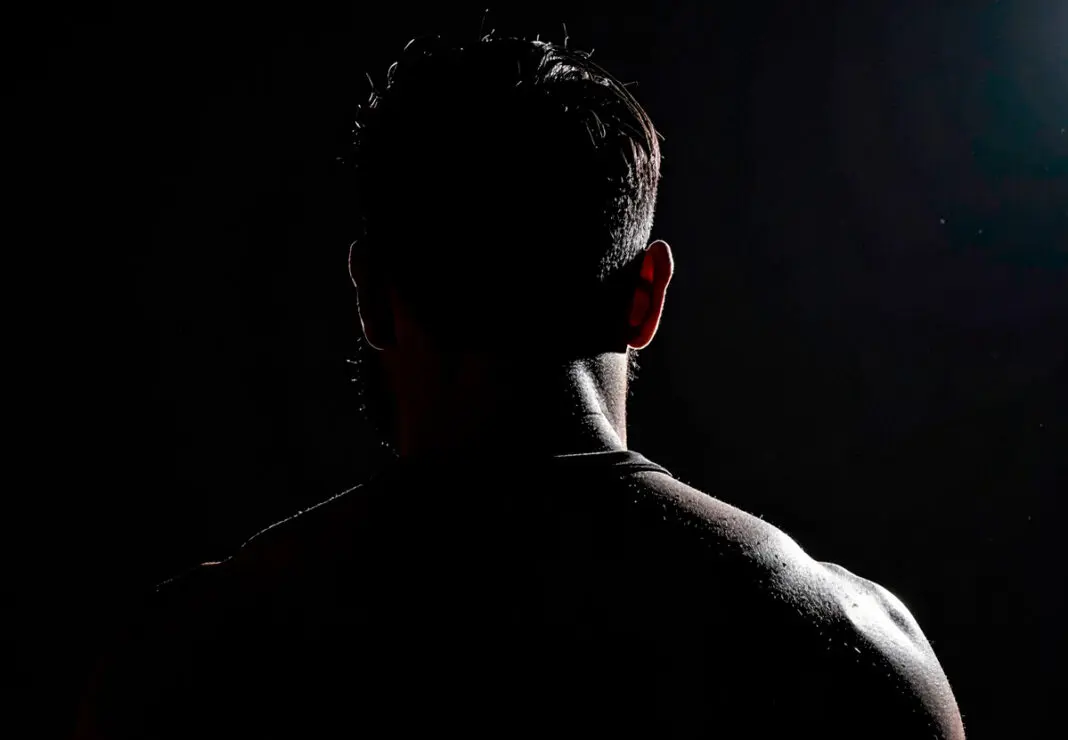
We spoke with several LGTBIQ+ young people who are currently studying in religious centers. Some prefer to remain anonymous, for obvious reasons. His words, however, resonate strongly.
“At my school I cannot say that I have a boyfriend. If I do, I risk being punished or even expelled. So I keep quiet. I live as if I have no feelings.”
“Not all teachers are the same. There are those who turn a blind eye, who even smile at you knowingly. But there are also those who preach to you that ‘God can change you.’”
“The hardest thing is not having references. We have never had an LGTBIQ+ talk, the topic is never mentioned. It is as if we do not exist.”
When silence is a form of violence
The problem is not just what is said, but what not is said. The absence of content on emotional-sexual diversity in the school curriculum of many religious centers is a form of invisibility. There is no representation in the classrooms, nor in textbooks, nor in external talks. And that hurts.
Silence is a powerful message. When an institute does not talk about diversity, it is saying—even if it does not say it explicitly—that it is not an important topic, or worse: that it is an uncomfortable, conflictive or even dangerous topic.
Can faith and diversity coexist?
This is the big question. Is it possible to be a believer and part of the LGTBIQ+ collective without falling into a contradiction? The answer is neither simple nor unique. For some, faith is a refuge; for others, a cage.
There are inclusive religious communities, progressive Christian and Muslim movements, and even educational centers that try to build bridges between spirituality and diversity. But, let’s be honest: they are still the exception.
The majority of religious institutions maintain a traditional vision that clashes head-on with the free and full experience of many LGTBIQ+ people. So yes, in theory they could coexist. But in practice, there is still a long way to go.
The right to study without fear
The Spanish Constitution guarantees religious freedom and the right to education. But it also protects the right to identity, dignity and personality development. When an LGTBIQ+ person is discriminated against in a religious center, which right should weigh more?
The legal response is not easy, and charter educational institutions (that receive public funds) usually operate in a gray area. Should they continue to receive financial support if they do not guarantee safe environments for all students? It is an issue that Spanish society – and the government – must face.
Safe spaces: utopia or possibility?
Fortunately, initiatives are emerging that seek to open spaces for listening within religious schools. Some associations of families, teachers and former students are beginning to raise their voices.
There is also a growing network of LGTBIQ+ students who, although they cannot always make themselves openly visible, create support communities through social networks, WhatsApp groups or unofficial safe spaces within the school.
They are not perfect solutions. But they demonstrate something important: resistance exists, even where it seems impossible.
⚠️ A critical look: Is it fair to demand that a religious center adapt?
Here is an uncomfortable reflection: do religious centers have the right to maintain their beliefs even if they conflict with LGTBIQ+ rights? Where is the limit between ideological freedom and discrimination? Forcing a religious institution to accept realities that go against its doctrine can also be considered an act of imposition.
The debate is not simple. It requires balance, dialogue and, above all, a willingness to listen to those who suffer the consequences most: the students.
Being gay, lesbian, trans, bi, queer… in a religious institute is, many times, a form of silent resistance. But it can also be an opportunity to rethink spaces of faith from inclusion. No one should have to choose between believing and being who they are. No one should feel guilty for loving.
Ideally, one day we wouldn’t have to write articles like this. That diversity was a natural part of the classroom, the sermon and the hallways. That the children did not have to hide behind uniforms, crucifixes or rules that deny them.
But until then, we will continue to make visible. And accompanying. Because no faith—none—should hurt.