

Beyond the rainbow: and after June, what?
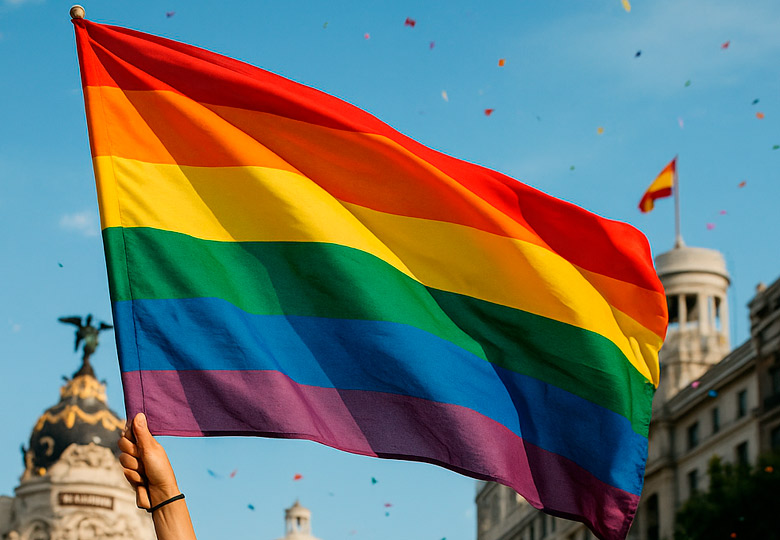
Every June, the streets are colored with color, the networks are filled with protest messages and the rainbow flags wave strongly. It’s LGTBIQ+ Pride Month. A powerful, necessary moment, full of visibility and memory. But what happens when the lights go out? Where is the commitment when July arrives?
Perhaps the most important question we can ask ourselves this month is precisely that: What can I do to make Pride last all year long?
It is not necessary to be a professional activist or soldier in a group. Change is also built from everyday life. From the words we use. From the silences we choose not to keep. From the times we decided not to look away.
Living Pride every day: a political and everyday act
Many times we think that supporting the LGTBIQ+ group involves great gestures. But the truth is that social transformation is also born from simplicity. From our homes, our groups of friends, our jobs, we can do much more than we think.
How to live Pride all year round? Here are some ideas to get you started:
- Active listening. Don’t assume. Don’t interrupt. Let each person express themselves with their own words, their identity, their doubts.
- Check your language. Do you speak inclusively? Do you avoid jokes or expressions that perpetuate stereotypes? Language matters.
- Question the spaces you inhabit. Is your work environment safe for LGTBIQ+ people? Does your educational center work on emotional and gender diversity?
- Support queer projects. Consume culture made by people from the collective. Books, music, podcasts, independent art.
- Intervene when you see discrimination. Whether on social networks or in a conversation between acquaintances, your voice can make a difference.
- Educate (and educate yourself). There is a lot of information accessible. Learn about history, intersectionality, rights, invisible realities.
The importance of alliances
If you are not part of the collective, your role is still fundamental. Allied people are not here to “save” us, but to walk alongside us. Listen, amplify voices, learn without appropriating. That’s also Pride.
And if you are part of the group, remember that you also have to look inward. Sometimes we forget that we do not all live the same realities. That a trans migrant person has obstacles that perhaps you will never have. Or that a bisexual person can feel invisible even within activism.
That’s why we talk about intersectionality. Because the fight is not only for orientation or identity, but for a dignified and free life for all, in all possible layers.
Pride is also self-care
Hay que decirlo: militar cansa. Claiming your existence in every space is exhausting. Sometimes we feel like we have to always be explaining, justifying, resisting. And that’s not fair.
Therefore, living Pride all year round also means allow yourself to rest, take care of your mental health, surround yourself with safe networks. Love without fear. Celebrate yourself in your body. Say no. Set limits.
The revolution is also made from joy, from tenderness, from pleasure. Because joy is also a form of resistance.
What do we do with what makes us uncomfortable?
You may have doubts when reading this. Or even some rejection. Is it really necessary to think about this all year long? Aren’t we exaggerating?

It is valid to ask. But it is also important to remember that, for many, sexual orientation or gender identity is not a “choice” that can be turned off when June ends. We live with them every day. In the hospitals. In the courts. On the street.
Now, there are also those who wonder if this constant Pride discourse perpetuates a kind of “permanent labeling,” or if it risks pigeonholing people into a political identity. Wouldn’t it be more liberating to be able to simply live, without needing to claim oneself all the time?
We don’t have all the answers. But we do know that, today, visibility continues to save lives. And as long as that is the case, Pride is not a burden, but a tool.
Cultivate Pride in small spaces
Thinking that change only occurs in large demonstrations is a mistake. There are revolutions that begin after dinner on a Sunday. In a conversation with a neighbor. In an editorial decision. In a pronoun correction in class.
A school that opens space to talk about diversity is already doing Pride. Una empresa que aplique protocolos contra la LGTBIfobia ya está haciendo Orgullo. A group of friends who question their prejudices are also doing so.
No action is insignificant. The important thing is commitment. The will not to sit still. To keep wondering what else can be done.
Shared responsibility
Pride is not a one-day celebration. There is a flag on the balcony during June. Es una actitud política, social y humana que se puede ejercer los 365 días del año.
Does it require effort? Yes. Does it mean getting uncomfortable sometimes? Also. But rights do not stand alone. They need action, reflection and presence.
Each unites from its place, with its tools, with its times. But without forgetting that silence also communicates. And that, many times, staying on the sidelines is taking sides.
Reflect, act, transform
El Orgullo no vive en las pancartas. Live in daily decisions. In how we look, in how we hug, in how we care. In itself we leave room for others to shine.
So we return to the initial question: What can you do to make Pride last all year long?
Maybe you don’t know it yet. Maybe you are learning. But just the fact of asking yourself is one step. And steps, even if they are small, also make a way.