
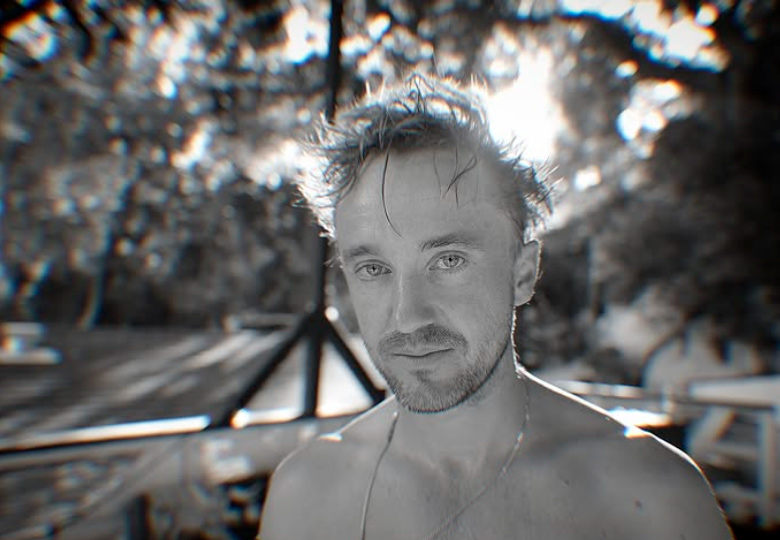
This is not the first time that Tom Felton – the actor who played Draco Malfoy in the Harry Potter saga – has publicly expressed his appreciation for J.K. Rowling. But this time she has done so in the midst of one of the most sensitive and painful controversies for part of the LGTBIQ+ community: the author’s position on trans people.
During the red carpet at the Tony Awards, a journalist from Variety directly asked Felton if the controversy over Rowling’s comments had had any effect on his life or work. The response was lukewarm to say the least:
“I can’t say that it shocks me, the truth is that I’m not very aware,” he responded.
And then he added something that resonated on networks:
“The only thing I remind myself of is that I have been lucky enough to travel all over the world and I have seen nothing that unites the world more than Harry Potter. She is responsible for that, so I am immensely grateful to her.”
A thank you that makes you uncomfortable
Felton does not enter the discussion. He doesn’t condemn, he doesn’t actively defend, he just thanks. Is it possible to separate the work from the person who creates it? That is the question that hovers every time someone from the Potter universe takes a stand – or decides not to – in response to Rowling’s comments, whom many consider openly transphobic.
In 2022 he had already said something similar in an interview with The Times:
“No one has done more to bring joy to so many different generations.”
But of course, that vision comes into conflict with those who have stopped finding joy in that magical world precisely because they feel excluded by its author.
The distancing of his former teammates
While Felton is grateful, other actors have chosen the opposite path. Daniel Radcliffe, Emma Watson and Rupert Grint have been vocal in their disagreement with Rowling’s statements since she published an article in 2020 questioning the use of the term “people who menstruate” instead of “women.”
Radcliffe was forceful:
“Trans women are women.”
Also Eddie Redmayne, protagonist of Fantastic Beasts, expressed his disagreement and made it clear that he supports the trans community and does not share the writer’s ideas.
A judicial decision that reopens the debate
In April this year, the UK Supreme Court ruled that trans women are not included in the legal definition of “woman” under certain provisions of the Equality Act. Rowling, who financially supports For Women Scotland – an organization that promotes this biological view of gender – celebrated the decision with a photo toasting and smoking, posted on X (formerly Twitter).
These types of gestures are not only symbolic. They also reinforce an exclusionary narrative that directly affects the rights and dignity of trans people in the UK and beyond.
Thank you or position yourself?
It is valid that Felton feels grateful to the author who catapulted him to fame. But it is also legitimate to ask: can silence or ambiguity become a form of complicity? In times where the identity and rights of the most vulnerable are at stake, many voices within the LGTBIQ+ community believe that it is no longer enough to “not be aware.” Because being on the sidelines is also a choice. And every word—or lack thereof—has its weight.