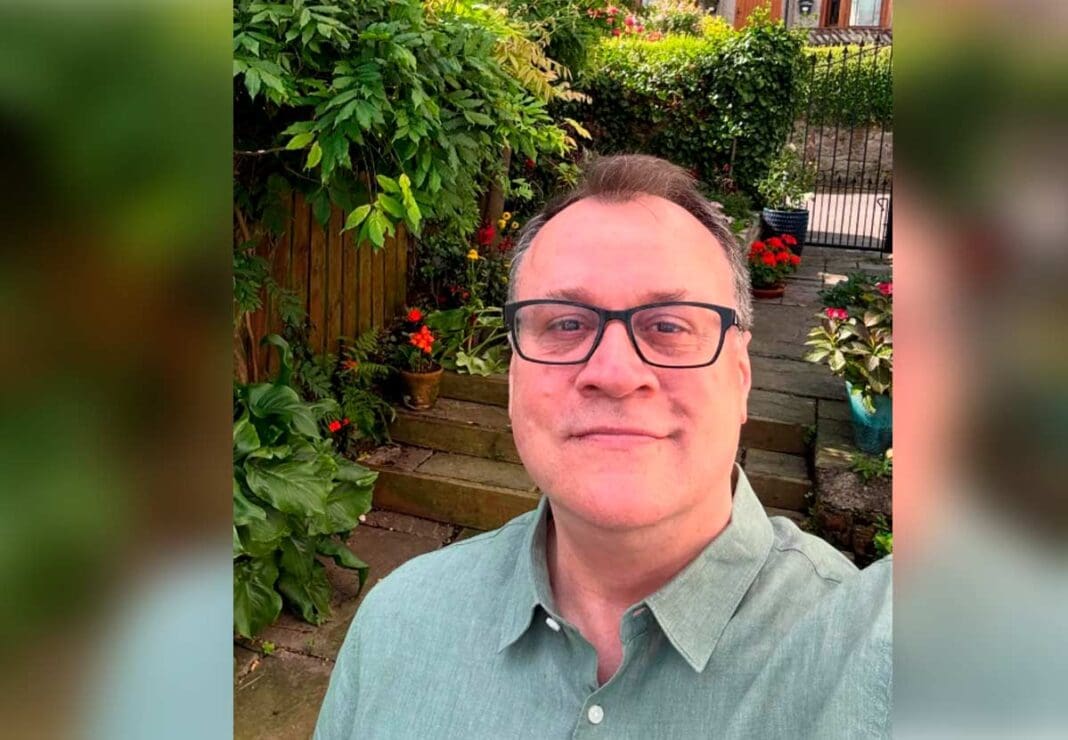
The British screenwriter Russell T Davies, recognized for revitalizing Doctor Who and for the iconic Queer As Folk, has issued a warning that resonates with concern: the rights of the LGTBIQ+ community in the United Kingdom Kingdom“are deteriorating rapidly and seriously”. And, according to him, the rise of the Reform UK party and the influence of the Trump era are part of the problem.
In an interview with The Big Issue, Davies recalled how, in the late 90s, many people imagined a 2025 full of progress, freedom and visibility for all identities. “We thought it would be all sunshine and smiles, walking hand in hand. But the reality is different: things are getting worse,” he noted.
The fear of Reform UK and its political program
The scriptwriter did not limit himself to generalities: he directly warned about the proposals of Reform UK, which has promised to ban what it calls “trans ideology” in schools during its first 100 days in government. Among other measures, the party proposes a “patriotic” curriculum, tax incentives for private schools, cuts to universities that “undermine freedom of expression” and the replacement of the Equality Law, eliminating diversity and inclusion regulations.

Davies believes the pattern is clear: “What happens in the United States, ends up happening here. And with a possible Reform government, we should be on our feet, with anger, fear and action.”
The echo of Trump and the transatlantic risk
Davies also pointed to former US President Donald Trump as a figure who has legitimized openly hostile speeches. According to him, Trump would be “happy” if LGTBIQ+ people were invisible or, directly, disappeared from public life. “Since his election I have noticed a change in how they speak to me as a gay man. It is the effect of months of hatred turned into a weapon,”he stated.
A message to the new generations
Despite the urgent tone, Davies does not seek to discourage, but to mobilize. It especially appeals to queer youth, recognizing that many young people have grown up unaware of previous struggles. “It’s not their fault, they are busy living their lives. But a confrontation is approaching. Are we ready to fight?”he asks.
His next project for Channel 4, Tip Toe, will explore precisely the dynamics of the so-called “culture war” and how intolerance is gaining ground again.
The critical view: alarmism or reality?
Some voices could consider Davies’ statements as an exercise in dramatization, perhaps influenced by his media profile and his television projects. It cannot be ignored that, in the political context, apocalyptic warnings can serve both to raise awareness and to mobilize an electorate. Furthermore, parties such as Reform UK defend that their policies seek to “protect freedom of expression” and “guarantee ideological neutrality” in education, something that their detractors see as a euphemism for excluding LGTBIQ+ identities and realities. The question is whether we are facing a real setback or an ideological pulse that can still lean towards inclusion.
Recent history shows that advances in rights are never definitive. Davies’ words, beyond being loaded with drama, invite an uncomfortable question: are we willing to defend what we have achieved, even when the political climate becomes hostile?