

Hello, reader. If you follow the world of football closely, you will know that the British Premier League has been showing a public commitment to the rights of the LGTBIQ+ community for a decade. This is not new, as the league has been involved in the cause for more than ten years, seeking to promote a more inclusive environment within the beautiful game.
Since the 2014-2015 season, we knew about the flagship campaign under the name “Rainbow Laces”. During a week of intense action, the main objective was to make visible and promote the collective’s fight within the demanding panorama of English football. One of the most striking and symbolic actions of that initiative was, without a doubt, the use of the armband with the colors of the rainbow by the captains of each team in league matches. The pressure of individual actions
However, visibility can lead to controversy. In the last season, this symbolic action became a focus of debate due to personal decisions of some footballers. For example, the then captain of Crystal Palace, Marc Guéhi (now at Manchester City), chose to wear a religious message on his armband that said “I Love Jesus”, diverting attention from the initial objective. Similarly, Sam Morsy, captain of Ipswich Town, directly chose not to wear the badge.
These gestures were not made in isolation in sport. This same controversy resonated strongly in other major competitions, such as the World Cup in Qatar, where the local government expressed its total opposition to the use of pro-LGTBIQ+ symbols. The tension between the message of institutional support and the individual freedoms or beliefs of the athletes put the league in a delicate position.
View this post on Instagram
“With Pride”: A change towards the collective
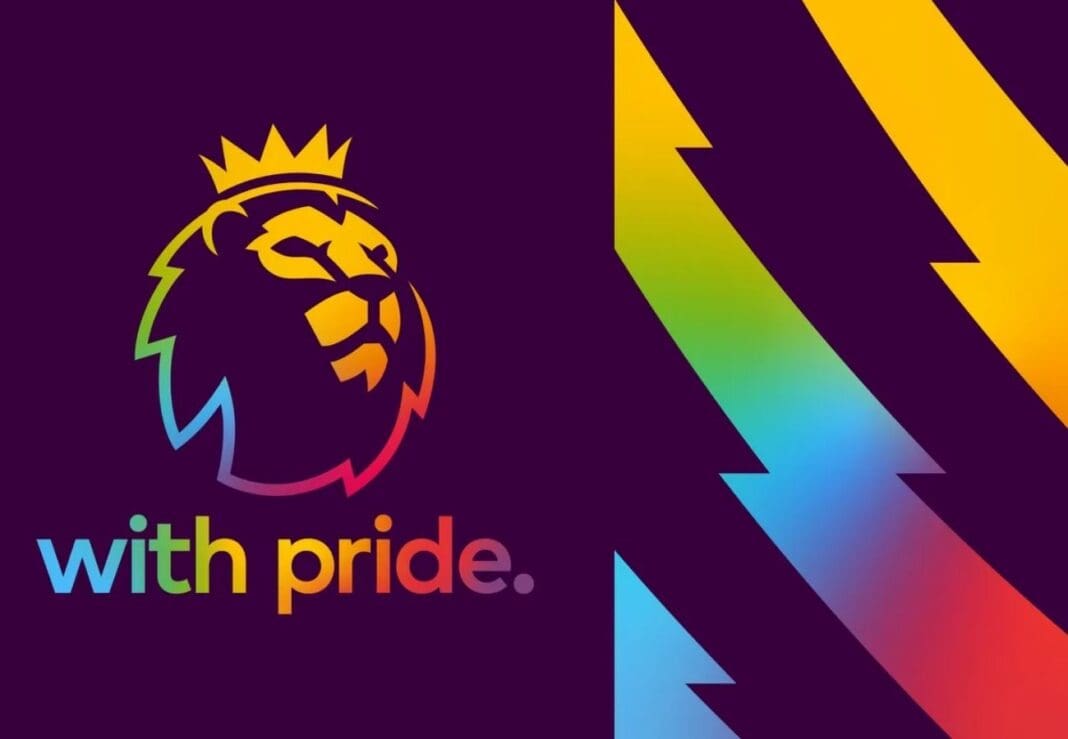
Given the obvious need to avoid these individual reactions that distorted the central message, the English league has decided to change its strategy. Far from being an abandonment of the cause, this modification seeks to transform the campaign into a more choral gesture and less dependent on the captains.
The initiative, now renamed “With Pride” (Con Orgullo), will focus on the matches that will be held between February 6 and 12. What do the changes consist of?
- Goodbye armband and laces: Captains will no longer be required to wear the rainbow armband, nor will lanyards be offered to players. The focus moves away from mandatory personal equipment.
- Visibility in the environment: The campaign will be integrated into the stadium landscape, ensuring constant visibility through elements such as:
- The billboards in the countryside.
- The table of changes shown by the fourth referee.
- The platform where the ball is held before the start of the match.
- The referees join in: The campaign slogan will also be displayed by the referees on the flags of their assistants.
- Voluntary participation of staff: Coaches and club workers will receive pins with the colors of the rainbow, which they can wear completely voluntarily during matches to highlight their commitment to the initiative.
This new approach is clearly an attempt to protect the campaign message from possible boycotts or individual misdirection, turning support for the LGTBIQ+ community into an institutional statement that permeates the game environment.
The question that arises is: Is this collective strategy more effective in generating awareness than the direct gesture of a captain? Is the change really intended to reinforce the message of inclusion, or is it a way to avoid controversies that could damage the league’s image internationally?
What is clear is that the Premier League, although changing its forms, maintains its intention for English football to be an open and respectful space for all. We invite you to follow this development and reflect on the fine line between institutional commitment and freedom of individual expression in elite sport.