

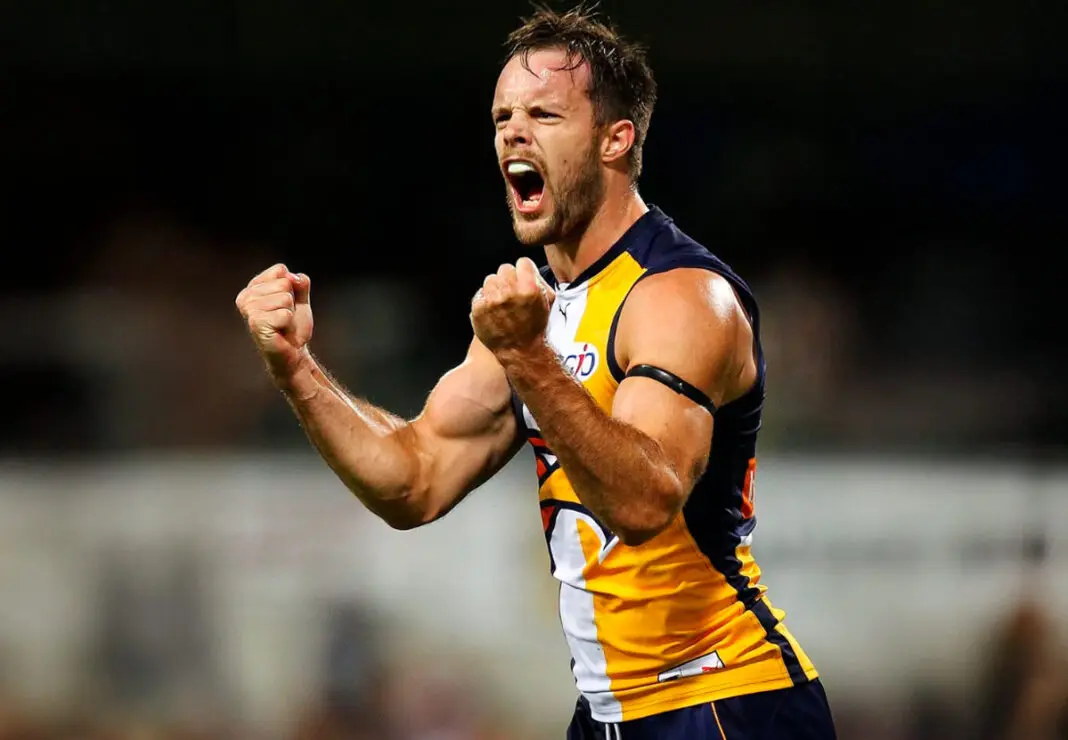

Former player Mitch Brown has made history in the Australian Football League (AFL) by becoming the first man, past or present, to openly declare himself bisexual. His announcement is not only a personal step full of courage, but also an opportunity for sport to rethink its relationship with diversity and seriously confront the homophobia that still persists in its stadiums and locker rooms.
Darcy Moore, captain of Collingwood and president of the Players’ Association, did not hesitate to describe Brown’s gesture as “tremendously brave” and stressed that his testimony is a turning point:
“There is a lot to learn from Mitch’s story, and him sharing it gives us the opportunity to change the culture and see real transformations in the industry.”

The context: homophobia still present in the game
Brown’s statement comes just days after Adelaide star Izak Rankine was banned for four games for using a homophobic slur. It is not an isolated event: in recent years there have been several similar episodes that show the urgency of a profound change.
Moore, although he defended the need to support all players, was clear in setting the limits:
“Homophobic insults have no place in our sport. The line is drawn, and it is firm.”
A call to collective action
The reflection of the president of the Players Association went beyond individual gestures. According to him, the challenge now is to transform the AFL ecosystem: implement policies, review practices and, above all, ensure that football is a safe and inclusive space.
“We want to see action, policy changes, systems that really move the cultural needle. It is everyone’s responsibility to make the industry safer,”he said.
Impact on the LGTBIQ+ community and sports
Brown’s coming out not only breaks a historic silence within the AFL, but opens the door for more players to feel free to be who they are without fear of rejection. Jack Crisp, Moore’s Collingwood teammate, put it clearly:
“Until now we were the only global sport without an openly bisexual or gay player. What Mitch has done is huge and will help other people feel comfortable.”
What is at stake is not only the visibility of a person, but the transformation of a sport that has millions of followers. Will the AFL be able to turn this moment into a real opportunity for change? Can it move from speeches to concrete action to ensure an environment free of discrimination?