

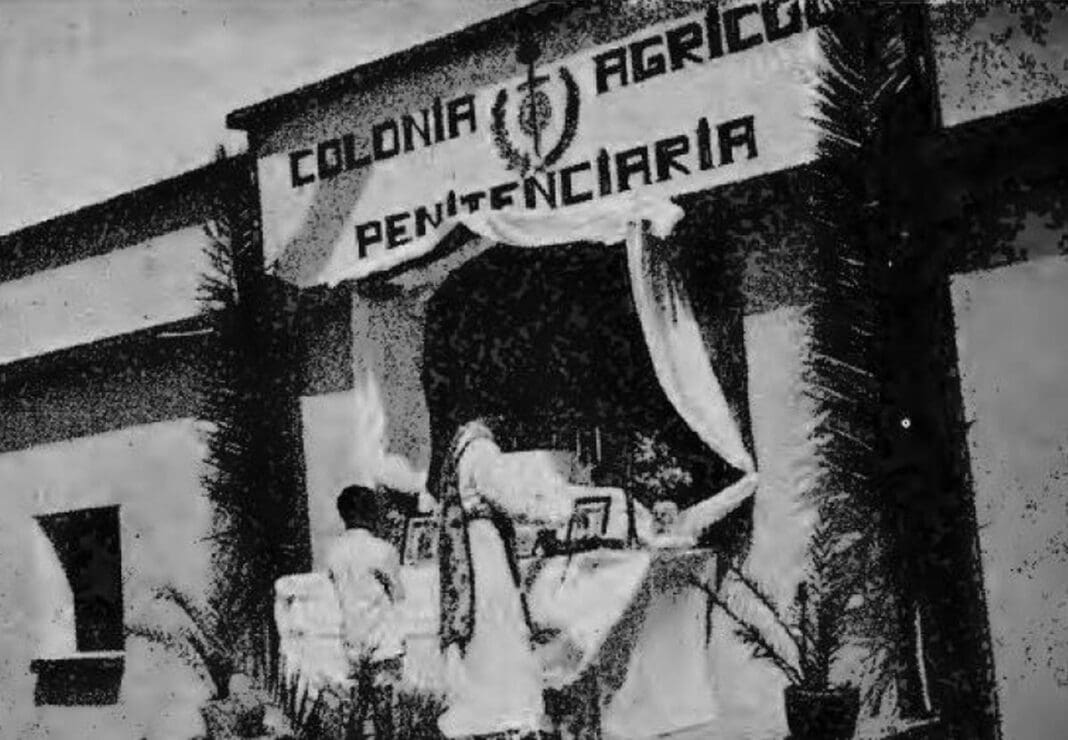
Dear Rainbow reader, there are dates that transcend the calendar to become a beacon of justice. One of them is scheduled for early 2026. Fuerteventura, one of the driest islands in Canary Islands, will host a momentous act of reparation to the LGTBIQ+ community, a Government initiative framed in the “50 years in freedom” program. The choice of place is not coincidental: the island is home to the former Tefía Agricultural Penitentiary Colony, a site of repression whose symbolism is inescapable.
Tefía: Where Sexual Orientation Was Condemned
Tefía, located in Fuerteventura, is a name that resonates with pain in the recent history of Spain. During the Franco dictatorship, this place functioned as a real concentration camp. Dozens of men were detained and forced to do strenuous work, forced to “break stones”, simply for being homosexual and exercising their sexual orientation in public. The official excuse was as cruel as it was absurd: they supposedly sought to “green” the island, but as the Minister of Territorial Policy and Democratic Memory, and former Canary Islands president, Ángel Víctor Torres, has pointed out, the real goal was meaningless punishment.
Torres announced at a press conference that there are plans for Tefía to soon be declared a Place of Memory, a vital recognition for the visibility of what happened there. This event in the Canary Islands will be the central event of a program with fifty events to commemorate the anniversary of the end of the dictatorship, and its relevance is projected at the national level thanks to the deep historical significance of the colony.
The Challenge of Forgetfulness and the Threat of Involution
One of the most critical points that the minister highlights is the dangerous historical ignorance that persists among youth. For many young people who were already born in democracy, the brutality of the repression that the homosexual community suffered under Franco is an unknown chapter. Worse still, this lack of memory is fueled by certain political discourses that, according to Torres, go so far as to deny these facts.
Do you know Tefía’s story and what she represented for the LGTBIQ+ community?
Do you think that forgetting these chapters can pave the way for the reversal of the rights achieved?
Torres not only looks to the past, but also warns about the present. He warns that there are civil achievements that are taken for granted—such as equality for the LGTBIQ+ collective—that are under threat today. And involution is not a ghost of the past. The minister recalled recent cases in Europe, such as in Hungary, where demonstrations of support for the community have been prohibited, demonstrating that the fight for rights continues to be a daily and urgent task. A Broad Tribute to Political Victims
The program of events in the Canary Islands will not only focus on the LGTBIQ+ community. Special prominence will also be given to all victims of political repression, including those who were murdered and thrown into mass graves, chasms, wells or the sea. Torres recalled that, although there were no major battles on the islands during the Civil War, the first victims of the conflict did claim lives in places such as La Palma or the north of Gran Canaria.
This set of acts, with redress in Tefía as its axis, is not just a gesture of remembrance. It is an exercise in democratic memory that seeks to dignify those who suffered barbarism and, above all, protect the future. It is a call to the reader not to underestimate the fragility of acquired rights and to keep historical consciousness alive.