
There is an uncomfortable truth that the LGB community must honestly accept: many of the rights that we enjoy today were achieved thanks to trans people who put their bodies forward when no one else wanted to do so. People expelled from their homes, beaten by the state, condemned to marginality and submerged work, singled out even within our own spaces. And yet, they were the ones who led the fight.
The story of the LGTBI+ movement cannot be told without naming Marsha P. Johnson and Sylvia Rivera. Two racialized trans women, poor, survivors of violence and the streets, who understood before anyone else that freedom could not be built by leaving behind those who suffered the most. Both were on the front lines of the Stonewall riots in 1969 and later founded STAR, an organization dedicated to providing shelter, food and protection to trans youth expelled from their homes.
While part of the movement sought respectable social acceptance, they took care of those who slept on the street. While many gays could hide to survive, visible trans women did not have that possibility. They were the easiest target for violence. And that’s why they were also the bravest.
There is a historical debt with trans people because for decades the LGB community itself used them as a shield in protests and then pushed them aside when the time came to occupy institutional spaces. History was filled with successful gay white men while trans women continued to die young, impoverished, and forgotten.
Exclusion often begins in the place that should be safest: the family. Few forms of violence are as devastating as feeling that those who gave you life stop recognizing you. Many trans people not only lose their homes; They lose the hug, the look, the last name and the belonging. They learn too soon that for a large part of society their identity is debatable, negotiable or a source of shame.
And when a person is expelled from their family, the rest of the exclusions come in a chain: dropping out of school, inability to access employment, health discrimination, street violence and, in too many cases, prostitution as the only way to survive. Talking about sex work in the trans population without first talking about structural exclusion is deeply hypocritical.
During the HIV/AIDS pandemic, when fear turned the sick into outcasts, it was many trans women who emotionally supported the community. They entered hospitals when even families abandoned their children. They gave food, accompanied death and offered humanity in the midst of horror. Official history has not yet sufficiently appreciated this immense act of collective love.
That is why it is so painful to observe how today the dignity of trans people is once again being questioned through political, media and social discourses that once again make them a target. Its existence is debated as if it were a theory. Their rights are discussed as if they were privileges. And meanwhile, they continue to be one of the groups with the highest rates of unemployment, suicide, poverty and violence.
Society should ask itself a simple but uncomfortable question: what would we do if we had to live every day justifying who we are?
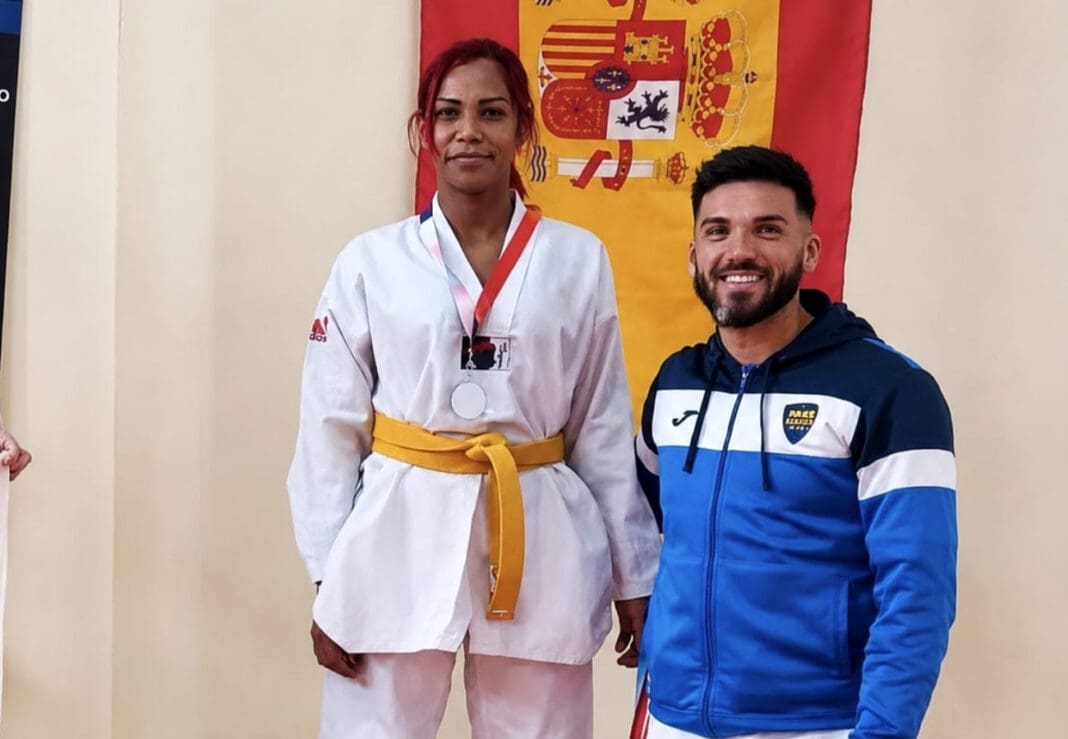
Sport has not been an easy space either. For too long it has reproduced rigid models of masculinity and femininity that expelled any difference. That is why my work is especially important. Through taekwondo and activism, I have promoted inclusive spaces for LGTBI+ people, especially defending the dignity and participation of trans people within the sports field.
My work is not born from theory, but from empathy. From understanding that sport can save lives when it stops being a place of humiliation and becomes a refuge. That a trans person can enter a tatami without fear, compete without being questioned and feel part of a team is not a symbolic gesture: it is a form of reparation.
Because trans people don’t need compassion. They need protection, opportunities and respect. They need us to stop talking about them and start talking to them. They need public policies, decent employment, real health access and safe environments. But they also need something much more basic: for society to understand that their lives have the same value as any other.

Perhaps the true evolution of a society is not measured by how it treats those who fit in, but by how it protects those it has historically condemned to the margins.
And if today we can love with more freedom, walk with less fear and live with more rights, it is because there were trans people who resisted when doing so meant risking their lives.
We do not owe them an annual tribute.
We owe them memory, dignity and justice.