
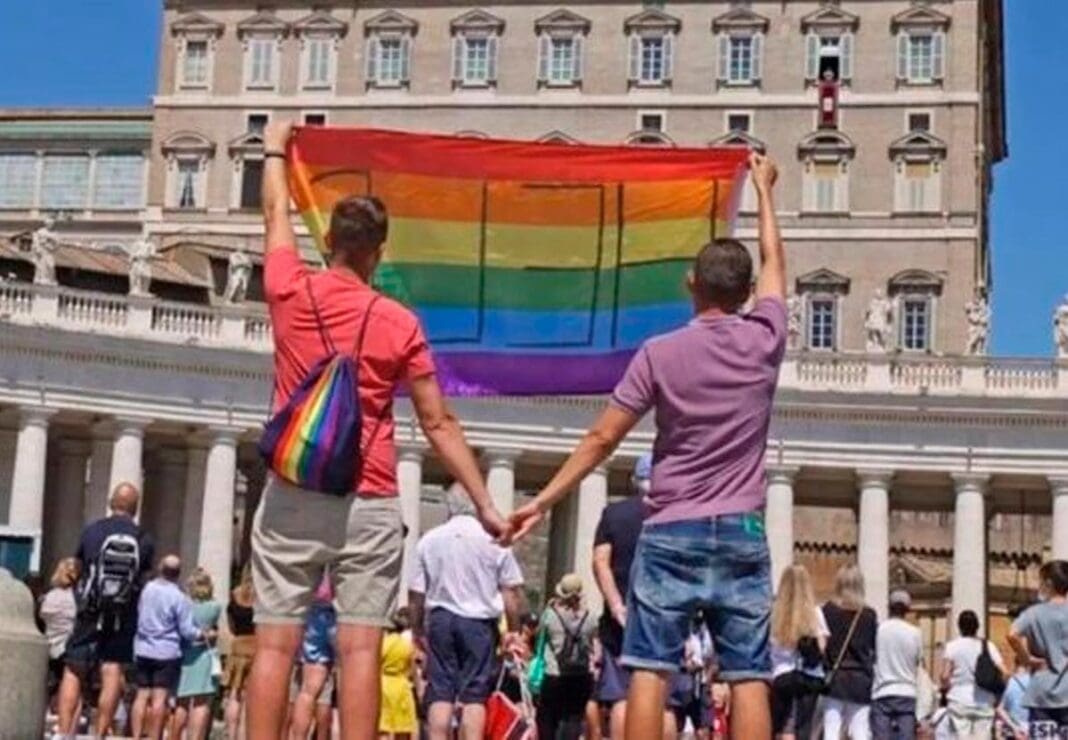
Something is moving in the foundations of the Church. In this Holy Year, a long-awaited space opens for the Catholic faithful belonging to the LGTBIQ+ community. They have managed to be part of the official Jubilee agenda, with various meetings that will bring together more than 1,300 souls from forty corners of the planet. The highlight: a long-awaited pilgrimage to cross the emblematic Holy Door of St. Peter’s Basilica.
The voice of hope: Luisma González and the meaning of pilgrimage
Luisma González, Spanish theologian and collaborator of Chrismon, one of the organizations that accompany the LGTBI community in Spain, shares her vision with a mixture of faith and hope. For him, this pilgrimage is not a simple act of devotion; It is a real turning point. “It is recognizing that this is our home, that we are here, that we exist,” he states with conviction. And he adds: “We go with the faith and enthusiasm of every pilgrim to the common home that is in Rome”.
Key figures at the meeting: James Martin, Andrea Conocchia and the Jesuit dialogue
The presence of figures such as the American priest James Martin, a well-known defender of the rights of homosexual and transgender people, and the participation of Father Andrea Conocchia, parish priest of Torvajanica, who has accompanied trans people to papal audiences, underlines the relevance of this meeting. Martin, in fact, will organize a meeting at the General Curia of the Jesuits, a space for fundamental dialogue and reflection.
From Pope Francis to Leo XIV: the hope of an open door
For a large part of the participants, the openness shown by Pope Francis was the first impulse. Now, the gaze rests on Leo XIV, in the hope that he will keep that door open, although his position on the issue has not yet been clearly expressed. Will this be a path of no return towards greater acceptance? What challenges and opportunities will arise in this new horizon?
A historical event with nuances: not an “LGTBIQ+ Jubilee”, but a change in progress
It is important to clarify that this event, although historic, does not constitute a “LGTBIQ+ Jubilee” in the sense of a great jubilee event like that of the Young People or the Poor. This is one of the many pilgrimages organized spontaneously by various Catholic entities. However, its inclusion in the official agenda, although initially without the LGTBIQ+ acronym, speaks volumes of an ongoing change.
The spirit of “La Tenda di Gionata”: faith, not confrontation
Officially, the event is called “Pilgrimage of the association ‘La Tenda di Gionata’ (‘Jonathan’s Shop’)”, an organizing entity along with other groups of faithful and fathers and mothers with gay children. Tiziano Fani Braga, promoter of the initiative, explains the spirit that moves them: “We will not go there to celebrate a Pride parade, nor to make demands, because we are not looking for confrontation. We are not looking for a way to make ourselves visible”.
Fani Braga emphasizes the essence of his presence in Rome: “Obviously, we are aware of our difficulties, but we are Christians, baptized like everyone else, and we have the right and the duty to manifest our faith. And that is why we will make this pilgrimage”.
Beyond the Holy Door: the importance of communion and prayer
Beyond crossing the Holy Door, an act loaded with symbolism for any pilgrim, participants give equal importance to the “communion that will be created during the vigil and mass.” These will be the moments of greatest recollection and prayer, where stories and experiences of people who have carried out valuable, and often difficult, pastoral work in various parts of the world will come together.
Criticism, threats and the true essence of the Church
Despite having received criticism and even threats for this initiative, Fani Braga highlights a fundamental truth: “the Church is not just an institution; the Church is also us, who create this celebration, who create these moments of prayer together”. The unexpected and large participation, with nearly 1,300 registrations from 40 countries so far, is a testimony to the thirst for spirituality and belonging that exists in the LGTBIQ+ Catholic community.
“The Church comes out of the closet”: a path of no return
Luisma González expresses it with a powerful metaphor: “I believe that this visibility brings the church out of the closet”. For him, the reception of the LGTBIQ+ community by the Church has begun a path “without turning back”. It is time, he assures, “to look forward with a hopeful gaze, to put a name and face to a reality that has been invisible and persecuted”.
Pilgrimage program: vigil, mass and crossing the Holy Door
The pilgrimage program, like any other, includes a prayer vigil in the Church of the Gesù, in the heart of Rome. The next day, the vice president of the Italian Episcopal Conference, Francesco Savino, will preside over a mass, followed by the long-awaited pilgrimage to the Holy Door.
The future in the eyes of Leo XIV: pragmatism and clear points
The hope that Leo XIV will continue the path of openness begun by Francis is palpable among the faithful. Fani Braga, although cautious, shares his expectation: “León, in my opinion, will be more pragmatic, but I think he will make some points very clear. That is my hope. Let’s give him time”.

Open questions for reflection
This meeting at the heart of Catholicism raises crucial questions for the future of the Church and its relationship with the LGTBIQ+ community. How will this dialogue evolve? What impact will this visibility have on other dioceses and parishes around the world? Are we facing the beginning of a profound transformation or an isolated gesture within the framework of the Jubilee? Time, and the continuity of these efforts, will tell.