
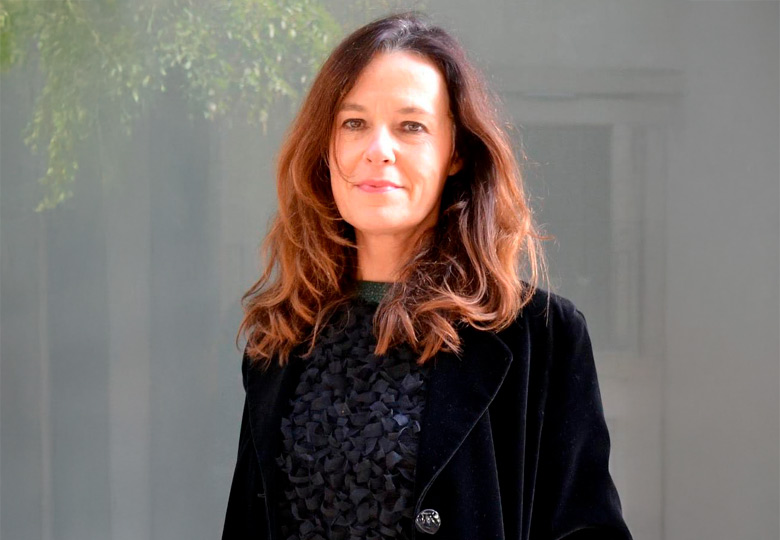
In Spain, thousands of LGTBIQ+ young people continue to suffer family and social rejection to the point of finding themselves on the streets, without resources or support. We spoke with Gemma Brulles, president of Now Where, the association that has become a real refuge for those who do not know where they can be, or where they can go. It tells us its origin, its mission and what we can do as a society so that no person is left homeless because of who they are.
Most associations are born from a need. In your case, the urgency seems to come from a real gap in care for LGTBIQ+ people who suffer violence or discrimination, especially in everyday environments such as work, family or neighborhood. What was the founding moment of the association?
Now Where was born in 2019 after learning that there were entities in Europe that helped LGTBI+ young people who suffered rejection from their families and/or their close circle, being also the element that gave rise to the Fédération Européenne des Refuges where there are associations from France, Italy, Belgium and Switzerland.
I founded it because I wanted to help young people who had not had the luck of my son, since parental acceptance or neutrality is very important to prevent them from feeling abandoned or rejected, if rejection in their family environment is also added to that rejection in their close environment, it could lead to very complicated situations of social exclusion.
“We accompany and welcome LGTBI+ young people who suffer family rejection”
What situation or case prompted you to say: ‘something must be done’?
Upon knowing that in Spain there was also a high percentage of people belonging to the LGTBI+ group who suffered from these situations of rejection and that it could be a potential factor that could lead them to situations of homelessness, we decided that it was time to take the step and create this association.
The name “Now Where” already suggests a place for those who don’t know where to go. How would you define the association’s mission in a few words? What type of support do you give to those who contact you?
At the phrase level I would say that “We accompany and welcome young LGTBI+ people who suffer family rejection.”
From Now Where we offer support in different areas, including first care, emotional support, family mediation and host families, mainly.
Many people associate support for victims with psychological assistance, but we know that the reality is more complex. What type of aid do you offer specifically? Is there a protocol or is each case treated individually?
Each case is treated in a personalized way through the first attention area (which is the one that receives the contact requests sent to us by people who want to contact the association), from this first contact an interview is carried out to learn more about the situation of the person who contacts us, from there they are sent all the necessary documentation to register them in the association as a user and they are referred to the different areas of attention to users who we have. To give an example, it can be referred to listening to assign a volunteer person to support them, accompany them to do errands, have a coffee, who is a person the person trusts; or refer her to receive support and career guidance among other fields of intervention.
View this post on Instagram

Discrimination at work can be subtle, invisible and devastating. What can a young LGTBIQ+ person who suffers harassment in their work environment do? What would be the first step if they decide to go to your association?
In situations of this type we collaborate with entities and organizations that have greater experience in these fields so that they can receive advice on all those doubts that arise and that they can face these problems with the support of different entities.
Many victims do not take the step of asking for help due to fear, shame or lack of information. What can those close to them do to support someone who is suffering, but does not dare or does not know how to ask for help?
To the close environment of all the people who suffer these situations of rejection and/or violence, what we can recommend from the association is that you make it as easy as possible for them to go to entities like ours without fear of being judged, and if they are at risk of homelessness that they can be sheltered until they recover in all aspects of their life and can become independent in all dimensions of their life (economic, social, personal, etc).
“The rejection of a child at home, the place that is supposed to be the safest for a young person, is an invisible violence that can be very detrimental to growth”
In a world where the urgent often leaves out the important, financing community care projects is not always easy. Where do your resources come from?
On an economic level, what we mainly rely on are donations made to us by companies that promote inclusion and diversity within their own environments, but when it comes to carrying out the various actions that the association develops, we mainly rely on the support and great work of our fantastic team of volunteers who are very committed to the vision and values of the association.
There is violence that does not always fit into legal categories. Do you encounter many situations that are not “reportable” but are deeply harmful? How do you approach them?
Within the situations that we have attended, these violences are quite common in people from the LGTBI+ community who come to us. The rejection of a child at home, the place that is supposed to be the safest for a young person, is an invisible violence that can be very detrimental to the growth and autonomy of people from the LGTBI+ group who suffer this type of violence.
For this it is vital that in our areas both communication and assistance to people in the group who suffer these situations are favored, giving importance to people’s feelings and emotions, so that they do not feel that it is something that should not be treated and that they feel welcomed by us.
View this post on Instagram
There has always been talk of networking as a form of resistance. What other entities do you collaborate with? Do you think we are knowing how to build a solid network between associations, activisms and professionals in the LGTBIQ+ field?
We work in the LGTBI Center of the Barcelona City Council where other entities with which we collaborate reside. Also with Acathi and the Eddy Foundation, which are entities with which we have a lot of synergy.
At the same time we are a founding member of the Fédération des Refuge together with Belgium, France, Italy and Switzerland to help us learn and lobby in Europe.
Attention to victims is vital, but so is prevention and social pedagogy. Do you have educational programs or awareness actions open to society?
From the association we give talks in schools and companies so that they know that this reality is still very present in our society and for this it is vital that we offer awareness and knowledge on the subject, both to accept people as they are, respecting their identity and to prevent these situations of rejection from being replicated in the future, being important above all in schools.
✨Where a home is missing, a family is born.
The conversation with Gemma Brulles reminds us of something essential: sometimes the greatest violence does not leave physical marks, but rather absences. Now Where demonstrates that warm accompaniment, without judgment and with real support networks can save lives and restore lost dignity. As long as there continue to be young people rejected just for being LGTBIQ+, associations like this will continue to be a necessary home for many. Because, as their motto says, “the family does exist”… and sometimes it is found outside the home.