

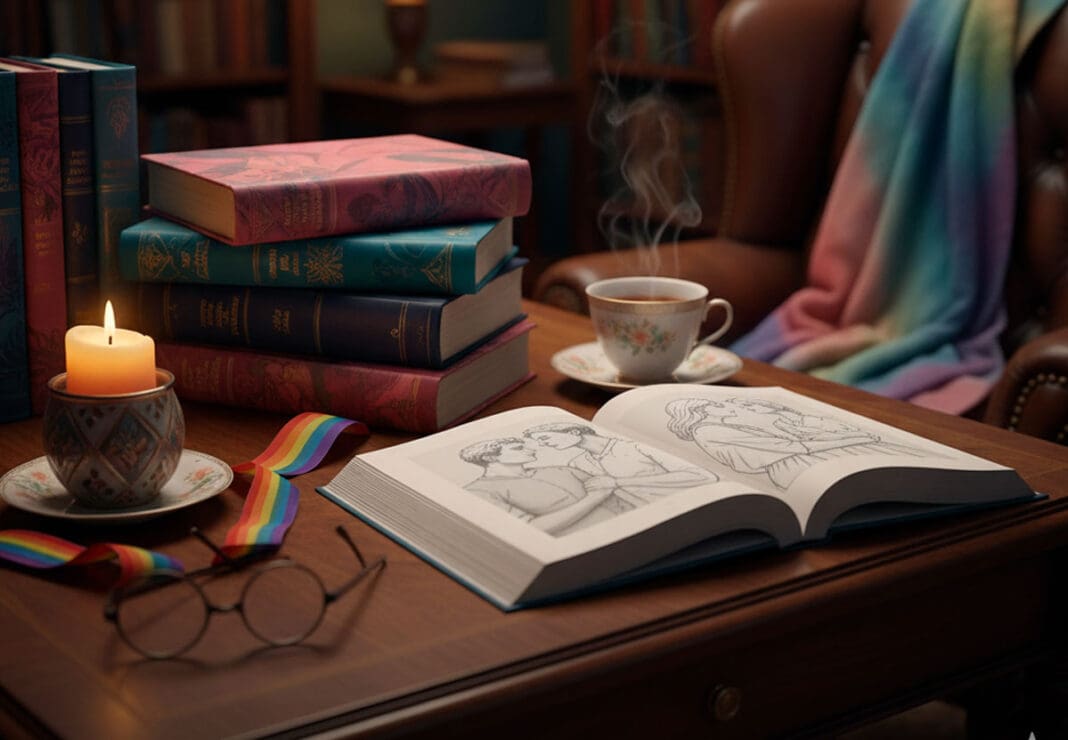
Erotic literature has been a genre that, throughout history, has explored the deepest human desires and fantasies. However, many times, these stories have fallen into the trap of heteronormative clichés, leaving aside the diverse and rich experiences that characterize the LGTBIQ+ community.
What is inclusive erotic literature?
Inclusive erotic literature is defined as that which represents sexuality in a diverse way, considering different sexual orientations, gender identities and experiences. This approach allows narratives to reflect the complexity of human relationships, encompassing not only heterosexual desire, but also same-gender interactions, as well as the experiences of non-binary and trans people.
The importance of representation
One of the reasons why inclusive erotic literature is crucial lies in its ability to make visible experiences that have been historically ignored. When a reader encounters characters who share their own experiences, they can feel a deep connection and a sense of belonging. This not only validates their experiences, but also offers them a way to explore their own sexuality in a safe and welcoming environment.
Notable works in inclusive erotic literature
Let’s look at some works and authors who have contributed significantly to this genre, opening doors and challenging established norms.
1. The House of Flowers” by Manolo Caro
This Netflix series, although not a book, has echoed in contemporary literature and art by presenting a renewed vision of family and desire. The way it addresses the relationships between queer characters and their emotional complexity has inspired many writers in the literary field.
2. “Tales from the jungle” by Horacio Quiroga
Although not traditionally considered erotic literature, some of Quiroga’s stories can be read from an inclusive perspective. Its treatment of sexuality and desire in a context of wild nature offers a unique look at human relationships.
3. “Woman’s body, women’s sensations” by Laura Ramos
This book is a compendium of stories that celebrates female sexuality from an inclusive perspective. The stories go beyond the physical, exploring desire, intimacy and the emotional connection between women.
4. “Stories of love, madness and death” by Gabriel García Márquez
In some of his stories, Márquez presents relationships between characters of various orientations, allowing for a broader interpretation of sexuality and desire.
5. “The kiss” by the Spanish writer Tania López
This book is a modern example of how erotic literature can address desire between women in an authentic and non-judgmental way. Tania López tells stories that illustrate the diversity of the female sexual experience, creating a space where love and desire can flow without restrictions.
New voices in inclusive erotic literature
In addition to the classics, it is important to recognize the emerging voices that are shaping contemporary erotic literature. Authors such as Marta Sanz, Luisgé Martín and Cristina López Barrio are exploring new ways of narrating desire and sexuality, challenging traditional limits and promoting a broader and more varied representation.
Self-exploration in literature
Inclusive erotic literature also offers a space for self-exploration. Many works allow readers to reflect on their own sexuality and desires, encouraging an internal dialogue that can lead to a greater understanding of oneself and others. How can we accept and celebrate our sexual diversity through literature? It is a question that invites deep reflection.
A critical analysis of inclusive erotic literature
Despite advances in the representation of sexual diversity, it is essential to question how inclusive contemporary erotic literature really is. There is criticism about the risk of falling into exoticism or the commercialization of queer experiences, which can distort the authenticity of the narratives. Are we really seeing a faithful representation or simply an idealized version to satisfy a majority audience? This is a question that deserves to be debated.
Inclusive erotic literature is an expanding field that seeks to represent the richness of sexual experiences beyond heteronormative boundaries. Through the works of authors committed to diversity, a space is beginning to be built where all voices can be heard and celebrated. However, it is vital that we continue to question and analyze these representations to ensure that they remain authentic and do not become mere commercial trends.
In a world where sexuality and desire are taboo topics, inclusive erotic literature is presented as a powerful tool for self-acceptance and celebration of diversity. What other works do you think should be included in this conversation?