
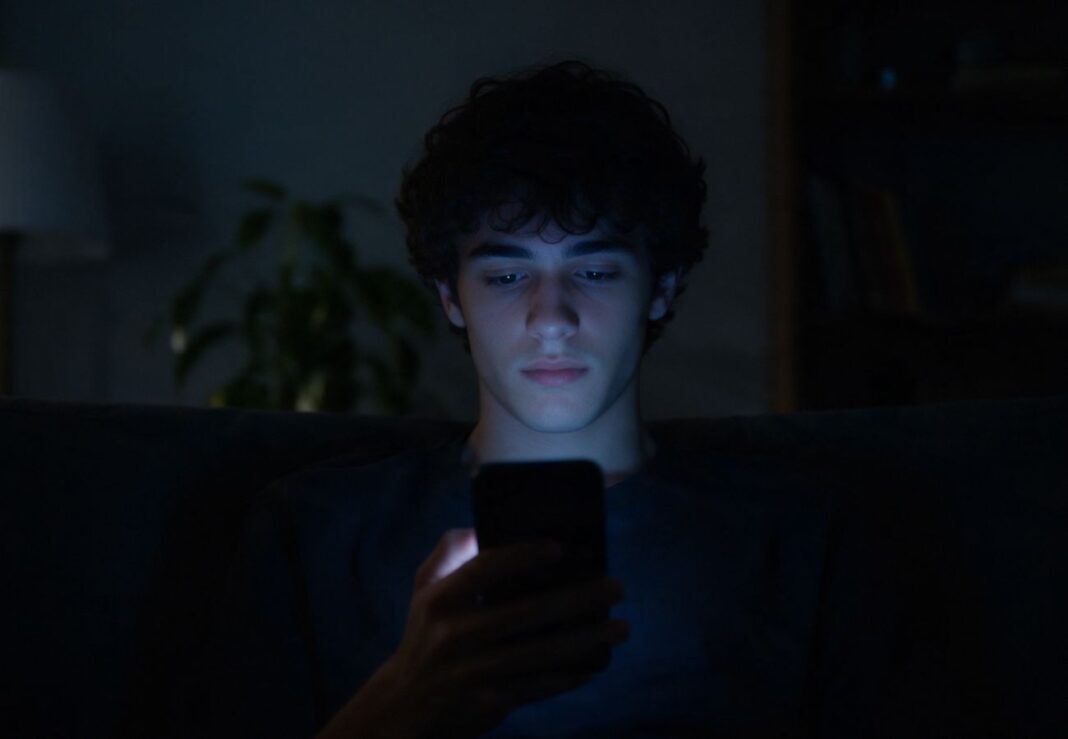
I’m telling you now, so you don’t have any doubts: yes, it is possible. And almost never does it require any movie tricks. I’ll tell you how it works, what functions give you away, and what you can close today.
When someone thinks of “being spied on”, they imagine a virus on their phone or a person discovering their password. That exists, but in dating apps, the most common risk is another, much sillier one: the app’s own design places you on the map, and those who know you know where to look.
An ex-partner has an advantage: they know your photos, your neighborhood, your schedule, and your habits. They don’t need to know anything about computers, just when to look.
Level 1: being followed without touching your phone
The basis of Grindr is a grid of profiles ordered by proximity. That’s why it’s useful, and that’s why it’s delicate. Its own help center acknowledges this: even if you deactivate “show my distance”, your profile still appears in the grid of other people, ordered by proximity, so they can still estimate how far away you are.
In plain terms: hiding your distance does not make you invisible. It removes a number, but it doesn’t take you off the list.
And there are serious precedents. A team from KU Leuven (Belgium) analyzed 15 dating apps in 2024 and found location failures in six of them, including Grindr, as reported by TechCrunch in July 2024. Using a triangulation technique, they were able to locate a person within about 2 meters of accuracy on Badoo, Bumble, Hinge, Hily, and happn. In Grindr, the accuracy was about 111 meters (to give you an idea, roughly a block in a dense city). The affected apps said they fixed it between 2023 and 2024, but the lesson is not technical: your location is part of the product.
This is not just a problem for the community, but it weighs more on us. A government report with data from 2025 (published in March 2026 and reported by Aragón Digital) estimates that 2,675,518 women suffered digital control in Spain, 13.7%, and includes persistent messages to know where you are with the intention of controlling you. It measures women, so it does not reflect what gay men, trans people, or non-binary individuals experience in their relationships, and that statistical silence also counts.
Level 2: knowing what you do inside the app
Grindr has a setting to decide if you appear in the list of “people who have viewed my profile” of others. If you leave it as it is, your visits are visible. An ex-partner who discovers that you are still viewing their profile, or someone else’s, has one more reason to message you, pressure you, or come looking for you.
It’s also worth knowing that photos that expire after being viewed once do not guarantee that no one saves them. Expiring is not the same as being unable to copy them.
And a detail that is often overlooked: since in Grindr all profile fields are optional, blocking an ex-partner does not always keep them out. Opening a new profile, without a photo or name, takes just a few minutes.
Level 3: having access to your phone or your account
Here, the app doesn’t need to fail. It’s enough for the person to know your PIN, share their Apple or Google account with you, or have a device with your session open. Grindr offers a discreet icon so that the app doesn’t appear as Grindr on your screen, a personal security PIN, and the option to delete messages or log out. Use them, especially if you share an apartment, phone, or tablet. And check from time to time what devices have your session open on your accounts and if you are still sharing your location.
And what about TheBlowers?
Here I will be cautious, because I prefer to tell you what I don’t know rather than make it up. The Blowers website says that its map “automatically geolocates members around you”, and a “discreet mode” appears in its menu, but it does not publicly explain what exactly it hides, nor how your position appears on the map, nor what blocking options you have. Its security page places the weight on the user: verify profiles, distrust those who take you to another app, and share your location with a friend before meeting.

I’m not saying it’s worse or better than others. I’m saying that if an app does not explain what the rest of the people see, it is sensible to assume that they see more than you would want. A simple trick: ask someone you trust to look at your profile from their account and tell you exactly what appears to them. I already talked about the traps of this app and Grindr in the real danger of fake profiles, and the same applies here.
The counterargument that must be acknowledged
It’s true that platforms have improved: the KU Leuven apps corrected what was pointed out to them, and Grindr has real privacy settings. It’s also true that without proximity these apps would lose their meaning, and that not every ex-partner is a threat. I don’t want you to close the app in fear or distrust every person you talk to.
My criticism goes another way: the safe option should be the default, not a setting that you have to go looking for. And as long as it isn’t, the responsibility to protect yourself falls entirely on you, just at the moment when you are going through a breakup and your mind is elsewhere.
What to do today, in five minutes
- Hide your distance and deactivate that other people can see that you have viewed their profile.
- Activate the PIN and the discreet icon if you share a device or apartment.
- Check where you have your session open (Apple, Google, WhatsApp) and stop sharing your location with those who should no longer have it.
- If there is already a strange profile circling you, do not respond to it. Save date-stamped screenshots, block, and report within the app.
- Tell someone you trust. Isolating yourself is exactly what makes it easier for them to keep controlling you.
If any of this sounds familiar and you need us to accompany you, at the Rainbow eSafe Association we are here to help you. You can contact us at rainbowesafe.com/contacto. And if you are worried that someone will expose you without your permission, here you have what outing is and what consequences it has, and what intragender violence is, because control also exists within our relationships.