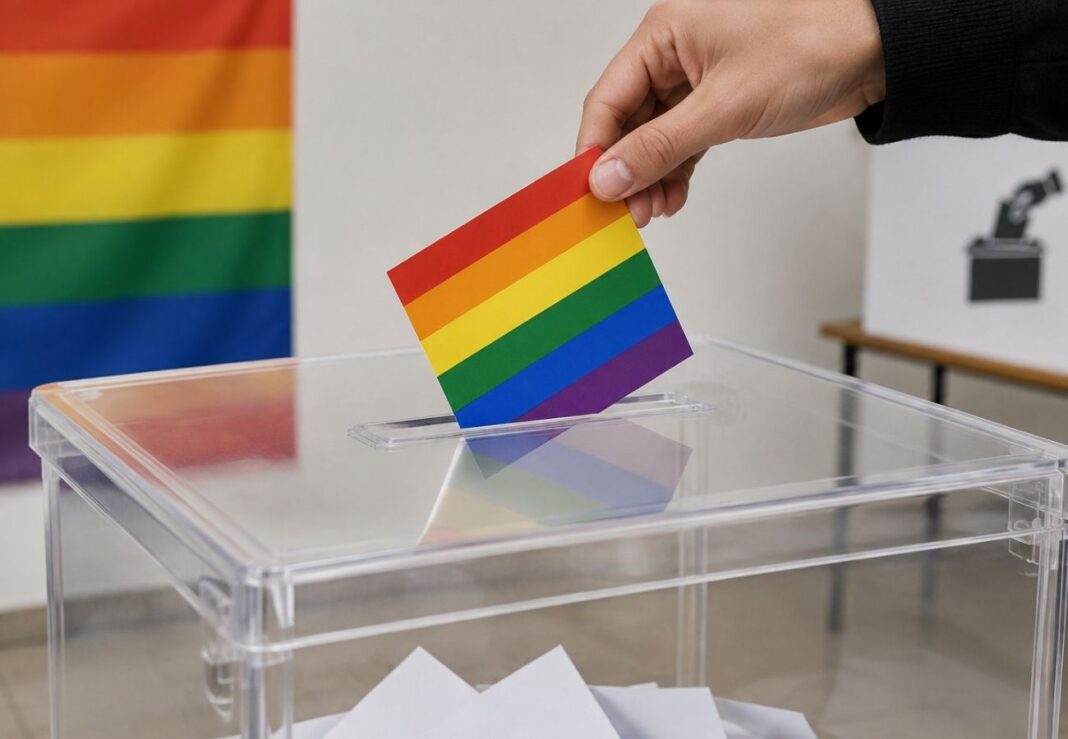

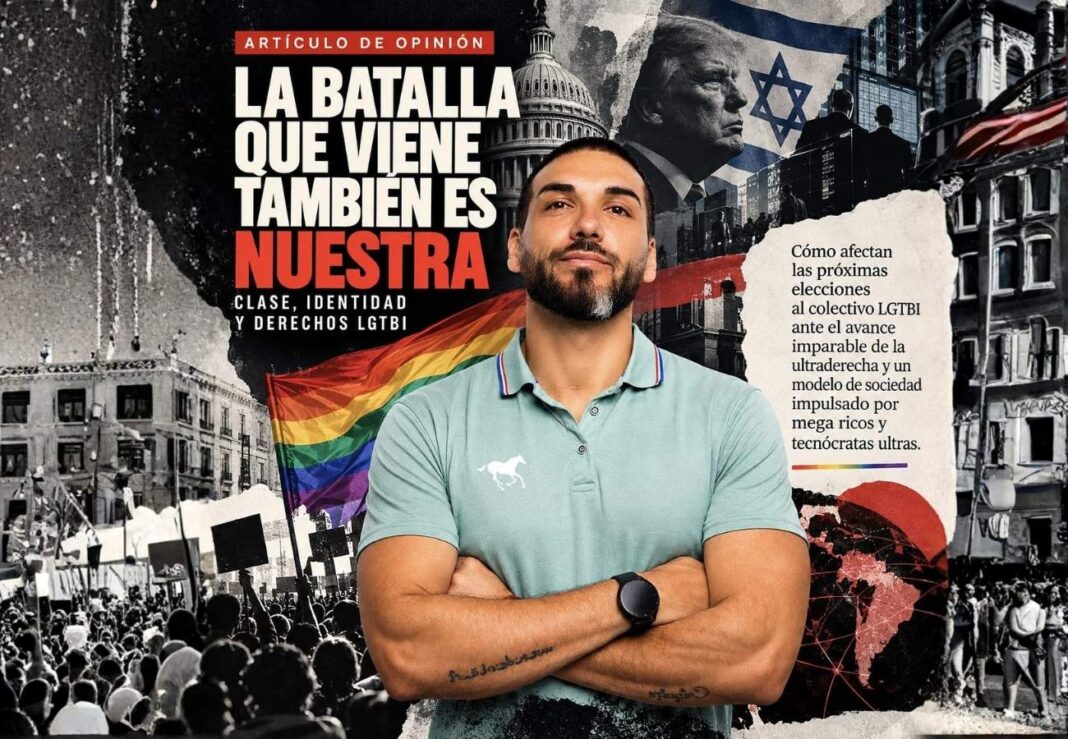
We are entering a new political and electoral scenario in which not only programs, governments, or economic models are being discussed. Something much deeper is being questioned: what kind of society do we want to build and what place will those who have historically had to fight to be recognized occupy in it. And here the LGTBI collective has much to lose.
We are not facing an abstract discussion. The rights we now consider conquered can no longer be taken for granted when the political forces that question equality policies manage to transform our identities into a permanent field of cultural battle.
The data should compel us to pay attention. In 2026, Spain has reached for the first time the top position in the Rainbow Map of ILGA-Europe, which compares LGTBI laws and policies of 49 European countries. But the organization itself warns that this legislative advance coexists with a much more complex reality and a growing political use of LGTBI people as a tool of confrontation.
The question, therefore, should not only be what rights we have conquered. The question is: what society is trying to be built around us?
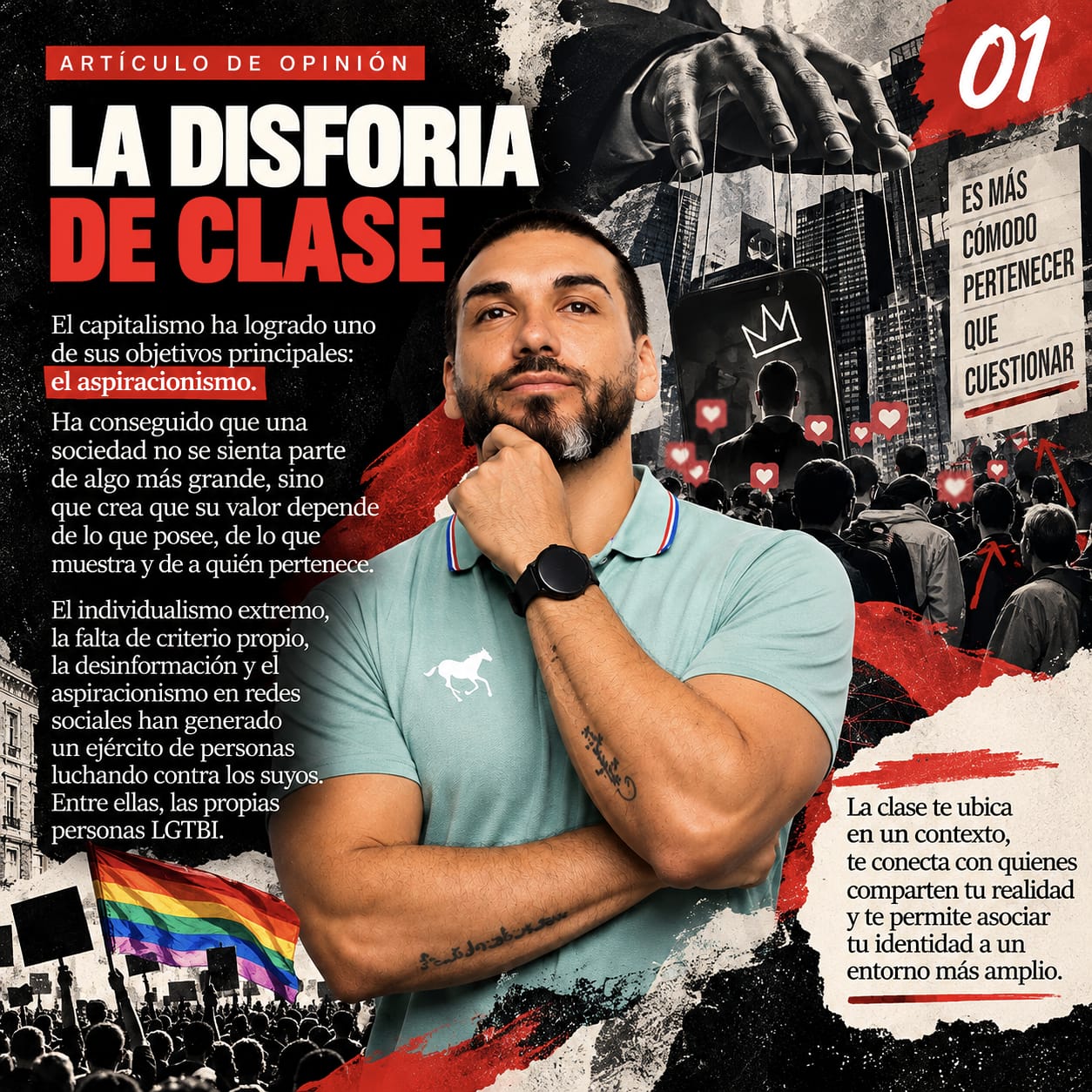
The class dysphoria
There is a contradiction that increasingly worries me: working people defending economic, political, and cultural models that may end up harming their own living conditions.
It is what we could call a form of class dysphoria: people who objectively live within a certain socioeconomic reality, but who have internalized the identity, values, and aspirations of those who are far from sharing their material conditions. Capitalism has shown an enormous capacity to turn individual aspiration into identity. You no longer need to belong to an elite to imagine yourself as part of it.
It is enough to consume their symbols, follow their references, reproduce their discourses, and believe that, one day, you too will be part of that world.
Social networks have accelerated this phenomenon. The algorithm does not necessarily connect you with those who share your living conditions; many times it connects you with what you aspire to be.
And there appears one of the great political problems of our time: the substitution of collective consciousness with an individual identity built from consumption, appearance, and aspiration.
It is more comfortable to feel exceptional than to recognize oneself as part of a majority that shares problems.
It is more comfortable to think that one is destined to ascend than to ask why so many people are being expelled from housing, precarized at work, or deprived of opportunities. And, above all, it is more comfortable to belong than to question.

When identity separates from material conditions
Here we come to a particularly important issue for LGTBI people. For decades we have learned that our identity was the center of our struggle. And it is. But our identity does not exist in a vacuum.
It is not the same to be gay owning a home than to live in a rental with a precarious salary. It is not the same to be a trans person with economic stability than to face labor precariousness. It is not the same to age as LGTBI accompanied by a family and social network than to do so in solitude. It is not the same to be an LGTBI migrant than to have citizenship, resources, and a support network.
Sexual orientation, gender identity, and material conditions constantly intersect. That is why perhaps we need to recover an idea we should never have abandoned: the struggle for equality is also a class struggle.
Not to replace identity with class. But to understand that both are connected.
Because we were never fully included
LGTBI people know perfectly what it means to be outside the spaces of power. For decades we have been tolerated rather than accepted, used rather than listened to, and incorporated into certain spaces when we were useful. Our history shows that inclusion was never automatic.
The heteropatriarchal system determined for a long time what we could be, where we could be, how we should behave, and to what extent our existence could be made visible. That is why it is especially dangerous that now some LGTBI people confuse freedom with the simple individual possibility of consuming, ascending, or belonging.
Freedom cannot consist solely of being able to choose which t-shirt to buy, which restaurant to frequent, or which influencer to follow. Freedom also consists of being able to live without fear, having a home, accessing decent work, aging accompanied, forming a family, receiving healthcare, practicing sports without discrimination, and fully participating in society.
The Law 4/2023 itself recognizes this broad dimension of LGTBI rights and establishes measures in areas such as employment, housing, education, health, sports, culture, family, and protection against discrimination. That is why reducing our struggle exclusively to certain cultural battles would be a mistake.

The far-right has understood something that we sometimes forget
The far-right political forces have understood that identities can become an extraordinarily effective tool for mobilization.
The trans person. The migrant person. The feminist. The LGTBI person. The foreigner. The different. The “other”.
The strategy consists of turning certain groups into symbols of much broader problems and using them as a simple explanation of a complex reality.
ILGA-Europe has been documenting precisely this trend for several years: the instrumentalization of LGTBI people, misinformation, hate speech, and attacks against human rights organizations are increasingly connected with processes of democratic deterioration. And here we must be especially smart.
Because when we manage to make a working person believe that their main problem is another working person who is trans, migrant, or gay, we have achieved exactly what any power structure needs: for those who share material problems to stop recognizing themselves as allies. For those at the bottom to confront each other.
The battle will also be cultural, but not only cultural
That is why I believe we need to change the way we approach this battle. We cannot abandon our identities. We cannot renounce our claims. We cannot accept even a setback in our rights.
But we also cannot allow our identity to be used to lock us into a political, social, or economic bubble. We need to talk about LGTBI rights and housing. About LGTBI rights and work. About LGTBI rights and poverty. About LGTBI rights and education. About LGTBI rights and mental health. About LGTBI rights and sports. About LGTBI rights and migration. About LGTBI rights and old age.
Because an LGTBI person does not stop being a worker, precarious, student, pensioner, migrant, neighbor, or resident of a neighborhood. We are all those things at the same time. And that is precisely our strength.
November 29 should not just be an electoral date
That is why the upcoming elections must also be an opportunity to ask ourselves what kind of society we want to build. Not only who governs. Not only who wins or who loses. But what rights we are willing to defend, what social model we want to preserve, and what role we want LGTBI people to occupy within that society.
Because the rights conquered are not eternal simply because they are written in a law. They need institutions to protect them. Organizations to defend them. Citizens to know them.
And people willing not to take a step back when they become the object of political dispute again. But we also need something more difficult: the ability to question ourselves. To question our individualism. To question our aspirationism. To question misinformation. To question the discourses that pit us against each other.
And to question even those who, sharing our identity, end up defending models that may harm the material conditions of those who are part of our own community.
Because belonging to a community should not mean stopping to think. On the contrary.
It should mean knowing our history, recognizing our contradictions, and understanding that no one is completely liberated while others continue to be left behind.
The battle ahead will not only be for identity. It will be for the model of society. And LGTBI people will be within that battle, whether we want to or not. The question is whether we will be able to understand that our individual freedom needs a society that guarantees collective freedom.
That, perhaps, is the true challenge of November 29.