


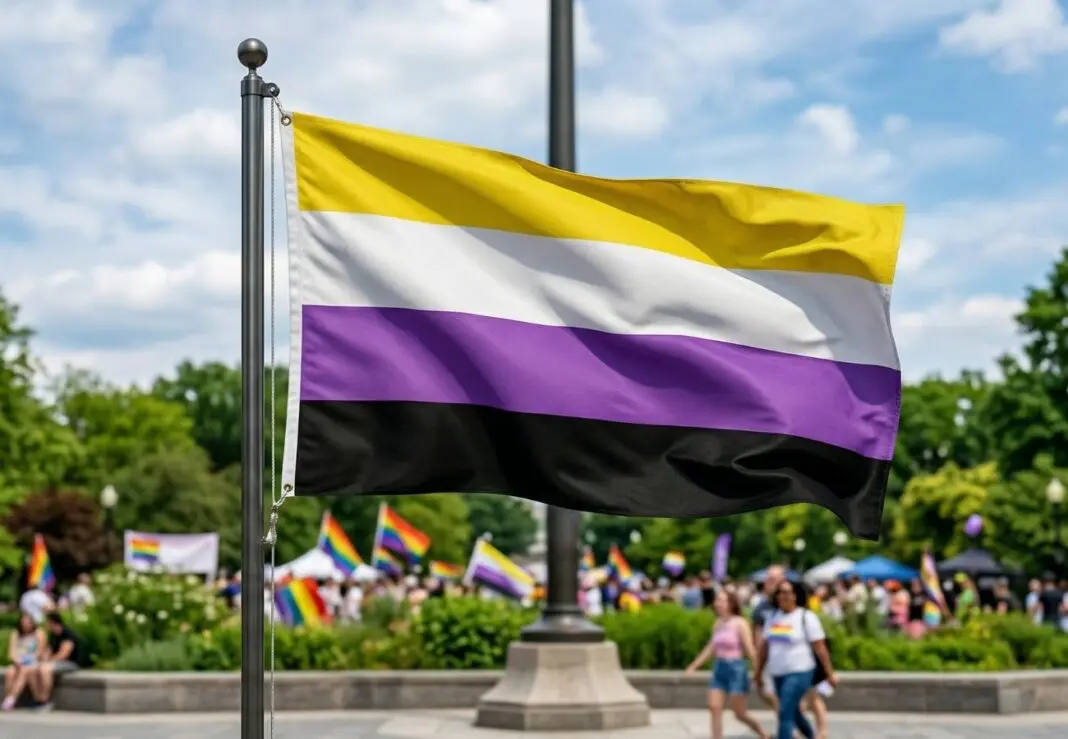

- On March 26, 2026, non-binary people and allies demonstrated in 10 cities in front of the Civil Registries.
- The Enebé* State Network coordinated this first state mobilization to denounce the exclusion of these identities in the LGTBI Law of 2023.
- The groups warned about the lack of administrative protection and the impact on the mental health of a community that continues to be made invisible.
Last Thursday, Spain experienced an unprecedented day in the fight for diversity. The recognition of non-binary identities in Spain was the central axis of the first mobilization coordinated at the state level by the Enebé State Network*. In a simultaneous protest in front of the Civil Registries of ten cities, hundreds of people denounced that the Spanish State continues to fail to comply with international Human Rights standards by limiting gender self-determination only to the options of “man” or “woman.”
The ruling of the LGTBI Law of 2023
During the rallies, it was recalled that the LGTBI Law of 2023, although it was celebrated at the time, left out the recognition of non-binary identities in Spain. This administrative omission means that thousands of people still do not appear correctly reflected in their ID, birth certificate or municipal registry. As explained by the spokespersons for the Enebé* Network, this lack of legal recognition systematically excludes the community from basic procedures in the Tax Agency or Social Security, forcing them into legal invisibility that is unacceptable in a democracy.
The protesters pointed out that countries such as Argentina, Germany or Denmark already offer alternative gender options (such as “X”), while in Spain 81% of non-binary people admit to avoiding public spaces for fear of suffering violence or discrimination. This lack of protection translates into alarming figures: 87% of the community has been forced to perform masking or cis-passing (passing as a cis man or woman) in the healthcare field in order to receive care.
Requirements for a dignified and full life
Reading the manifesto in front of the Civil Registries was forceful: the recognition of non-binary identities in Spain is an outstanding debt that directly affects access to the labor market and the physical integrity of people. The Enebé State Network urged the Government to modify not only the state LGTBI Law, but also the equality laws and the protocols in education and sports to include all gender realities without exceptions.
Among the key requests of the mobilization were the non-imposition of gender markers at birth and the creation of a simple administrative process so that minors and migrants can legally define themselves. The day of March 26 closed with the organizations’ commitment to maintain continuous monitoring of the State, remembering that human rights are not concessions, but inalienable guarantees that Spain must comply with immediately.