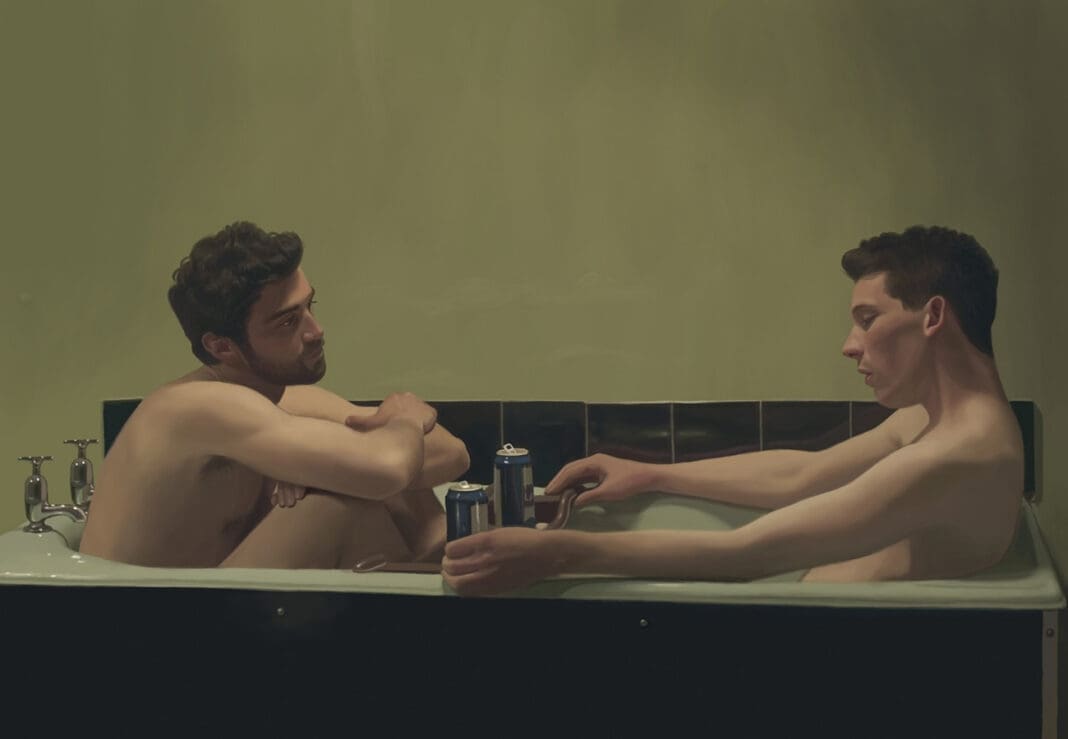

There are stories that remain silent for too long. Stories that do not appear in school textbooks, that rarely occupy official commemorations and that are usually relegated to footnotes. The play Vosotros no was born precisely to challenge that oblivion.
The piece, which will premiere on June 26 in Madrid, reconstructs one of the least known episodes of the Spanish transition: the situation of homosexuals who remained imprisoned even after the death of Francisco Franco and the first amnesty decree of 1976. While Spain celebrated the arrival of democracy, thousands of people were still considered criminals for the simple fact of loving in a different way.
The story takes place in the Carabanchel prison during the summer of 1976. There, dozens of homosexual prisoners lived together in the so-called “dovecote” of the third gallery, separated from the political prisoners because their sentences were considered common crimes. The contrast is as brutal as it is revealing: while Spanish society began to make its way towards democratic freedoms, many gay men and trans people continued to be deprived of liberty due to their sexual orientation or gender identity.

More than a historical recreation, Not You raises a profoundly contemporary question: who is left out when a society celebrates its advances? The work reminds us that rights never arrive automatically or universally. There are always groups that must wait longer, fight harder and endure greater invisibility to be recognized.
The importance of proposals like this goes far beyond the stage. At a time when hate speech is once again gaining ground in different countries and when the rights achieved seem less irreversible than previously thought, recovering the memory of those who were persecuted for their sexual orientation becomes a political and cultural act of the first order.
Diversity needs stories. It needs archives, testimonies, literature, cinema and also theater. Because a community without memory can also become a vulnerable community.
It is also very important that the younger generations have the right and the opportunity to know that there was a time when being homosexual could mean prison, social marginalization or exile.
Perhaps one of the most moving aspects of You are not is that it does not limit itself to narrating suffering. It also talks about friendship, affection and the support networks that emerged between those who shared the confinement. In these links appears an idea that today forms a central part of the LGBTQ+ experience: the chosen family. Long before the concept became popular, those men were already building spaces of mutual care in the face of a society that turned its back on them.
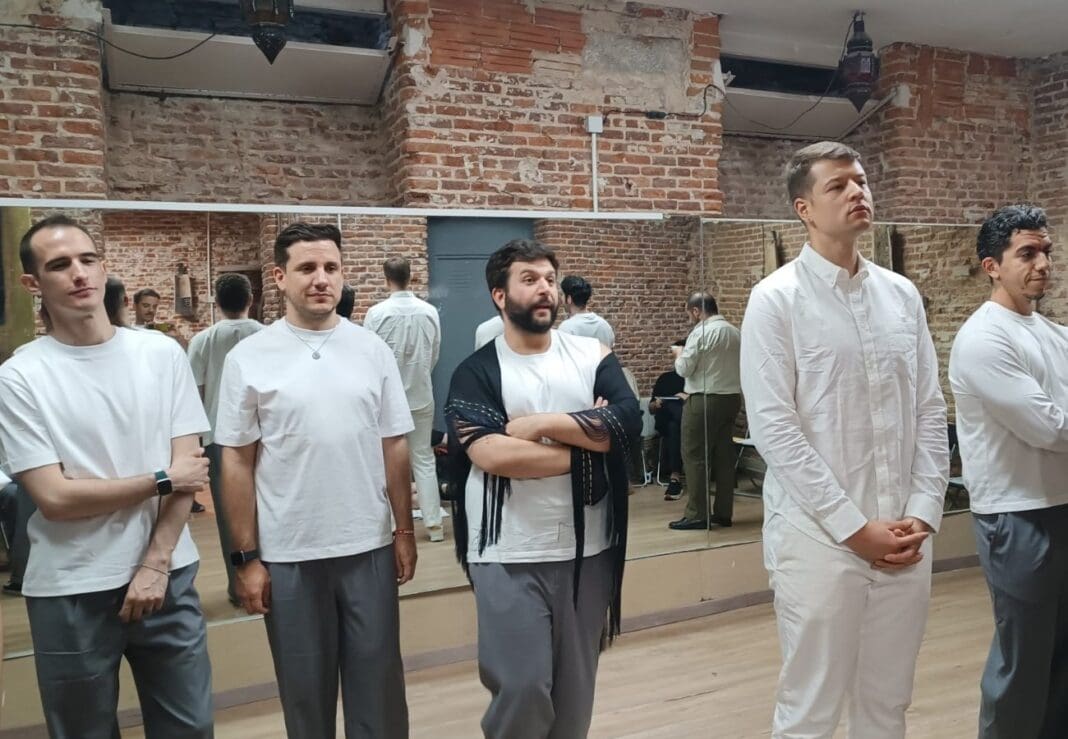
It is especially significant that the work is performed by members of GMadrid, an LGBT association that combines cultural, sports and community activity. There is a powerful symbolic continuity between those who fought to exist fifty years ago and those who today use art to keep that memory alive.
The achievements of the LGBTQ+ community in Spain are often presented as a success story. And they are. From the repeal of repressive laws to equal marriage, the country has become an international reference in terms of rights. But every conquest has a prehistory made of pain, resistance and names that often remained out of the spotlight.
You don’t returns part of that lost dignity. He does it from the theater, but also from democratic memory. And remember something fundamental: that freedom is not measured only by those who achieve it, but also by those who were excluded from it.
Fifty years after that summer of 1976, these stories are still necessary. Because telling the past is not staying in it. It is to better understand the present and defend the future.
The director. Rafael Molina (Madrid, 1980) usually works in theater production for various companies. At the same time, he works as a tutor and teacher of Dramatic Arts in theater groups such as those of GMadrid, the non-profit association that creates this production. He trained at RESAD, where he graduated in Textual Interpretation, but also in other training centers such as the Cuarta Pared school and theater hall. He completed his studies with a Master’s Degree in Cultural Management from the Carlos III University of Madrid, in addition to having training for the development of audiences in the cultural sector.
The author. Francisco Pastor (Madrid, 1986) works as a reporter at laSexta. Specifically, he follows current political events in the program La roca. He arrived there after years as an editor at Hoy por hoy and other Cadena SER programs. He has directed the Huella y lupa and How we have changed sections of Radio Nacional. And he had his own program: Barrio Iberoamérica, on the M21 station. He was also the head of culture at CTXT magazine. He still collaborates with this publication, as well as with the newspaper El País or the magazine Actúa. In 2016 he published his first essay, The Discarded Equalities. He graduated in Audiovisual Communication from the Carlos III University of Madrid.
Artistic profile: Argenis Allen | César Benayas | Jose Camacho | José Ángel Fernández | Antonio José Gallardo | Miguel Guijar | Jaime Iglesias | Javier Kiniro |Sergei Kosarev | Oscar Lopez | Rubén Martín-Vas | José Enrique Mesegar | Miguel Millan | Miguel Ángel Morote | Manuel Ortiz | Francisco Pastor