


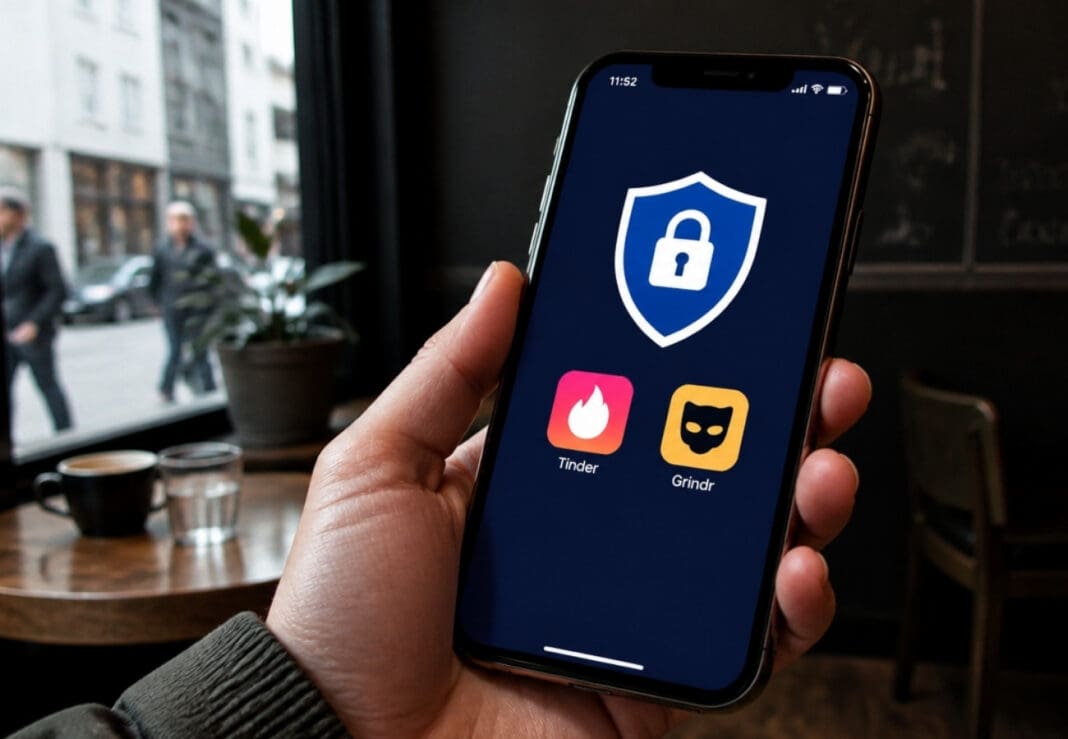
No one explains to anyone how to configure the privacy of Grindr before using it for the first time. No one sits you down to talk about geolocation, screenshots, or what to do if someone threatens to spread a photo of you, just as they do talk to you —with more or less accuracy— about using condoms. I have been working in digital violence for years and seeing the same pattern: we learn to protect ourselves in these apps after something bad happens to us first. And I believe that this is not a coincidence, it is an omission that has real consequences.
A void that is not just mine to perceive
You don’t have to believe me alone. The Spanish Agency for Data Protection itself has recently had to warn Tinder users about the risks of sharing personal data and about frauds like the “love scam.” That a public body has to issue such a warning, almost a decade after these apps became the most common way to meet people in Spain, says a lot about how late the conversation arrives. Affective-sexual education is still almost exclusively focused on the body and physical contact, and almost completely leaves out the digital layer where most of these encounters begin today.
In our community, moreover, that void weighs more. Grindr introduced real improvements in 2025 —hiding location, enhanced message encryption— but there is still a risk that most users do not know about until it is too late: in countries where being LGTBIQ+ is still persecuted, poorly configured geolocation has put users in real danger, and there have been cases of leaks that exposed location and identity. This is compounded by the fact that many profiles include sensitive information, such as serological status regarding HIV, which can end up being used without consent if that account is hacked or that data is leaked. The consumer association of Norway even reported that Grindr shared significant amounts of private information with advertisers without explicit consent, and the Wall Street Journal documented that location data of millions of app users was exposed to third parties between 2017 and 2020.
The tools exist, but they are hidden
The most frustrating thing about this void is that we are not talking about nonexistent technology. Limiting the accuracy of geolocation, deactivating the function that shows others how far away you are, verifying the other person’s profile, keeping conversations within the app instead of jumping to another channel too quickly: these are settings that are already there, in the privacy menu, waiting for someone to activate them. The problem is not that protective technology is lacking, it is that no one tells you it exists until you need it.
The counterargument that must be acknowledged
Someone could tell me that this information does circulate: there are cybersecurity articles, warnings from the AEPD, NGO guides. It is true, they exist, and it must be acknowledged. But they circulate as content that must be actively sought out, not as something that is systematically taught before someone starts using these apps —just as it does happen, albeit imperfectly, with sexual health. No one discovers Grindr’s privacy options in a talk at school or in a medical consultation. They discover them, at best, by searching on Google after a scare, and at worst, after having been a victim of blackmail, a leak, or unwanted exposure.
What is really needed
I do not ask for Tinder or Grindr to be demonized: they have changed, for the better, the way millions of LGTBIQ+ people meet, flirt, and find community, something that used to be much harder. I ask that we stop treating digital security as a separate, optional topic that each person researches on their own if they are lucky. Protection in these apps should be explained with the same naturalness with which we talk about any other care: what to configure before starting to use them, what warning signs to recognize, and whom to turn to if something goes wrong. From Rainbow E Safe we have been insisting on this for some time, and we will not stop doing so: prevention that does not arrive on time does not protect.