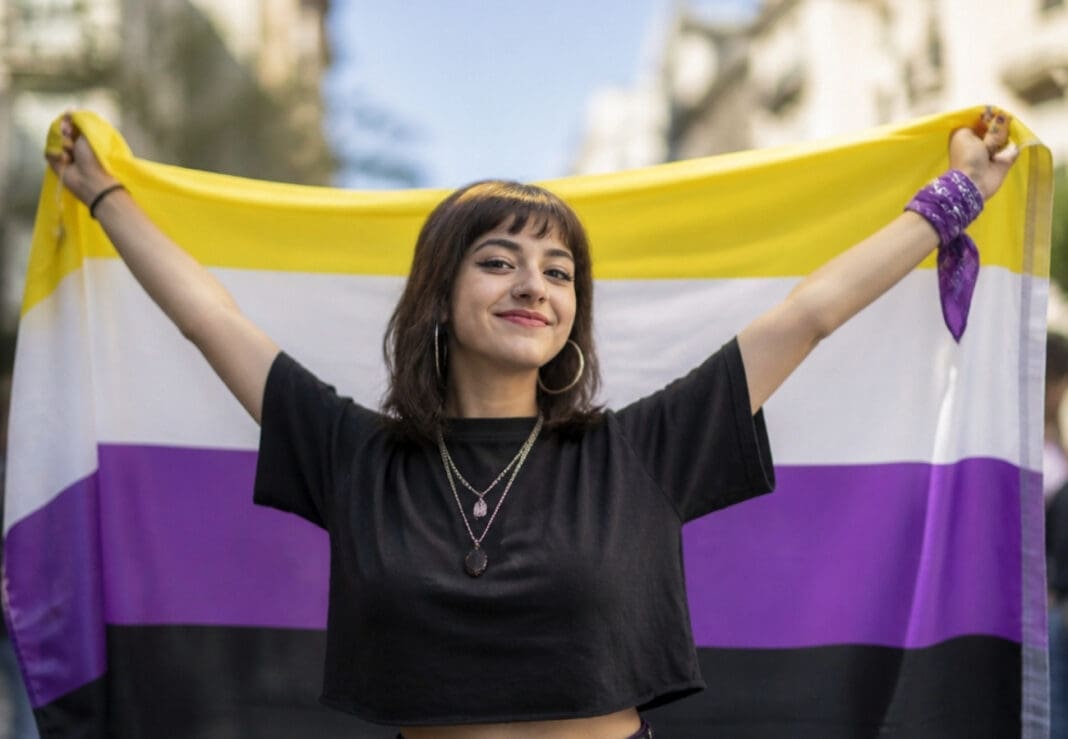

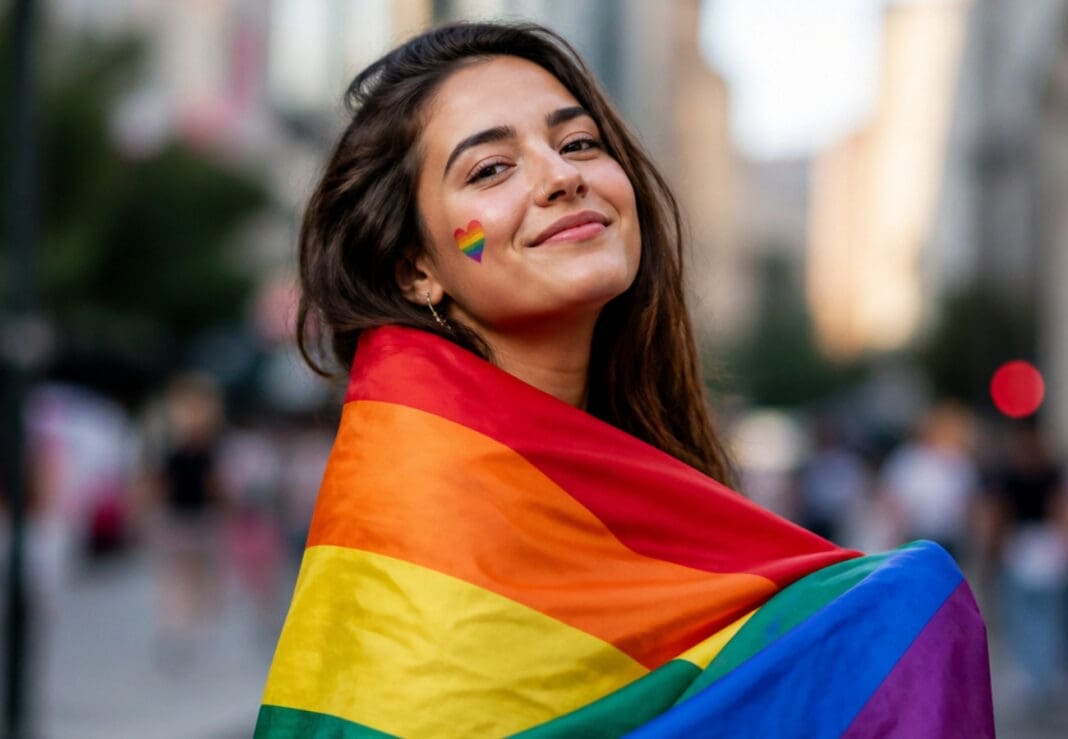
- 36% of LGTBIQ+ people aged 18 to 24 suffered discrimination in the last year.
- 43% experienced harassment and 21% were victims of some aggression, according to FELGTBI+.
- The Federation demands effective youth participation and rejects the merely symbolic use of their voices.
LGTBIQ+ youth demands specific public policies in Spain in the face of a combination of discrimination, violence, precariousness, and lack of resources. FELGTBI+ made the demand on August 11, coinciding with International Youth Day, and called for the inclusion of young people in decisions that directly affect their lives.
A generation that wants to participate in solutions
The State Federation of Lesbians, Gays, Trans, Bisexuals, Intersex, and more argues that policies aimed at LGTBIQ+ youth cannot be designed without their real participation. The organization demands that institutions listen to and incorporate their proposals throughout the process, not just when a campaign needs a diversity image.
FELGTBI+ uses the term youthwashing to describe this symbolic appropriation: showing commitment to young people without translating it into decisions, resources, or verifiable measures. The criticism distinguishes between being present in a photograph and having effective capacity to intervene in solutions.
Vir Markland, co-coordinator of the Federation’s Youth Group, reminds us that this is a highly educated generation willing to participate. The problems facing all youth—job precariousness, difficulty accessing housing, and economic uncertainty—are compounded by exposure to LGTBIfobia.
Discrimination can appear precisely at two decisive doors to start an autonomous life: employment and rental. This overlap explains why the Federation does not propose an isolated policy, but rather a response that connects LGTBIQ+ rights, housing, work, education, health, and protection against violence.
The central message is that a public policy cannot consider age and sexual or gender diversity as separate compartments. Needs intersect, and when they do, they can multiply vulnerability.
Discrimination, harassment, and aggression in numbers
The claim is supported by the report State of Hate 2026, prepared by FELGTBI+ in collaboration with members of a research team from the Institute of Public Policies and Goods of CSIC. According to the data released, 36% of LGTBIQ+ people aged 18 to 24 suffered discrimination in the last year.
The percentage of those who experienced harassment rises to 43%, more than four out of ten. Additionally, 21% were victims of some aggression. These are three different indicators that should not be confused, but together show sustained exposure to different forms of violence.
The digital environment occupies its own place. People under 35 account for approximately half of the cases of digital violence against the community, according to the same research cited by the Federation.
This dimension requires extending preventive measures beyond physical spaces. Training for professionals, reporting channels, platform responses, and digital education are part of a problem that accompanies youth both online and offline.
Koali Martín-Consuegra, also co-coordinator of the Youth Group, demands awareness and training in sexual, gender, family, and body diversity in educational, health, and public settings. The expressed goal is to reduce violence in spaces that should be safe.
The Federation adds a request for specific protection for trans and non-binary children and youth. In the case of non-binary people, it also demands legal recognition, considering that its absence facilitates situations of exclusion and rights violations.

Sexile as silent expulsion
The statement recovers data from the report State of Hate LGTBI+ 2025: Sexile, prepared by FELGTBI+ together with the University of Salamanca. The concept describes the forced abandonment of the place of origin for reasons related to sexual orientation, identity, or gender expression.
The phenomenon has a generational component. According to the research, the percentage of sexiled people aged 24 to 35 reaches 20%, compared to 13% for the overall LGTBIQ+ population.
Leaving a town or city does not always equate to a free choice. The lack of role models, spaces among peers, information, or resources can turn relocation into a strategy to live safely or express oneself without concealment.
Markland relates this lack to mental health: isolation, depressive episodes, and anxiety appear among the mentioned effects. The organization thus positions permanence in the territory as a matter of equality, especially in rural areas where services and community networks may be scarcer.
What policies does FELGTBI+ demand?
The Federation calls for accessible resources throughout the territory, with particular attention to rural areas. It also demands training in education, health, and public services, protection for trans and non-binary youth, and legal recognition for the latter.
Effective participation functions as a transversal condition. It is not just about consulting young people, but allowing them to intervene in the diagnosis, design, execution, and evaluation of policies.
The data released turns this request into a measurable agenda. Reducing 36% discrimination, 43% harassment, and 21% aggression requires objectives, resources, and monitoring. Addressing sexile requires services that allow people to remain in the territory, not just support when the exit has already occurred.
LGTBIQ+ youth does not appear in this demand as a passive recipient. The Federation insists on their capacity to formulate solutions and demands that institutions move from symbolic representation to participation with real consequences.