

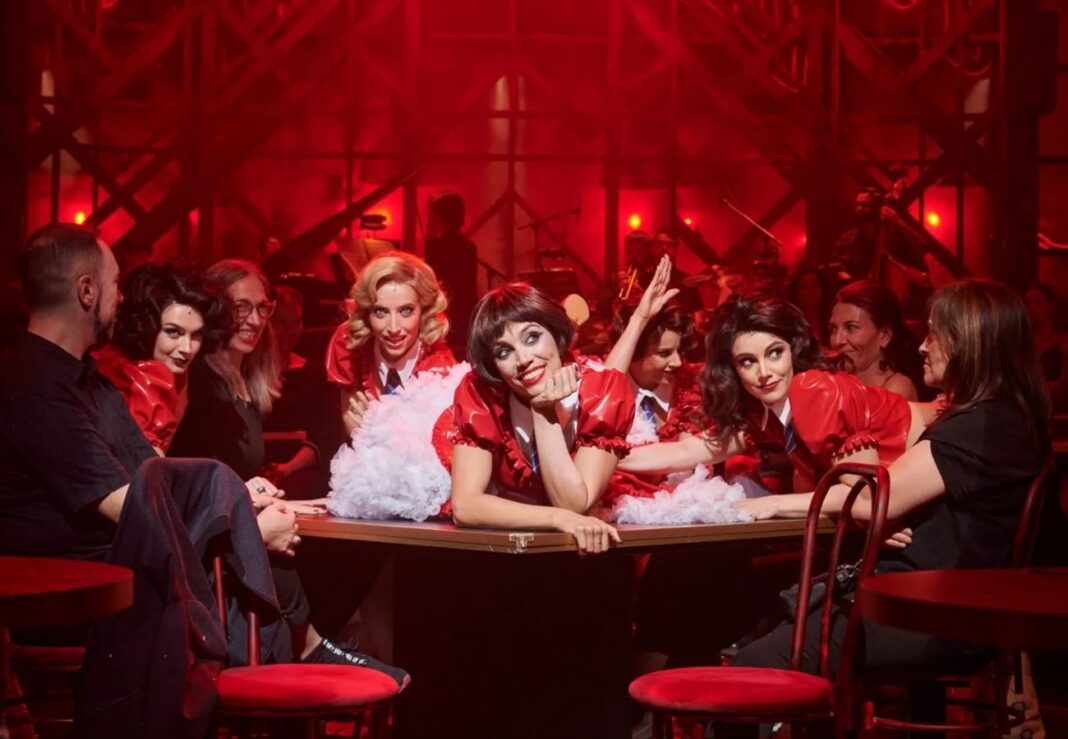

A great show. It entertains, moves, and also invites you to look at reality from another place. Cabaret, the musical at the Kit Kat Klub, is back in Madrid.
In Espacio Delicias, the audience is not limited to sitting in front of a stage: they cross the doors of a universe of their own, becoming part of a Berlin cabaret and traveling to a time when freedom, diversity, and rights were beginning to be threatened by one of the darkest chapters in European history.
The proposal from LETSGO, under the direction of Federico Bellone, recovers the classic musical by Joe Masteroff, with music by John Kander and lyrics by Fred Ebb, to transform Espacio Delicias into the mythical Kit Kat Klub. An immersive setting that begins even before the curtain rises: artists appearing among the audience, music, lights, costumes, carefully recreated corners, and a set design that breaks the traditional boundaries between stage and spectators.

But behind the glitter, feathers, humor, sensuality, and choreography, there is a story that deserves to be heard.
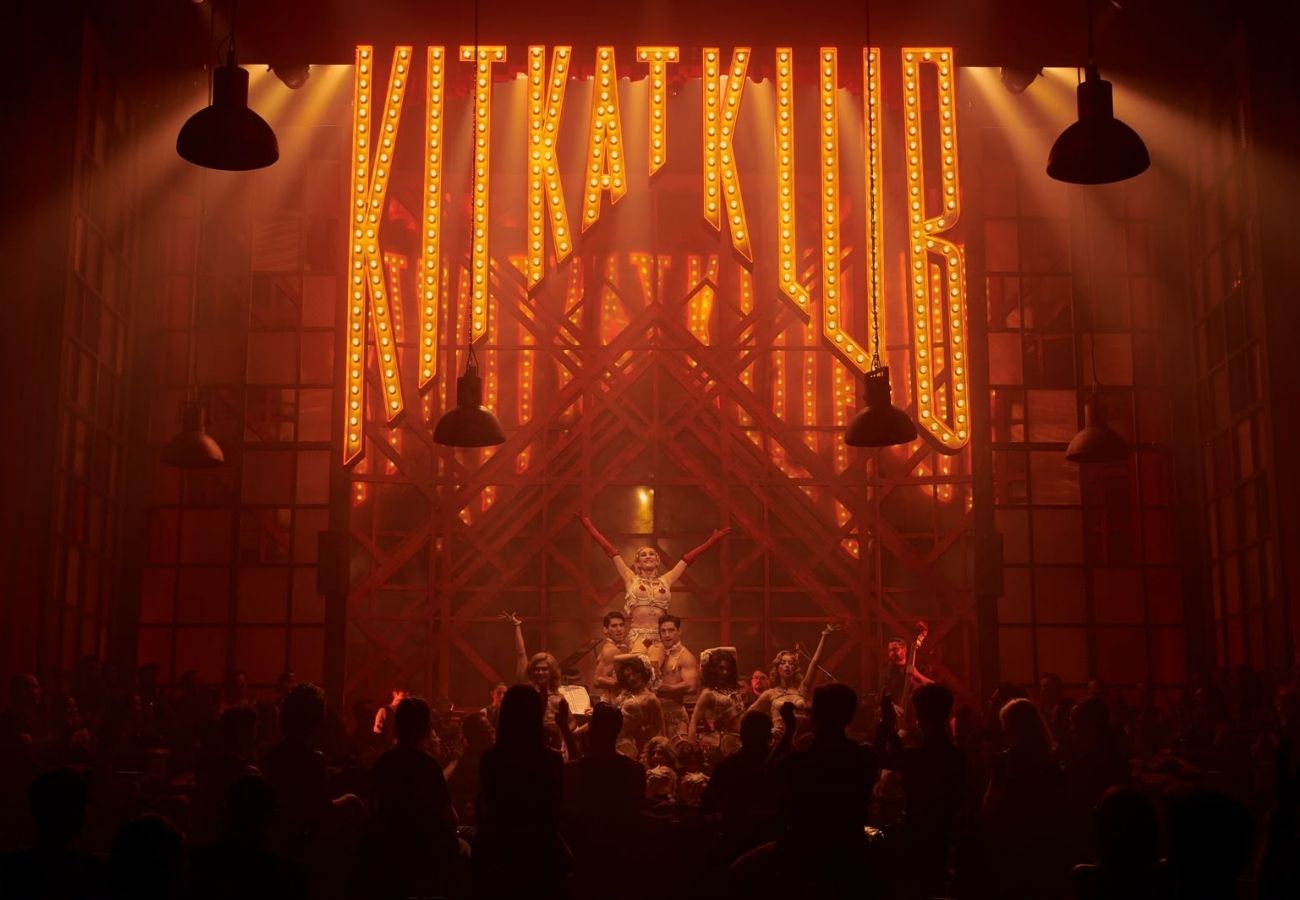
A party in the midst of darkness.
The story transports us to Berlin in the early 1930s, when the Weimar Republic is going through its last moments and Nazism advances over German society. In this context, the Kit Kat Klub serves as a nighttime refuge where artists, diverse characters, desires, identities, and ways of living that challenge the conventions of the time coexist.
There we meet Sally Bowles, an English singer who finds her place in the world on stage; Cliff Bradshaw, an American writer who arrives in Berlin; and a series of characters whose personal stories are intersected by the advance of political and social persecution.
The cabaret represents, to some extent, that space where it still seems possible to be oneself while, outside its walls, a threat grows that seeks to impose a single way of thinking, feeling, and living.
Nazi persecution was not only political: it also targeted homosexuals, those who did not fit into the sexual and gender models imposed by the regime, and various communities considered undesirable. Diversity became a target of repression, violence, and silencing.
That is why Cabaret has a reading that transcends its time. It reminds us that rights should never be taken for granted and that culture, art, and spaces of freedom can also become territories of resistance.
Love, desire, and freedom have no age.


One of the most interesting aspects of this story appears far from the younger characters and the big choreographies. The relationship between Fräulein Schneider and Herr Schultz introduces a particularly moving dimension: the possibility of falling in love, building projects, and experiencing desire during maturity and old age.
She is the owner of a boarding house and he is a Jewish merchant. Both find in their bond an opportunity to share life, until the advance of anti-Semitism and Nazi persecution threaten to destroy that future.
Their story raises a question that also deserves attention from a diversity perspective: why do we continue to represent love, romance, and sexuality as if they were the exclusive heritage of youth?
The adult characters in Cabaret have desires, feelings, contradictions, and projects. They are not there to occupy a secondary place or to represent a stage of retirement from life. They are protagonists of their own stories.
In times when we still need to combat ageism, reclaim other representations of older people, and question stereotypes about aging, this dimension acquires particular value. Age does not eliminate the capacity to love, choose, desire, or reinvent oneself.
And perhaps there lies one of the most current readings of the work: diversity also implies recognizing that there are many ways to live, love, and age.
Talent, music, and an experience that happens around.
From an artistic perspective, the production offers a display that deserves to be highlighted. The cast combines acting, singing, dancing, and a stage presence that sustains the intensity of the show. The live music, choreography, and the work of the artists create an atmosphere that invites you to let yourself be carried away by the universe of the Kit Kat Klub.
The musical direction, costumes, lighting, and set design play a fundamental role. It is not simply about reproducing the aesthetics of a period cabaret, but about building a living space, where every corner seems to have something to tell.
The immersive proposal is one of its great attractions: the artists interact with the audience, the action shifts, and the show breaks with the usual distance between those who perform and those who observe.
The cast of this season includes Mario Vaquerizo and Víctor Palmero, who alternate in the role of Master of Ceremonies, along with Laia Prats, José Pastor, Patricia Clark, Tony River, Ricky Merino, and Marta Arteta, among other performers. A collective bet in which the talent of musicians, dancers, and actors is essential to sustain the energy of each performance.
When the music ends, the question remains.
There is something profoundly significant about leaving a show like Cabaret after spending a couple of hours among songs, humor, sensuality, and celebration. Because the story does not end with the last applause. A necessary question remains: what happens when a society stops tolerating differences?
The Kit Kat Klub represents that space where life seems wonderful, where identities find expression, and where art allows imagining other forms of existence. But the historical context reminds us that no party can remain indifferent to what happens outside.
From Revista Rainbow, it is worth approaching this production not only as a theatrical recommendation but as a cultural experience that allows for conversation about diversity, memory, human rights, freedom, and ageism.
Because defending diversity is also defending the right to exist without fear, to love without asking for permission, to express oneself freely, and to enjoy life at all ages.
And if there is something that Cabaret leaves us, it is precisely that: as long as there is music, artists willing to challenge conventions, and people who refuse to give up their freedom, there will always be reasons to keep the stage light on.
Welcome, welcome to the Kit Kat Klub!