
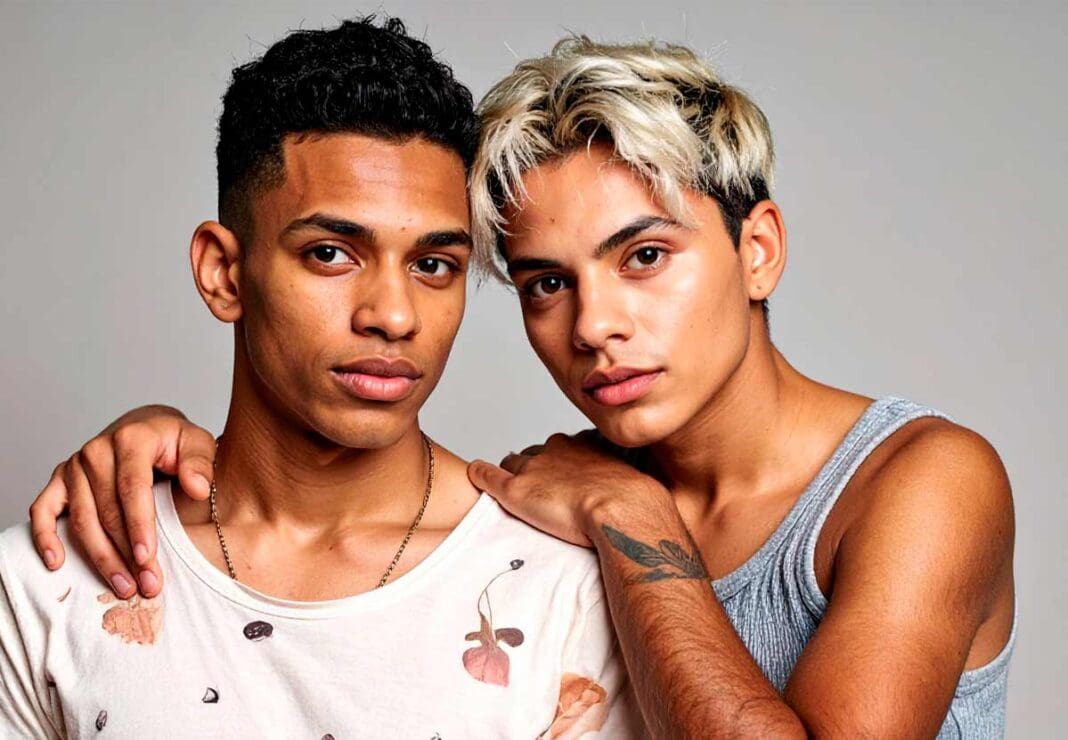
The LGTBIQ+ community has found in the creation of its own languages and signs a way to name experiences and resist the predominant narratives. This practice not only reflects the richness of diversity, but also becomes a vehicle for self-expression and claiming rights. In this article, we will explore how the queer community has developed its own words, signs and codes, allowing each identity to express itself authentically.
The Need to Name
Since time immemorial, language has been a fundamental tool for the construction of identity. In the case of the LGTBIQ+ community, the lack of an adequate vocabulary to describe specific experiences has led to the creation of new terminologies. Words like “pansexual”, “non-binary” or “genderqueer” have emerged to give voice to identities that were previously invisible. This naming process is crucial because it allows people to recognize themselves and be recognized in a broader context.
The Influence of Social Networks
Digital platforms have played a vital role in the spread of these new queer languages and signs. Through social networks such as Twitter, Instagram and TikTok, the community has shared not only vocabulary, but also ways of communicating that go beyond the verbal. Signs and gestures, for example, have found their place in the digital sphere, facilitating an instant and effective form of connection. This expansion of queer language has contributed to the construction of a more united community, where each person can find their space.
Codes and Signs
Sign creation is another fascinating aspect of queer language. In many cases, these signs arise in response to the need to communicate effectively within the community, often in situations where verbal language can be limiting or even dangerous. For example, some communities have developed specific signs to refer to different types of identities, orientations or experiences, thus creating a code that only those who belong to the community can understand.
Resistance to Regulation
Queer language and sign are not only tools of communication, but also acts of resistance. By creating and using its own vocabulary, the community challenges traditional notions of gender and sexuality, questioning heteronormativity. This act of naming becomes a means to vindicate the existence and rights of queer people in spaces where they are often marginalized.
Reflections on the Future of Queer Language
As society advances, queer language also evolves. New terms and signs constantly emerge, reflecting changes in the understanding of identity and sexuality. However, the question arises: how do you ensure that this language remains inclusive and accessible to all? The inclusion of diverse voices and experiences is vital for queer language to continue to be a tool of empowerment.
However, not everything is positive in the area of queer language. Some critics argue that the proliferation of terms can lead to community fragmentation, making some people feel excluded. Additionally, the commercialization of queer culture can dilute the original meaning of these words and signs. This dilemma raises questions about how inclusivity and authenticity can be balanced in queer language. Is it possible that the constant creation of new terms ends up confusing instead of uniting?
Queer language and sign are reflections of a vibrant and ever-evolving community. As new words are created and new forms of communication developed, space opens up for each individual to express their identity in a unique way. Resistance to regulations and the search for inclusion are fundamental aspects in this process. Each new word, each sign, is an act of affirmation and a step towards a more diverse and equitable future.