
- Lambda denounces that hate, rejection, and biphobia continue to be a daily reality for bisexual people, coinciding with the International Bisexual Visibility Day on September 23.
- The organization demands the explicit recognition of bisexuality in official statistics, the protection of mental health, and the end of hypersexualization and erasure of bisexual men.
- Lambda organizes a training talk open to the public on Wednesday, September 23, at 18:00, at its headquarters, led by activist and educator David Cirujeda.
Lambda, LGTBIAQ+ collective of the Valencian Community, denounces on the occasion of the International Bisexual Visibility Day, commemorated on September 23, that hate, rejection, and biphobia continue to be a daily reality for bisexual people. The organization emphasizes the urgent need to raise awareness among the public and provide tools to institutions to eradicate monosexist discrimination.
Why is bisexuality still invisible?
Despite social advances, bisexuality remains one of the most unknown, questioned, and invisibilized orientations, both in society in general and in the LGTBIAQ+ community itself. According to Lambda, some people in the community accuse bisexual individuals of enjoying a supposed heterosexual privilege that is nothing more than a lack of awareness and visibility of this orientation, when heteronormative pressure means that many people do not have the opportunity to explore their sexual orientation.
What specific discriminations does Lambda point out?
Lambda highlights several specific discriminations that bisexual people suffer:
Lack of administrative attention. Bisexuality is not included in public data. Socially, bisexual men are invisibilized —understanding that if they have a male partner, they are gay— and bisexual women are hypersexualized, both in social imagery and in the workplace.
The myth of “the phase”. Among the most widespread prejudices is the idea that bisexuality is a phase, which forces bisexual people to come out of the closet regularly to defend themselves against constant questioning, a consequence of heteronormative pressure and monosexist prejudices.
Impact on mental health. The denial of one’s own orientation worsens the mental health of bisexual people. According to the book Más que visibles, coordinated by Carlos Castaño Rodríguez and Ignacio Elpidio Domínguez Ruiz, 37.15% of bisexual men and 15.2% of bisexual women have had suicidal thoughts or attempts.
Undignified treatment in mental health. In cases of mental health, it is often considered that these individuals are confused, and they receive undignified treatment at times when they are most vulnerable. In general health services, people are often not attended to based on their sexual practices or how they define themselves, but based on their partner; therefore, Lambda suggests talking about “women’s partners” or “men’s partners” to avoid excluding bisexual people.
International disprotection. The lack of recognition of bisexuality in international protection can pose difficulties in being recognized as victims of LGTBIfobic persecution in certain countries.
What activity does Lambda organize for this date?
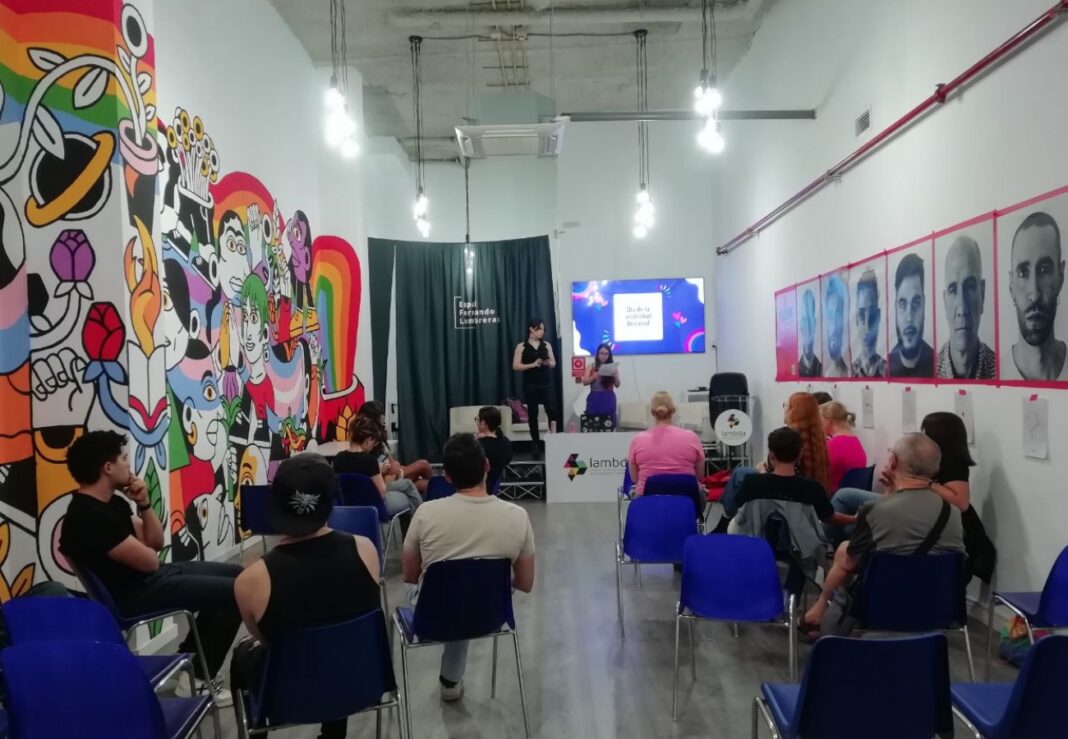
To address this lack of information and the prejudices that sustain discrimination, Lambda has organized a activity open to all citizens on Wednesday, September 23, at 18:00, at the entity’s headquarters, led by David Cirujeda, bisexual activist and educator from Lambda.
“Education is the answer to achieve educational and workspaces free of violence, including judgments and ridicule that also affect the mental health of LGTBIAQ+ people in general and bisexuals in particular,” explains Cirujeda.
Frequently asked questions
When is the International Bisexual Visibility Day?
It is commemorated on September 23.
What does Lambda demand for bisexual people?
The explicit recognition of bisexuality in official statistics, the protection of mental health, and the end of hypersexualization and erasure of bisexual men.

What data does Lambda provide about the mental health of bisexual people?
According to the book Más que visibles, 37.15% of bisexual men and 15.2% of bisexual women have had suicidal thoughts or attempts.
Where and when is the talk organized by Lambda?
On Wednesday, September 23, at 18:00, at Lambda’s headquarters, led by educator David Cirujeda.
Who leads the training activity?
David Cirujeda, bisexual activist and educator from Lambda.