


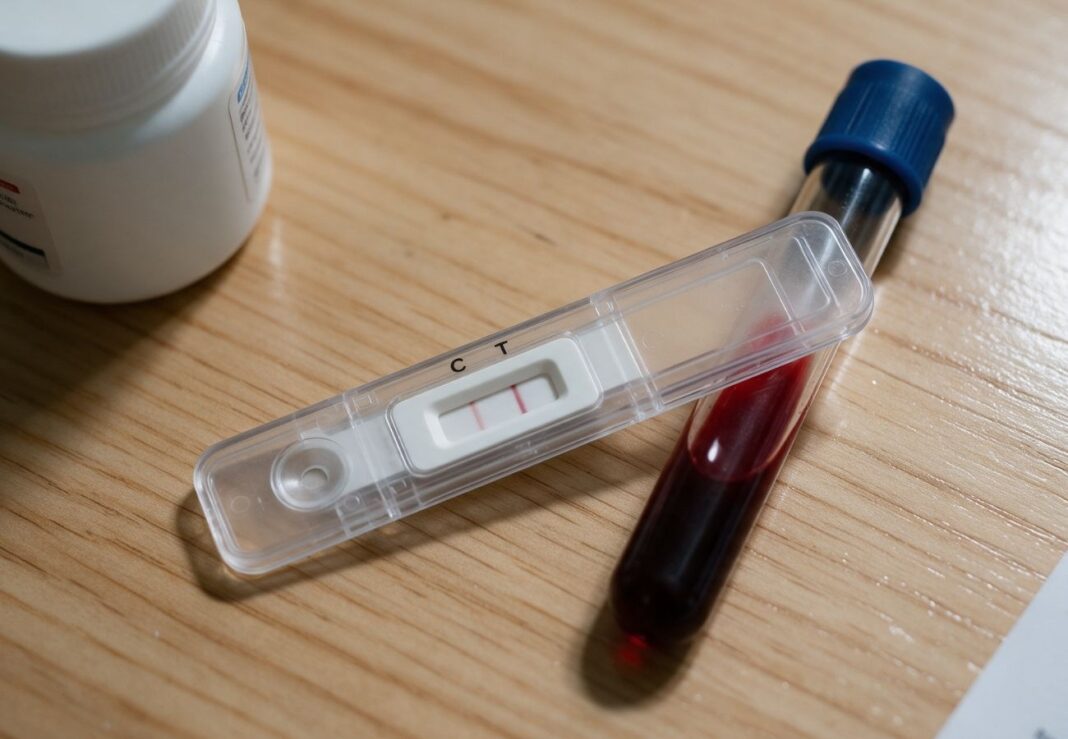
- The FELGTBI+ denounces “significant barriers to access” to the HIV test in health centers, especially in Primary Care.
- A study with the University of Salamanca collects testimonies from people whom health personnel refused to test.
- In Spain, more than half of HIV diagnoses are still late.
Getting the HIV test is not always as easy as asking for it. The State Federation LGTBI+ (FELGTBI+) reported on October 20, International HIV Testing Day, that in some health centers in Spain, test requests are rejected due to prejudice, according to research conducted with the University of Salamanca.
What barriers exist to getting the HIV test?
The main barrier is that there are health personnel who refuse to perform the test claiming that it is unnecessary, that there is no risk, or that it is not useful. This is what participants in the qualitative research conducted by FELGTBI+ along with the University of Salamanca report.
According to the federation, these refusals do not respond to medical criteria, but to preferences, perceptions, or stereotypes of the person providing care. The problem is greater in localities without specialized centers, where testing depends on Primary Care and testing encounters “serious obstacles”.
Why is it worse in small towns?
In small municipalities, health personnel know the environment of the person requesting the test, and that generates shame. This is explained by Irene Aterido, coordinator of the Integral Health Group of FELGTBI+, who considers the situation “especially serious in small municipalities”.
This closeness causes “shame or fear of sharing aspects of private life”, as reported by Tribuna de Salamanca. And when asking for the test means sharing your sexual life with someone from your town, many people simply do not ask for it.
The problem of late diagnosis
In Spain, more than half of HIV diagnoses are still late, the federation reminds us. A late diagnosis reduces quality and life expectancy, makes antiretroviral treatment less effective, and facilitates the transmission of the virus.
That is why every test that is not done is a lost opportunity, both for the health of the person requesting it and for prevention.
What does FELGTBI+ ask for?
FELGTBI+ asks that wanting to take the test be enough to do so, “without having to explain reasons or justifications”. And without judgments or stigmatizing responses. Additionally, it demands:
- Mandatory and widespread training for health personnel, especially in Primary Care and emergencies, both about the tests and about preventive medication.
- Coordination between different levels of government and the Ministry of Health.
- That the Ministry’s guidelines are truly followed in clinical practice.
Frequently asked questions
When is International HIV Testing Day?
October 20.
What does FELGTBI+ denounce?
That in some health centers, the HIV test is refused on the grounds of lack of necessity, risk, or usefulness.
Do you have to justify why you want to take the test?
FELGTBI+ argues that no: it is enough to express the desire to take it.
How many HIV diagnoses are late in Spain?
More than half, according to the federation.